Not too long ago, Singaporeans gripped the doorframe as they trudged into September. A glum stretch of the calendar devoid of public holidays, the weeks between Singapore’s National Day on August 9th and Diwali in October/November were once a lull in the city-state’s multi-ethnic calendar, punctuated by the polarizing Hungry Ghost Festival.
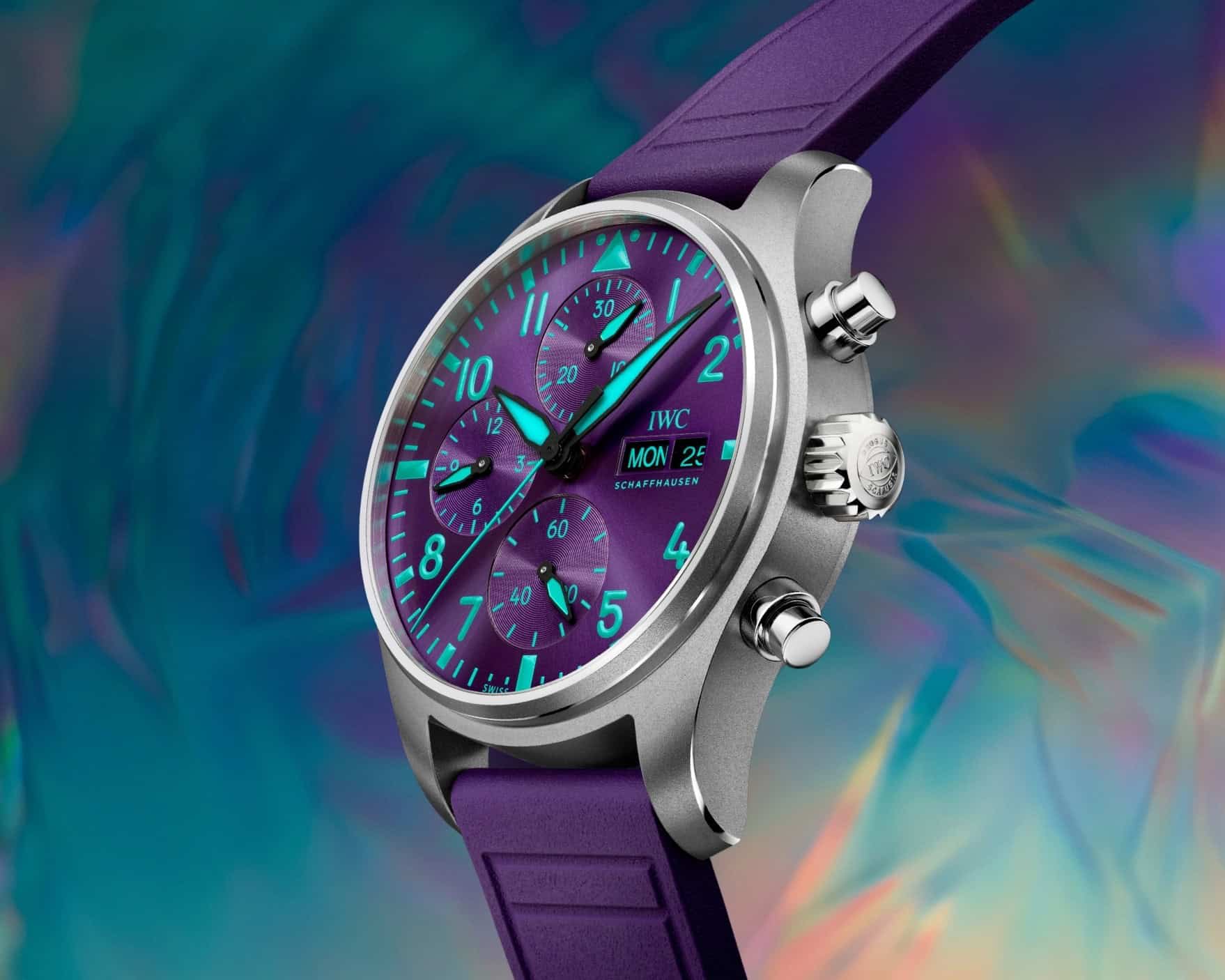
Arriving in a 41mm titanium case, the IWC Pilot’s Watch Chronograph 41 Mercedes-AMG Petronas Formula One™ Team brandishes a purple dial with Petronas-green highlights. Within beats the manufacture's workhorse Calibre 69385, which features a 46-hour power reserve and the maison's patented bi-directional pawl winding system.
An eerie Asian cousin of Latin America’s Day of the Dead, the Hungry Ghost Festival marks the seventh month of the Chinese lunar calendar, when restless spirits are believed to walk among the living.
For 29 to 30 days, pedestrians tiptoe around curbside offerings, and entertainers sing and dance in front of seats deliberately left empty, while the air loses transparency to the burning of “hell money”. There are also enough first-person horror stories about those who disrespect these month-long visitors (from hell, literally) to make even the most skeptical think twice about staying out after dark.
Around this time, westerlies also blow suffocating smoke from Indonesian crop burning to exacerbate Singapore’s incense-clogged air. “Wake me up when September ends,” we used to croon in jest.
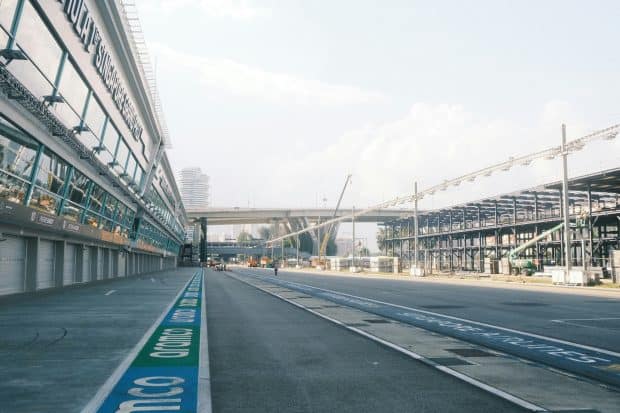
Then, to the delight of the Singapore Tourism Board, Singapore’s somber September and October saw a glimmer of rehabilitative hope in 2007—hotel magnate Ong Beng Seng successfully secured the rights to host Formula One in Singapore. Against the odds, his team carved a street circuit through the heart of the hectic, congested city, creating Formula One’s first-ever night race in 2008.
For the past 18 years, hundreds of thousands of tourists have braved the tropical heat annually to watch fast cars whizz past towering financial institutions and performances by famous musicians.
It has also become a cause for celebration among watch collectors, as numerous brands unveil new watches around this time every year in tribute to Singapore’s Grand Prix and National Day.
The first brands to do so were Audemars Piguet and TAG Heuer, which dedicated a special edition Royal Oak Offshore and Grand Carrera respectively to 2008’s inaugural Grand Prix.
Most recently in 2025, H. Moser & Cie. brand owners Edouard and Bertrand Meylan launched the Streamliner Tourbillon Pierre Gasly, together with the Formula One driver himself, at the Grand Hyatt Singapore.
This year, IWC Schaffhausen has joined the party in lavender livery.
The Legacy of the IWC Chronograph
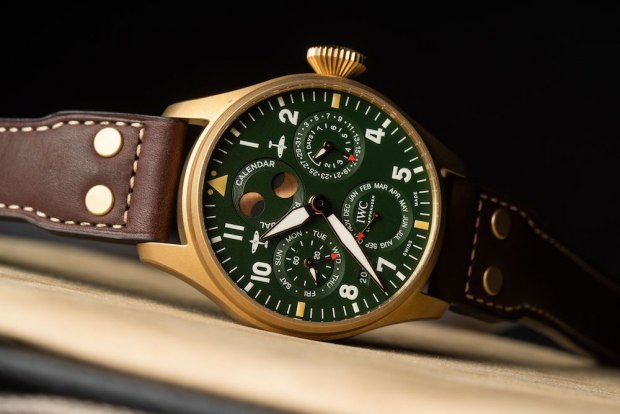
From attention-grabbing Portugieser limited editions to the complex Da Vinci Perpetual Calendar Chronograph, IWC’s chronographs have become highly sought-after pieces of horological history.
Counting prominent collectors and celebrities among their fans, including Barry Keoghan, Brad Pitt, Bradley Cooper, John Mayer and Tom Brady, the Pilot’s Chronograph is perhaps the most recognizable expression of IWC’s aviation heritage. Its design can be traced back to the company’s first Pilot’s Watch—the Special Pilot’s Watch of 1936—which was developed with considerable input from IWC owner Ernst Jakob Homberger’s aviation-enthusiast sons, Hans Ernst and Rudolf.
Configured to resemble a Flieger-style cockpit’s dashboard, the IWC Pilot collection is distinguished by signature oversized Arabic numerals, sword hands and orientation triangle at the 12 o’clock position.
Over the decades, the Pilot’s Watch has evolved through an ever-expanding repertoire of high-tech materials, including ceramic, titanium and proprietary Ceratanium®, while its chronographs have adopted increasingly sophisticated in-house movements. Today, the Pilot’s Chronograph is powered by IWC’s modern mechanical chronograph workhorses like the Calibres 69355 and 69385.

An Off-Kilter Movement
Unlike many contemporary luxury chronographs that favor a vertical clutch, IWC’s 69385—which powers this watch—uses the more traditional combination of a column wheel and horizontal clutch. The same basic architecture is found in the 69355 used in the Portugieser Chronograph.
In a horizontal-clutch chronograph, the chronograph train engages the going train laterally, with the coupling wheels visibly moving into mesh when the chronograph is activated. It makes for a particularly theatrical display through a sapphire caseback, where the start of the chronograph can be watched as the wheels engage, then disengage after use to prevent energy wastage.

Both the 69355 and 69385 beat at 4Hz and provide 46 hours of power reserve. They also incorporate IWC’s bidirectional pawl-winding system, a modern descendant of Albert Pellaton’s ingenious winding mechanism, which maximizes energy transmission from wrist motion to the mainspring.
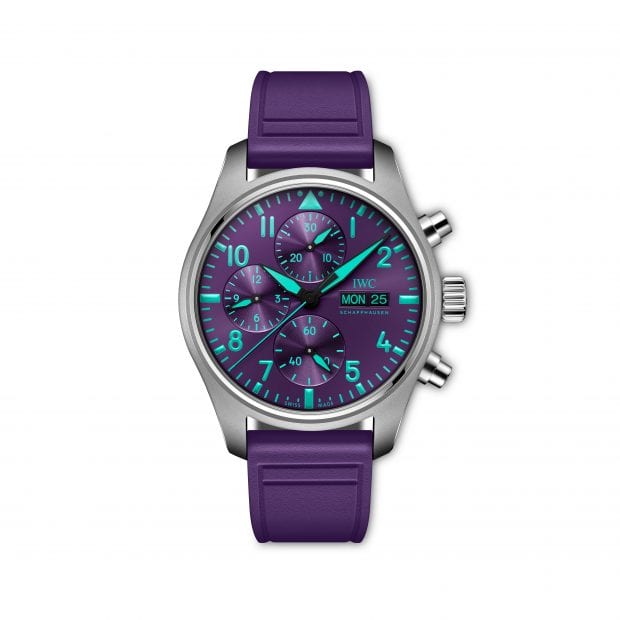
The 69385, however, is configured specifically for the Pilot’s Chronograph’s more information-rich dial. Alongside its chronograph function, it drives a practical day-and-date display at 3 o’clock. Its three subdials comprise a 30-minute chronograph counter at 12 o’clock, a 12-hour counter at 9 o’clock and running seconds at 6 o’clock.

The 69355, meanwhile, is the simpler two-register arrangement used by the Portugieser Chronograph, with a 30-minute counter at 12 o’clock and running seconds at 6 o’clock. The result is a cleaner, more symmetrical dial, while the 69385’s additional 12-hour counter gives the Pilot’s Chronograph a busier, more instrument-like character.
On the new Mercedes-AMG Petronas edition, these numerals and indices are picked out in the team’s signature green, providing a vivid contrast against the deep-purple dial inspired by Singapore’s national flower.
An Unapologetic Dial
IWC Schaffhausen has been the Official Engineering Partner of the Mercedes-AMG Petronas Formula One™ Team since 2013, and the partnership has produced a growing stable of watches that blend the brand’s aviation heritage with motorsport-inspired materials and colors.
IWC previously dedicated a titanium Pilot’s Chronograph 41 to the inaugural 2022 Miami Grand Prix and a Ceratanium® iteration to Las Vegas’s first Grand Prix, held in 2023. These watches, as well as last year’s three-handed Pilot’s Watch Mark XX Mercedes-AMG Petronas edition, are all accented by Petronas-green highlights. This year, however, IWC has gone considerably louder.
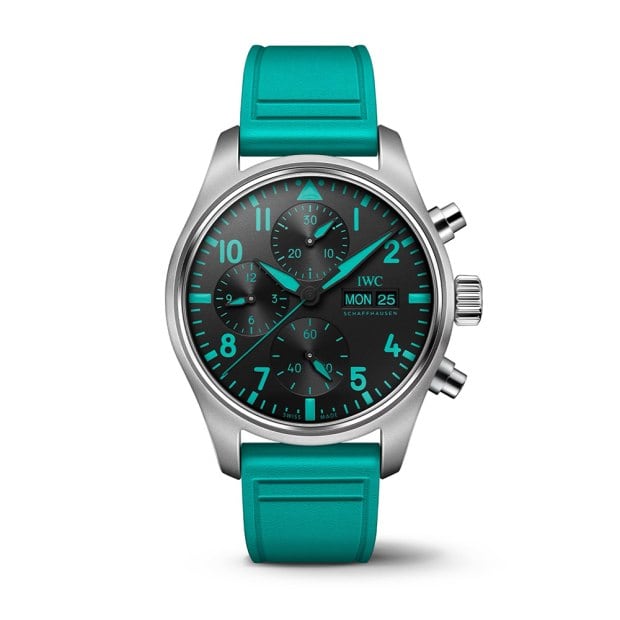
Unveiled a few days ago to mark the impending 2026 Singapore Grand Prix, the Pilot’s Watch Chronograph 41 Mercedes-AMG Petronas Formula One™ Team is dressed in a deep-purple dial inspired by Vanda Miss Joaquim, Singapore’s national flower. It is the first purple dial in IWC’s Pilot’s collection, and is accented with the racing team’s signature green.

The 41mm case is crafted from Grade 5 titanium, a material prized for its high strength-to-weight ratio and consequently well suited to meet the exacting demands of both aeronautical and automotive performance engineering. Its surfaces have been brushed to reveal the metal’s natural, subdued gray sheen, providing a suitably technical counterpoint to the flamboyant dial.
Thanks to IWC’s EasX-Change® system, the purple rubber strap can also be swapped without tools, using the release mechanism integrated beneath the lugs.

Launched alongside matching apparel from official team kit supplier Adidas, the IWC Pilot’s Watch Chronograph 41 Mercedes-AMG Petronas Formula One™ Team is undoubtedly a conversation starter—and a vivid reminder of how Singapore defiantly took back the night, turning a dreary month into a jubilant season.