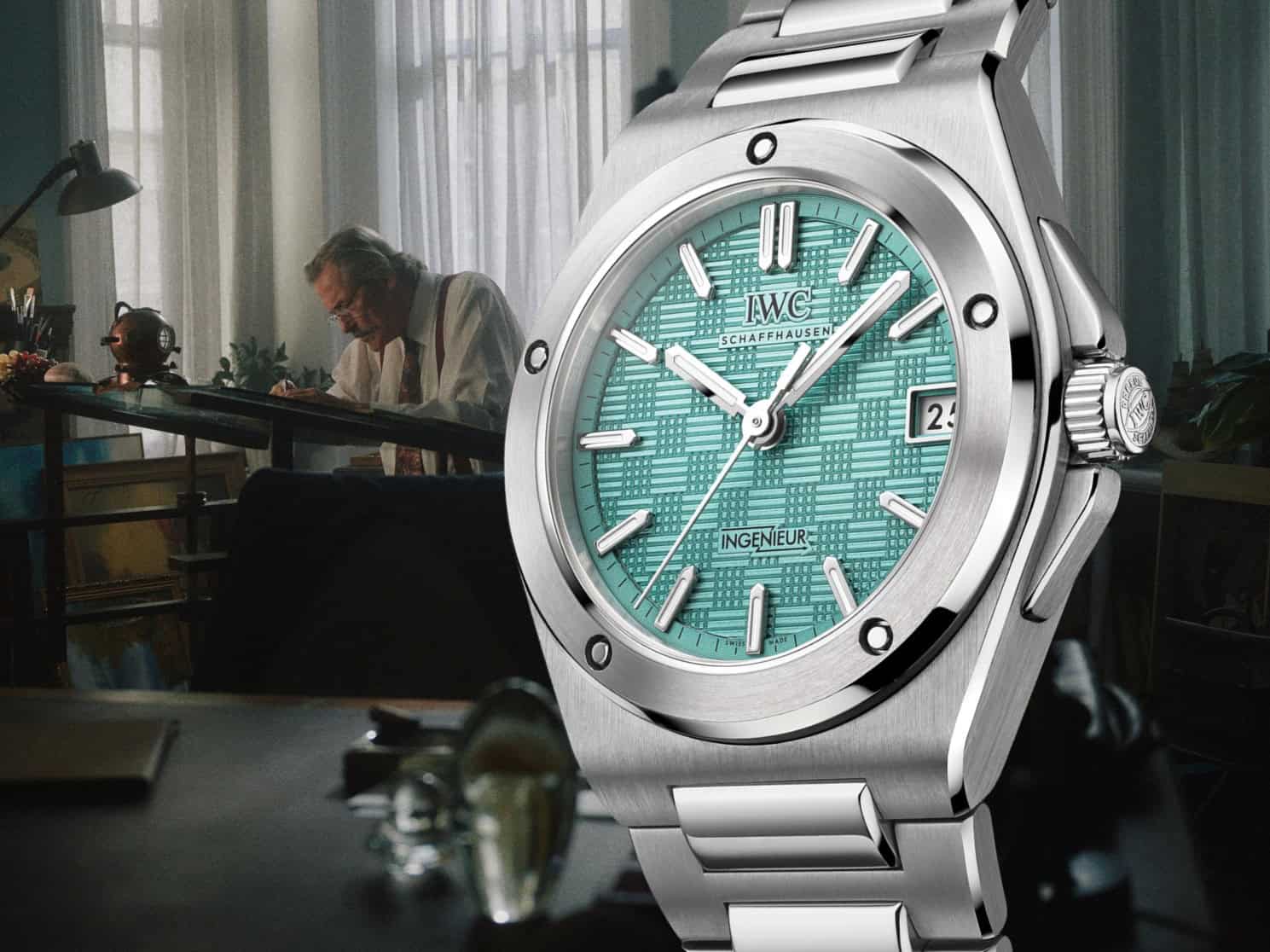
While many watch brands romanticize the very first iteration of a horological icon, the IWC Ingenieur has thrived by embracing shifting tastes and trends. Universally, the mechanical wristwatch itself has evolved from an essential timekeeping tool into a luxury accessory that signals personal style and success. Cognizant of modern collectors’ preferences, such as the current popularity of integrated bracelets, the ethos of the Ingenieur has matured accordingly over the past seven decades.
We look back at the intriguing journey of this luxury sports watch collection.
Originally developed for scientists and engineers working in highly magnetic environments, the first Ingenieur debuted in 1955. It featured a soft-iron inner case—essentially a Faraday cage—that shielded its ferrous components, and consequently its accuracy, from magnetic forces up to 80,000 amperes per meter (1,000 gauss). Decades later, the advent of magnetism-resistant quartz watches in the 1970s provided the fateful nudge that propelled the Ingenieur from a practical tool into a highly desirable luxury item. Yet, while the line officially began in 1955, its contemporary identity belongs entirely to the vaunted design codes of the 1976 Ingenieur SL.
In the Beginning
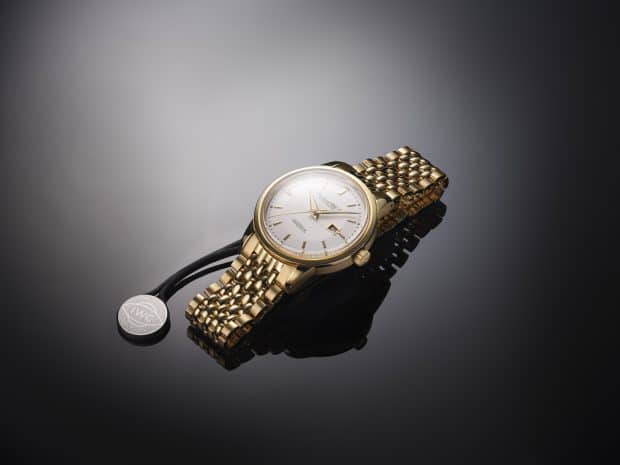
The mid-century original debuted in two versions: the time-only Ref. 666 A, powered by the in-house Caliber 852, and the Ref. 666 AD, which added a date window via the Caliber 8521. These movements were shielded by shock absorbers, and clients could choose between a black or a silvered dial.
Beyond its magnetic resistance, the Reference 666 introduced an innovation that remains a hallmark of modern IWC timepieces. IWC’s Technical Director, Albert Pellaton, developed the Pellaton winding system—an ingenious automatic mechanism that uses pawls to make mainspring winding via the rotor remarkably efficient.
To picture a pawl, think of a ratchet wrench—the kind of wrench that you don’t need to lift off a nut before applying a subsequent rotation. That type of wrench has pawls that prevent it from turning in the opposite direction.
Likewise, the pawls in the Pellaton winding system minimize wasted motion. It originally debuted in the Calibers 85 and 81 before evolving into the 852 and 8521 movements that powered the first Ingenieurs.
The Genta Makeover
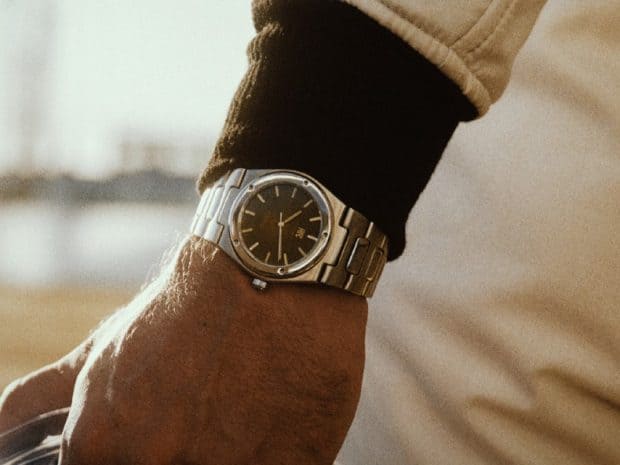
In the 1970s, Gérald Genta, who designed the Audemars Piguet Royal Oak (1972), Patek Philippe Nautilus (1976), Bulgari Bulgari (1977; together with Gianni Bulgari) and Omega Constellation “Manhattan” (1982; with Carol Didisheim), overhauled the utilitarian Ingenieur into a stylish head-turner. Unveiled in 1976, the Ingenieur SL Ref. 1832 featured a bold, integrated case shape that flowed seamlessly into an H-link steel bracelet.

Genta’s design dramatically improved upon the 1955 model’s bottle-cap-style screw-on bezel, where the recesses randomly ended up in different spots. Instead, the SL featured five fixed recesses where the bezel screws always aligned perfectly. Nicknamed the “Jumbo” due to its 40mm diameter and 12.5mm thickness, its dial bore a distinctive textured grid pattern alongside the iconic “Ingenieur” lightning bolt logo. Powered by the Caliber 8541, the “SL” moniker is widely believed to stand for “Steel Line,” though some collectors suggest it signified “Safety and Longevity.”
Only around 1,000 examples of the original Ref. 1832 are believed to exist. In the subsequent decades, the Ingenieur was produced in various case sizes but largely relied on outsourced movements. The renaissance of the collection would only arrive in 2005 when IWC unveiled the 42.5mm Ingenieur Automatic Ref. 3227. Powered by the in-house Caliber 80110, it marked the return of proprietary movements to the line and coincided with a high-profile partnership with Mercedes-AMG.
The Recent Comeback
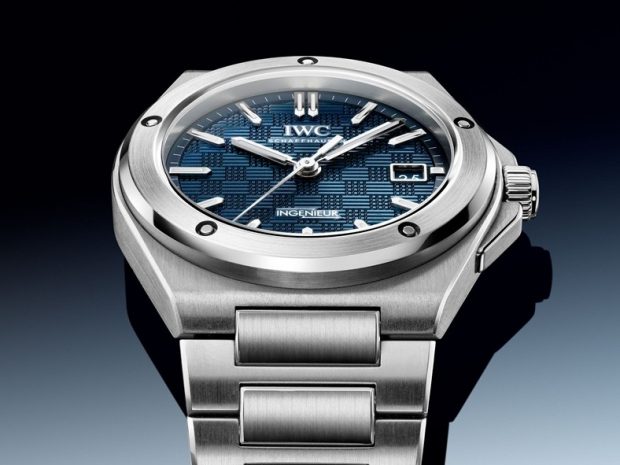
The Ingenieur made a triumphant return to Genta’s pure design language with the launch of the Ingenieur Automatic 40 Ref. IW3289 in March 2023. Originally debuting in four steel and titanium variations, this release set the aesthetic for the current catalog.
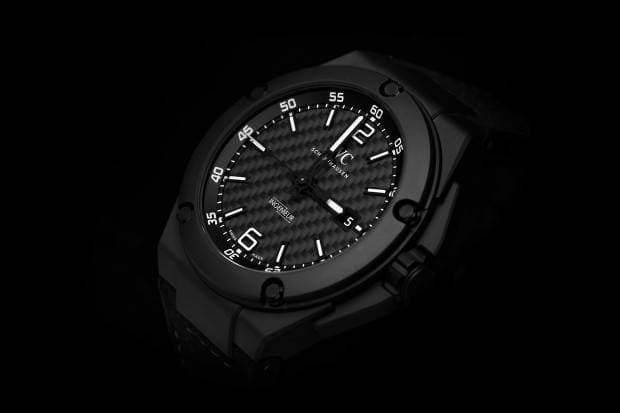
The collection has since expanded to include diverse sizes, complications like perpetual calendars and tourbillons, and advanced case materials. In fact, the highly anticipated ceramic versions were sneakily previewed by musician and voracious watch collector Ed Sheeran in 2025, when paparazzi spotted him wearing a stealthy black ceramic Ingenieur.
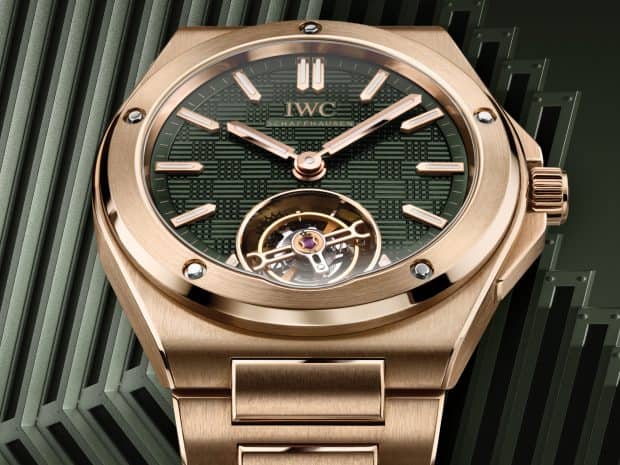
This year, IWC added more novelties to the Ingenieur family including a 41mm perpetual calendar, a 41mm tourbillon featuring the brand’s proprietary Armor Gold® screws, a striking green 42mm ceramic version, and elegant 35mm models offered with either a gray dial framed by a diamond-set bezel, or a blue dial with steel bezel.
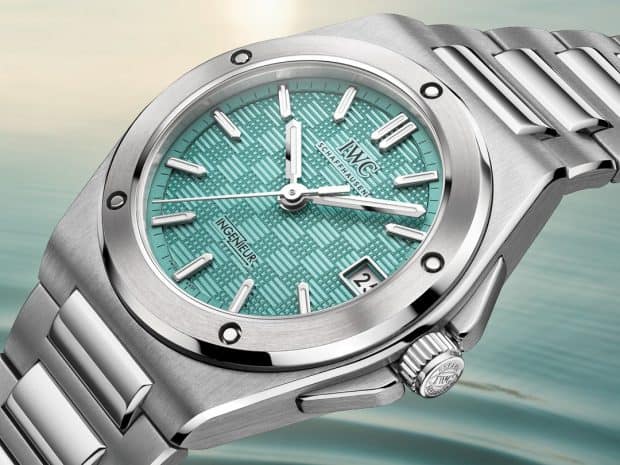
Introducing the new IWC Ingenieur Automatic 35 Pool Blue Ref. IW324902
Today, IWC unveiled a 35mm Ingenieur Automatic featuring a vibrant new dial color: Pool. This aquamarine-toned dial is embellished with rhodium-plated hands and indices, all set against the Ingenieur SL’s iconic weave pattern. Powering the timepiece is the Caliber 47110, which delivers a 42-hour power reserve and features hacking seconds. The hacking function was only introduced to the Ingenieur line in 1967 when the second generation of Ingenieurs was unveiled.
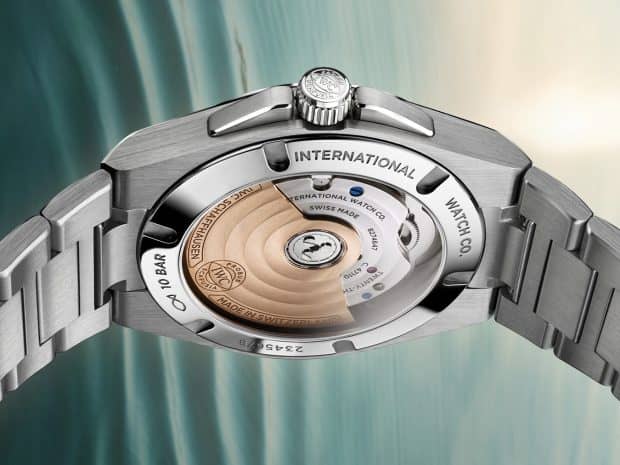
Through the openworked caseback, the movement’s plates, bridges, and rotor are visible, each decorated with distinct hand-finishing techniques including polishing, brushing, and Côtes de Genève. To showcase these intricate finishes, IWC omitted the traditional soft-iron inner case. While this means the Ingenieur Automatic 35 loses its historic anti-magnetic properties, the trade-off allows for a remarkably slim profile of just 9.4mm. Rounding out the design is a 100-meter water resistance rating and an integrated bracelet secured by a butterfly folding clasp.
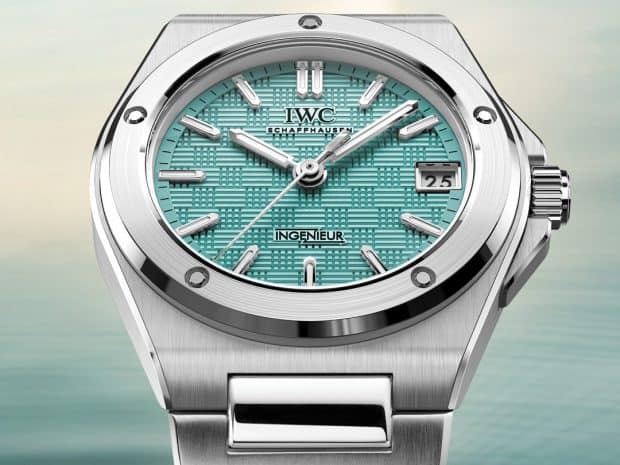
“Our new Pool color is a fresh, radiant aquatic shade that feels made for summer—and it brings a surprising and vibrant new expression to the Ingenieur,” says Christian Knoop, Creative Director at IWC.
“The dial captures light in a beautiful way, and it perfectly complements the clean lines and the refined proportions of the Genta-inspired integrated bracelet design.”