The five watch complications every collector should understand are the chronograph (a built-in stopwatch), the GMT or dual time (a second time zone), the perpetual calendar (a date that self-corrects for leap years), the moonphase (a display tracking the lunar cycle) and the tourbillon (a rotating cage fighting gravity’s effect on accuracy).
Chronograph, GMT, perpetual calendar, moonphase and tourbillon: what each watch complication actually does, the reference that defined it, and the 2026 watch pushing it forward.
In watchmaking, a “complication” is any function beyond telling the time. Complications are how collectors keep score: they separate a watch that merely runs from one that computes. But the vocabulary can intimidate newcomers, so Haute Time built this plain-English field guide — what each complication actually does, the classic reference that defined it, and a current example proving the art is still advancing.
1. Chronograph: What Does It Do?
A chronograph is a stopwatch built into a watch. Pushers on the case start, stop and reset a central seconds hand, while subdials tally elapsed minutes and hours — your watch keeps telling the time throughout. It is the most-used complication in the catalog, born from timing races, flights and rocket burns. The classic reference is the Omega Speedmaster Professional, NASA-qualified in 1965 and worn on the Moon; Zenith’s El Primero of 1969, among the first automatic chronograph calibers, is the movement-side landmark. The complication is still evolving: at Watches and Wonders 2026, TAG Heuer’s Monaco Evergraph introduced the Calibre TH80-00, developed with Vaucher Manufacture Fleurier, which replaces traditional chronograph levers and springs with flexible, one-piece compliant components — all inside a 40mm grade 5 titanium case. Start your complication education here; you will actually use it.
2. GMT and Dual Time: What Is the Difference?
A GMT or dual-time watch displays a second time zone, usually via an extra 24-hour hand or subdial, so travelers can track home and local time simultaneously. “GMT” typically means a fourth hand read against a 24-hour scale; “dual time” usually means a separate display with its own hours. The classic reference is the Rolex GMT-Master, created in the 1950s with Pan American Airways for jet-age crews — its two-tone bezel remains aviation shorthand. For a current benchmark, Vacheron Constantin marked the Overseas’ 30th anniversary in 2026 with the Overseas Dual Time “Cardinal Points”: a 41mm titanium quartet whose four dial colors map to compass points, running the manufacture Calibre 5110 DT/3 and water-resistant to 150 metres, inspired by a prototype field-tested on Everest in 2019. The most practical complication after the date. Also worth reading: the five best dress watches of 2026.
3. Perpetual Calendar: How Does It Work?
A perpetual calendar is a mechanical memory: it knows how many days are in each month — including February — and corrects itself automatically, needing no adjustment until 2100, when the Gregorian calendar skips a leap year. A tiny program of cams and levers encodes a four-year cycle into metal. Patek Philippe defined the genre, from the first perpetual calendar wristwatch in 1925 to the collector-canon ref. 3940. The complication’s frontier moved again in 2026: IWC’s Big Pilot’s Watch Perpetual Calendar Ceralume, limited to 250 pieces, is the first watch with a fully luminous ceramic case — Super-LumiNova compounded into the ceramic itself, so the entire 46.5mm watch glows for more than 24 hours after a charge. Vacheron Constantin took the opposite route this year, slimming the same complication into the Overseas. The thinking collector’s grail complication.

4. Moonphase: What Does It Show?
A moonphase displays where the Moon sits in its cycle — new, waxing, full, waning — usually via a rotating disc in a dial aperture. The lunar cycle runs about 29.5 days, and a standard moonphase drifts one day every two and a half years or so; “astronomical” versions stay accurate for over a century. It is the most romantic complication, prized for beauty rather than utility. The classic references are Patek Philippe’s calendar-moonphase watches and Jaeger-LeCoultre’s Master Ultra Thin Moon, which pairs the display with dress-watch slimness. The complication’s poetic ceiling rose again in 2026 with the Van Cleef & Arpels Midnight Jour Nuit Phase de Lune: a 42mm white gold piece with a 24-hour day/night disc and an on-demand moonphase summoned by a pusher at 8 o’clock. Buy it because you love looking at it.

5. Tourbillon: Is It Actually Useful?
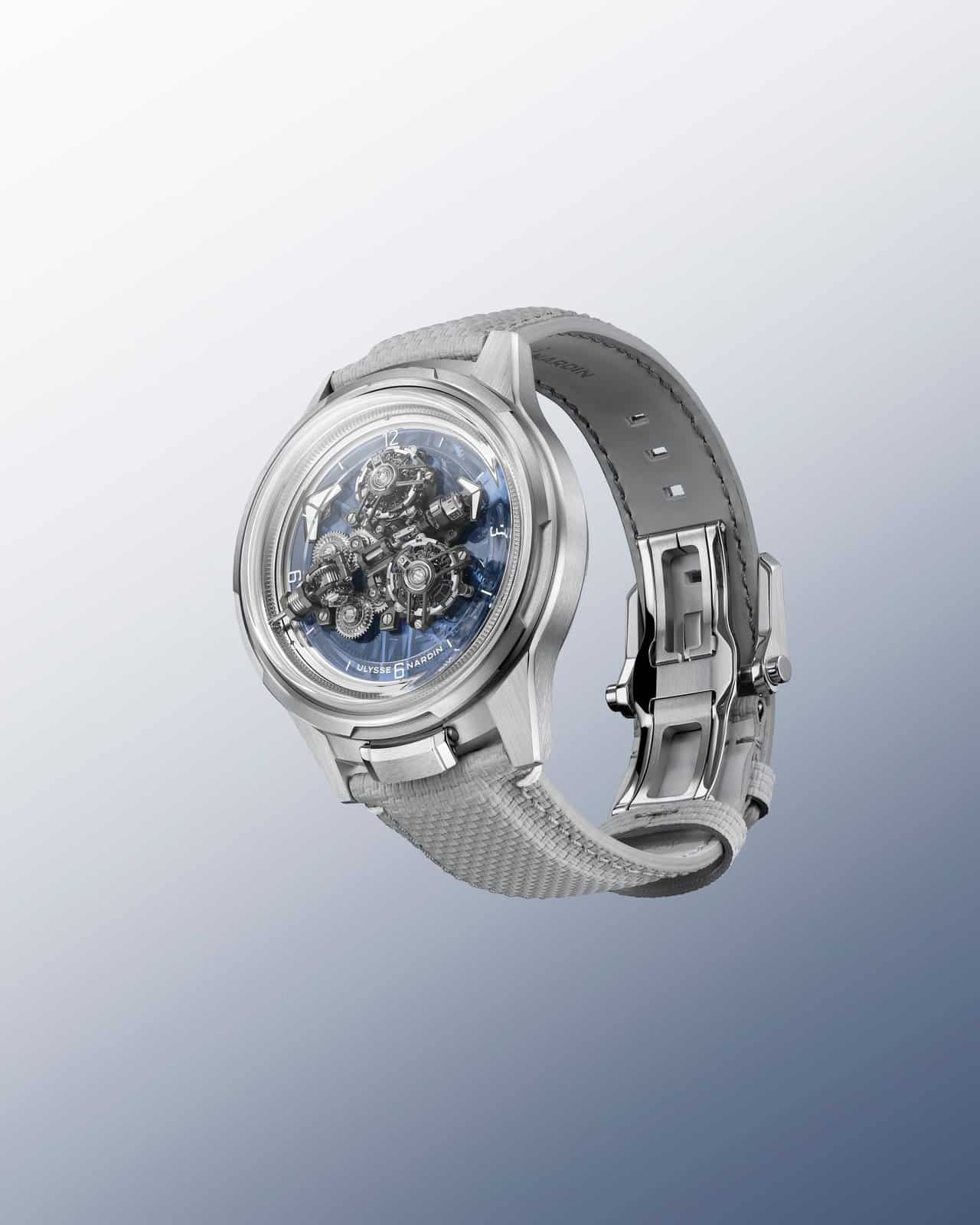
A tourbillon mounts the watch’s regulating organs — balance wheel and escapement — inside a cage that rotates, usually once per minute, averaging out gravity’s distorting pull on the balance. Abraham-Louis Breguet patented it in 1801 for pocket watches that sat vertically in waistcoats; on a moving wrist its benefit is debated, which is why the tourbillon today is really a demonstration of mastery — hypnotic, difficult and expensive. Breguet’s own tourbillons remain the historical touchstone. The modern edge is remarkable: A. Lange & Söhne’s 2026 Lange 1 Tourbillon Perpetual Calendar Lumen (50 pieces, 950 platinum, semi-transparent luminous sapphire dial, calibre L225.1) stacks it atop a perpetual calendar, while Ulysse Nardin’s Super Freak — celebrating 25 years of the silicon-pioneering Freak — puts all but 13 of its 511 components in motion around twin inclined flying tourbillons, driven by the new calibre UN-252. See also: the ultra-thin Piaget Polo Flying Tourbillon Moonphase.
Which Complication Should You Buy First?
Buy in order of use. A chronograph or GMT earns its keep weekly; a moonphase rewards the eye daily; a perpetual calendar rewards patience; a tourbillon rewards arrival. For a first complicated watch, a manufacture chronograph teaches you more about mechanical watchmaking per dollar than anything else in the catalog.
Watch Complications FAQ
What is the most useful watch complication?
For most owners, the date, then the GMT and the chronograph. A second time zone serves travelers and remote workers daily, while a chronograph handles everything from cooking to lap timing without reaching for a phone.
What is the most expensive complication?
Among common complications, the tourbillon and the minute repeater command the highest prices, routinely starting in six figures from major houses. Combining complications — a “grand complication” — multiplies cost further.
Do perpetual calendars really never need adjusting?
They track months and leap years correctly until March 1, 2100, when the Gregorian calendar omits a leap day. They do need resetting if the watch stops, which is why owners often keep them on winders.
Is a tourbillon more accurate than a normal watch?
Not reliably on the wrist, where constant motion already averages out gravitational error. Its value today is craftsmanship and spectacle: it remains among the hardest devices in watchmaking to build well.