Exactly 1,461 days separate one February 29th from the next. To bridge that gap, a perpetual calendar wristwatch has the irregular rhythms of our calendar encoded directly into steel and brass. Hundreds of components calculate the varying lengths of every month and accounts for leap years without missing a beat, translating an immense mechanical undertaking into an effortless glance at the wrist.
Inside a perpetual calendar, its ultra-precise choreography of microscopic gears fastidiously tracks the date, without requiring human intervention until the year 2100. Calculating the intricate mechanics required to make such a system both durable and accurate is no simple feat. Yet, today’s watchmakers are still coming up with new ways to advance this 18th century complication.
You might agree that this wrapping of watchmakers’ heads around dizzying gear ratios and tiny tolerances inspires awe and sparks joy in many a collector.
Introduced in 1762, Thomas Mudge’s perpetual calendar harnessed the Gregorian calendar in a portable pocket watch. Yet in this relentless discipline, his invention is hardly static. It persists as an invitation to contemplation and a canvas for expression; time doesn’t stand still, and neither has the perpetual calendar.

How a Perpetual Calendar Works
In a traditional perpetual calendar watch, the date indication functions as a dynamic conversation between the base timekeeping movement (tracking seconds, minutes and hours), an elaborate lever mechanism and a memory disc that is micro-engineered to store the irregular lengths of the Gregorian calendar.
The daily cycle begins with the hour wheel, which completes two rotations every 24 hours. A reduction gear driven by this wheel operates an intermediate driving wheel that turns once a day and bears an eccentric finger or cam. As midnight approaches, this finger gradually tensions a spring-loaded lever. Once released, the lever swings forward, nudging a 31-tooth star wheel forward by exactly one tooth, which in turn indexes the date disc seen on the dial. Often, the finger also actuates a 7-tooth star wheel that simultaneously tracks the days of the week.
The true genius of the complication activates at the end of months that do not have 31 days. This intelligence resides in the program wheel, often called the month cam. Typically configured with 48 sectors or teeth to represent the months of a full four-year leap year cycle, the outer edge of this wheel is cut with steps of differing radii and depths. The highest perimeter sections represent 31-day months, shallower notches correspond to 30-day months, a deeper notch corresponds to February in a leap year (29 days), and the deepest notches represent standard 28-day Februaries. Every month, an intermediate gear train indexes this program wheel by one step, positioning the appropriate notch beneath a mechanical feeler arm.
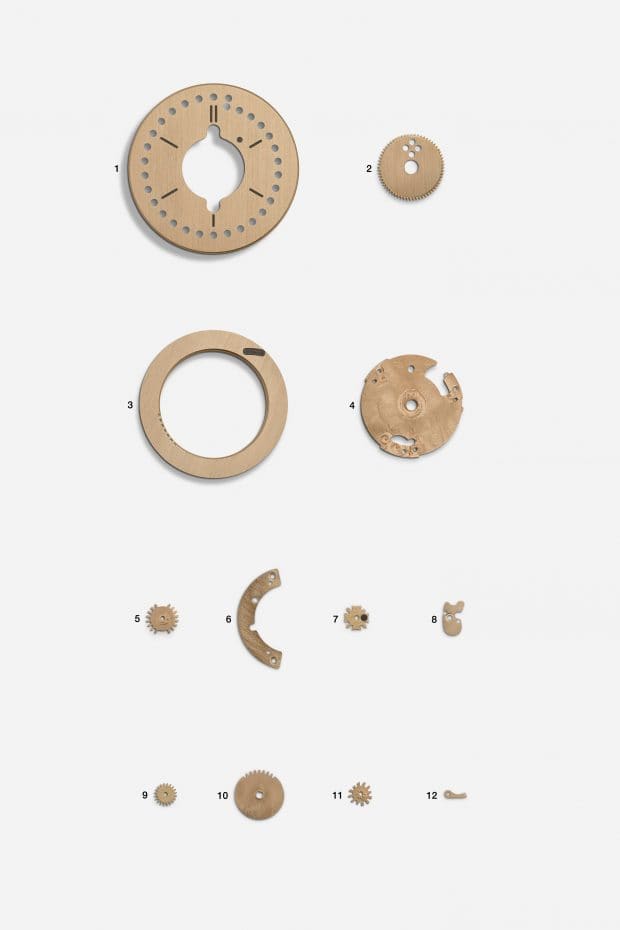
This is the bigger picture of what happens inside a perpetual calendar, but I’ve included a further explanation below.
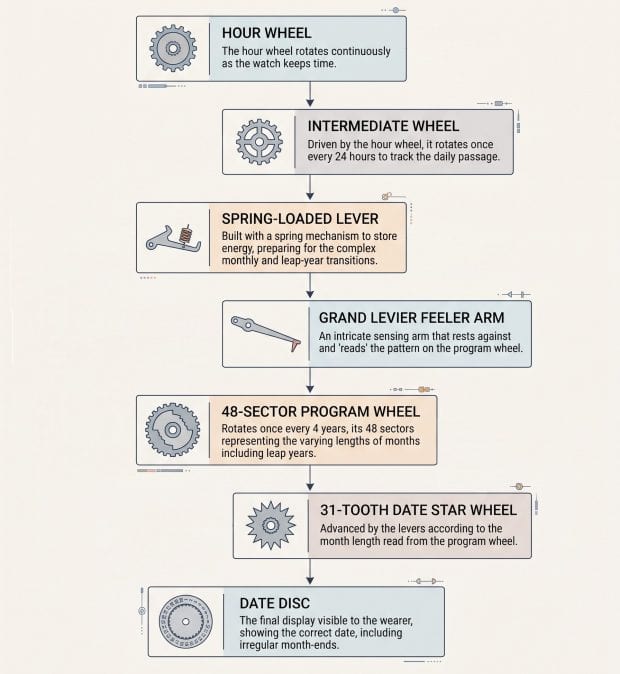
When midnight strikes on the final day of a short month, a large coordinating lever—historically termed the grand levier—reads the program wheel. The feeler arm on this lever drops into the active notch, and the physical depth of the fall dictates the total angular travel of the lever. As the lever’s opposite end carries multiple driving pawls or beaks, its extra stroke allows it to push the 31-tooth date star wheel past multiple teeth in a single rapid motion.
At the end of April, for instance, the deeper drop allows the lever to push the date star directly from 30 past 31 to 1. In standard Februaries, falling into the deepest notch enables the lever to swing wide enough to advance the date wheel across 28, 29, 30, and 31 in one bound, landing crisply on March 1st without requiring manual intervention.
Most perpetual calendars are accurate till the year 2100, because leap years divisible by 100 are not considered leap years (unless they are divisible by 400).
A satellite continually beams the date to your electronic devices, but this is hardly as poetic as a miniature mechanical brain computing the calendar through microscopic teeth and tensioned springs.
The Continual Evolution and Diversification of the Perpetual Calendar
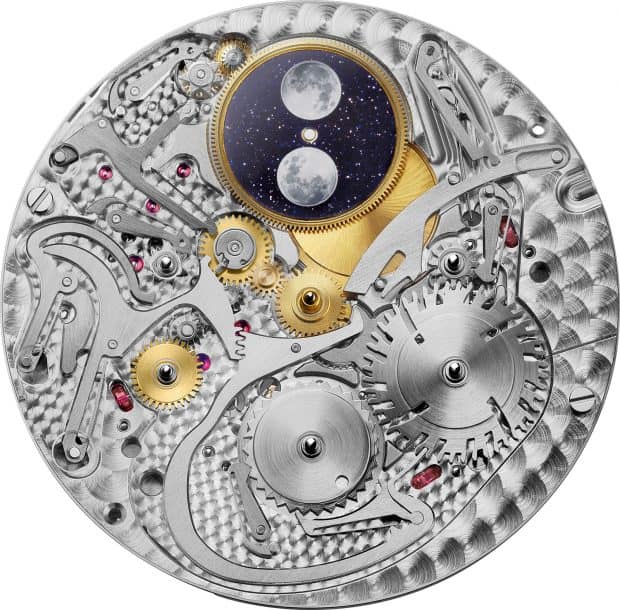
Nevertheless, Thomas Mudge’s perpetual calendar mechanism had shortcomings—it will have to be adjusted in 2100, must not be adjusted at certain times of day, and was visually busy—which inspired successors to improve on it.

By integrating a reduction module, the IWC Portugieser Eternal Calendar eliminated the need for its calendar to be adjusted in the years 2100, 2200 and 2300, endowing it with accuracy till the year 3999. This milestone in perpetual timekeeping is also armed with a moonphase accurate to one day every 45 million years. IWC’s Head of R&D Movements Christian Satzke developed it in 2024 based on the legendary Kurt Klaus’s 1980s module, and it went on to the clinch the Aiguille d’Or prize that year.

Another important contribution to perpetual calendar chronometry came from Stephen McDonnell in November 2015. His Legacy Machine Perpetual for MB&F eliminates its no-adjustment period (“dead zone”) by replacing the vulnerable grand levier system. He invented a patented mechanical processor that builds each month up by adding to a 28-day baseline, instead of subtracting from 31 days. By eliminating the need to skip over non-existent dates, this additive architecture prevents gears from clashing and creates an entirely foolproof, adjuster-safe perpetual calendar.

If you enjoy minimalism in this field of complicated watchmaking, I must vouch for Panerai, Parmigiani Fleurier and H. Moser & Cie, which have released exceptionally clean designs in recent years.
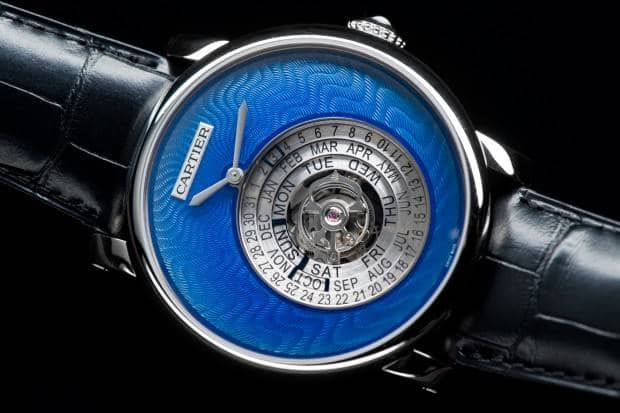
On the flipside, the inimitable Carole Forestier-Kasapi unveiled the maximalist Cartier Rotonde de Cartier Astrocalendaire at SIHH 2014, which reconfigured the perpetual calendar into a three-dimensional, multi-tiered amphitheater.
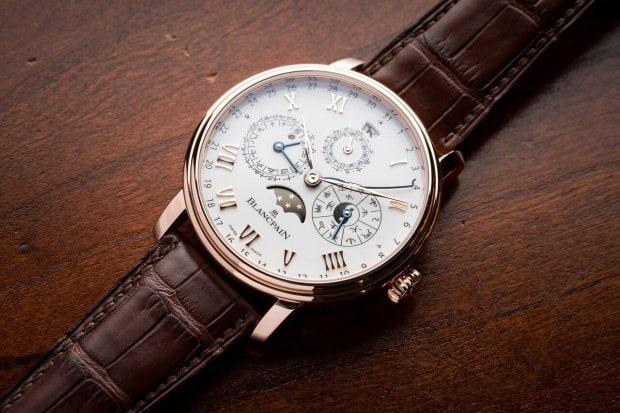
You might also have come across Chinese lunar calendar wristwatches made by manufactures like Blancpain and Parmigiani Fleurier, and the Islamic (Hijri) calendar wristwatches of Konstantin Chaykin and Parmigiani Fleurier, while Breguet’s antique Hijiri watches inevitably stir up much hubbub when they surface at auction once in a blue moon.
As the industry’s brightest minds couple the perpetual calendar with other complications, its price has inevitably soared, with Patek’s diamond-set grand complications retailing for millions. But if you’re in the market for a reliable perpetual calendar that doesn’t cost an arm and a leg, Frédérique Constant’s perpetual calendar is priced under US$10,000—widely regarded as the most affordable perpetual calendar from a trusted marque. However, Ochs Und Junior’s ongoing Perpetual Calendar series doesn’t price collectors out either, and it returned on October 16th 2026 with a new matte black silhouette and white gold details.
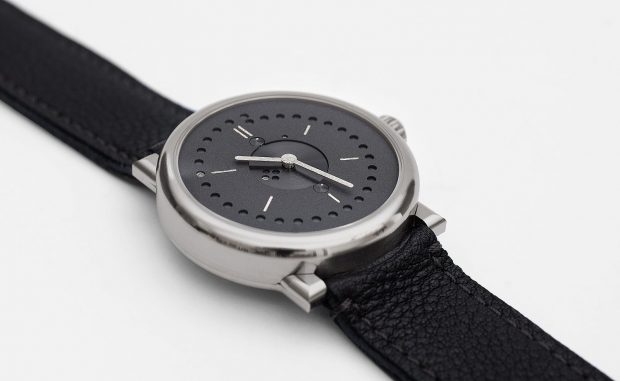
Introducing the Ochs Und Junior Perpetual Calendar Holiday Edition
The revered inventor of the Ulysse Nardin Freak, which was engineered from the ground up and comprises much fewer components than the average wristwatch, Dr. Ludwig Oechslin famously solved the perpetual calendar’s “dead zone” problem by replacing the delicate levers and springs with a system of rotating gears. This delightful breakthrough in the 1990s also made it the first perpetual calendar that could be adjusted both forwards and backwards.
In 2016, his eponymous brand Ochs Und Junior (Oechslin is the “big ox” in the brand’s name, and his son Giorgio is “Junior”) introduced its first Perpetual Calendar, which remains one of the most minimalist of perpetual calendar displays today.
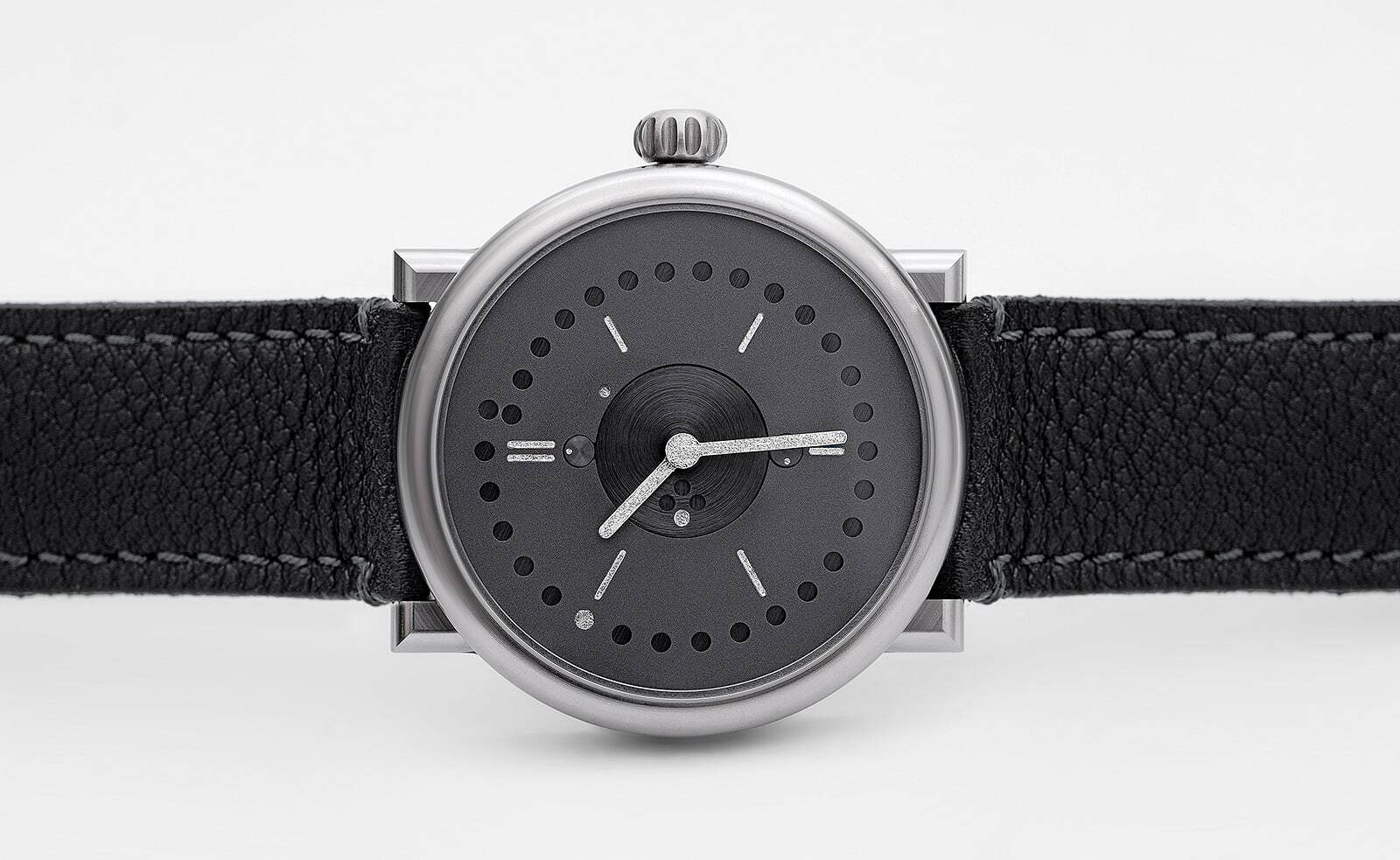
Encircling the hour and minute hands, a track of 31 dots indicates the date, while a four-dot diamond indicates the month—it’s January if it points to 1 o’clock, and it’s February if it points to 2. It’s a leap year if the outermost dot of the diamond is brightly colored, and it isn’t if another dot is highlighted. Its 60-hour power reserve is indicated below 12 o’clock, while a small seconds subdial runs above 6 o’clock.
Just in case, a “crown control dot” between 1 and 2 o’clock indicates whether it’s safe to adjust the date.
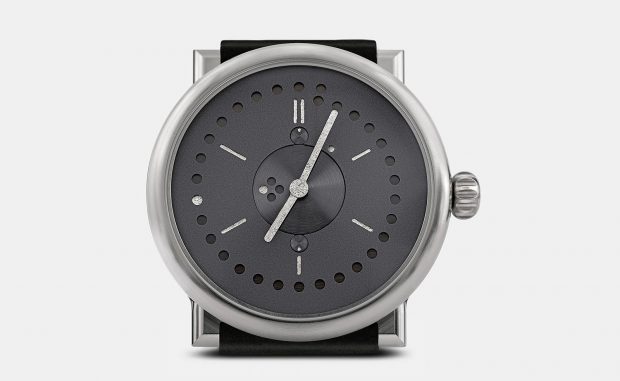
The new Holiday Edition of the Ochs Und Junior Perpetual Calendar sports a sandblasted and circular-grained anthracite dial, contrasted by white gold-accented hands, indices and dots.
Housed in a 42mm titanium case with 100m water resistance, it is paired with a black calfskin strap and is priced at CHF15,000.
Through such radical simplicity and mechanical wit, the perpetual calendar continues to evolve—proving there is always room to rewrite the rules while counting the days.