Entry luxury used to be a polite way of saying “starter watch.” In 2026 it means something more interesting. The brands are digging into their own archives, reviving names that once rode in cockpits, on racetracks, and in Art Deco shop windows, and pricing them where a first serious mechanical watch actually lives. The result is a crowded, genuinely exciting band between roughly $1,000 and $10,000, where heritage is the selling point and the movements are better than they have any right to be at the price.
Entry luxury watches in 2026 still run from $995 to $9,500: Hamilton’s Cushion from $995, the Longines Heritage Classic Sector Dial at $2,750, Tudor’s Black Bay 54 from $4,475, Omega’s steel Bond Seamaster at $8,600 and IWC’s olive Pilot’s Chronograph at $9,500.
This guide gathers the new and current entry luxury watches 2026 has put on the table so far, all checked against the brands’ own pages. Think of it as a map rather than a ranking: seven watches, seven different ideas of what a well-made watch should be, each with a story worth telling over dinner.
Under $5,000
Start with the floor, because the floor has never looked better. Hamilton’s American Classic Cushion Mechanical revives the brand’s Cushion Plain and Cushion Engraved models of 1926, and it does so with the kind of proportions that make modern watches look overfed. The cases come in 30mm and 34mm, square-shouldered and just 8.1mm thick, with a small seconds display at 6 o’clock, an open caseback, and dials in Arabic or Roman numerals. Inside is the hand-wound H-42, based on the ETA 7001, a slim movement descended from the Peseux 7001 of the 1970s, here upgraded with a Nivachron balance spring and a 57-hour power reserve. In our view, it is the most charming argument for a small watch in years. Steel models are $995, and gold PVD versions are $1,095.
Longines makes the same argument from its own archive. The Heritage Classic collection, the brand writes, is “inspired by iconic models from the 1930s and 1940s,” and the Sector Dial is the reference that carries that idea on the U.S. site. Ref. L2.828.4.73.0 is a 38.50 mm stainless steel watch with an opaline ivory dial, on a leather strap with a buckle. Longines describes a self-winding mechanical movement beating at 25,200 vibrations per hour, with a power reserve of up to 72 hours, beneath a scratch-resistant sapphire crystal with anti-reflective coating on the underside. Water resistance is 3 bar. The U.S. price listed for this reference is $2,750, which sits between Hamilton’s cushion case and the Gallet Flying Officer.
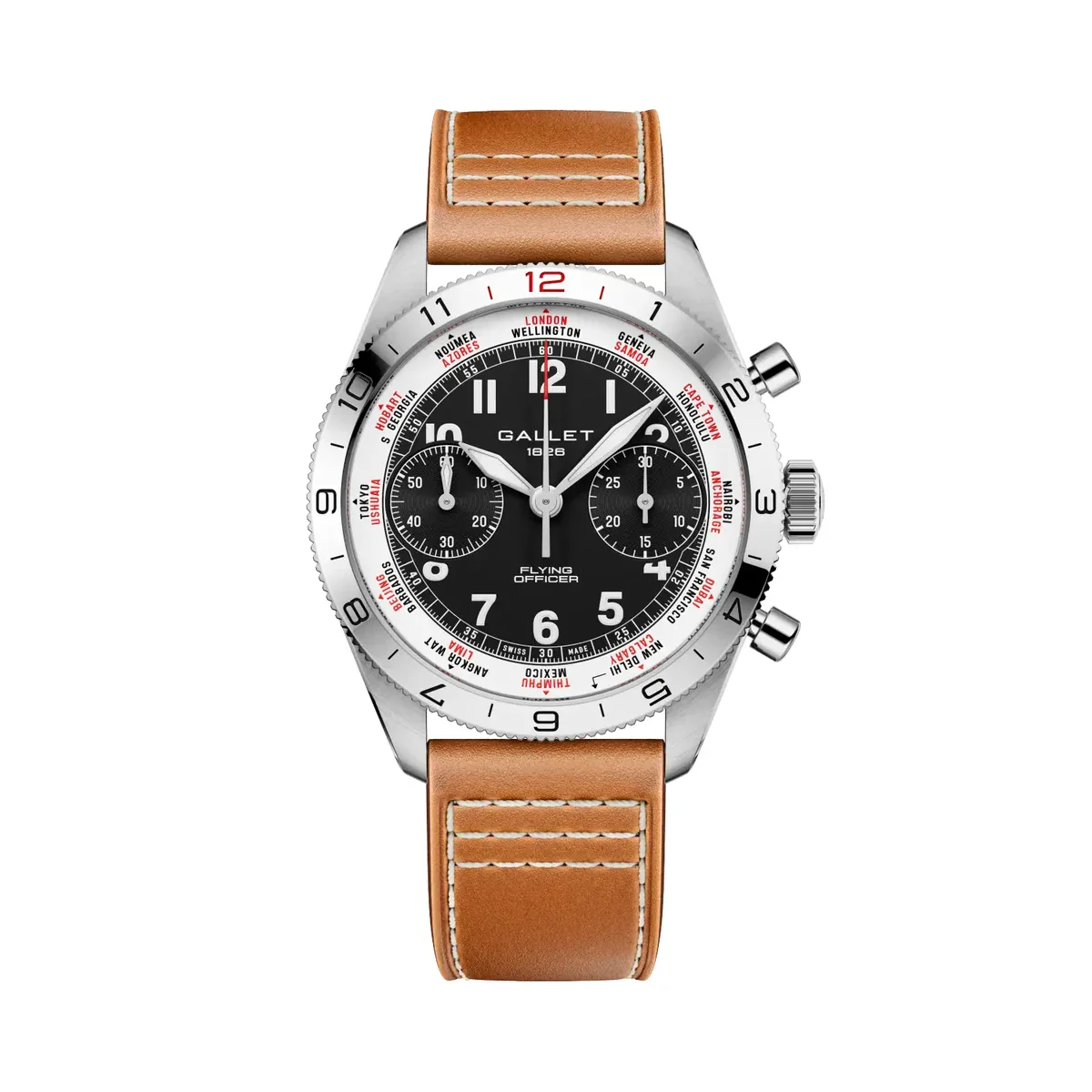
Gallet is a name to know if you have never heard it. The Swiss house first introduced the Flying Officer in 1939 as a companion to the earliest intercontinental flights, with a rotating bezel that let pilots track the time at upcoming refueling stops. Harry S. Truman wore one and called it “the most elaborate watch [he] ever saw,” which is the sort of endorsement no marketing department could invent. Today’s Flying Officer is reimagined with an updated city ring whose time zones follow modern global gateways, and the brand notes, plainly, that the watches are manufactured by Breitling.
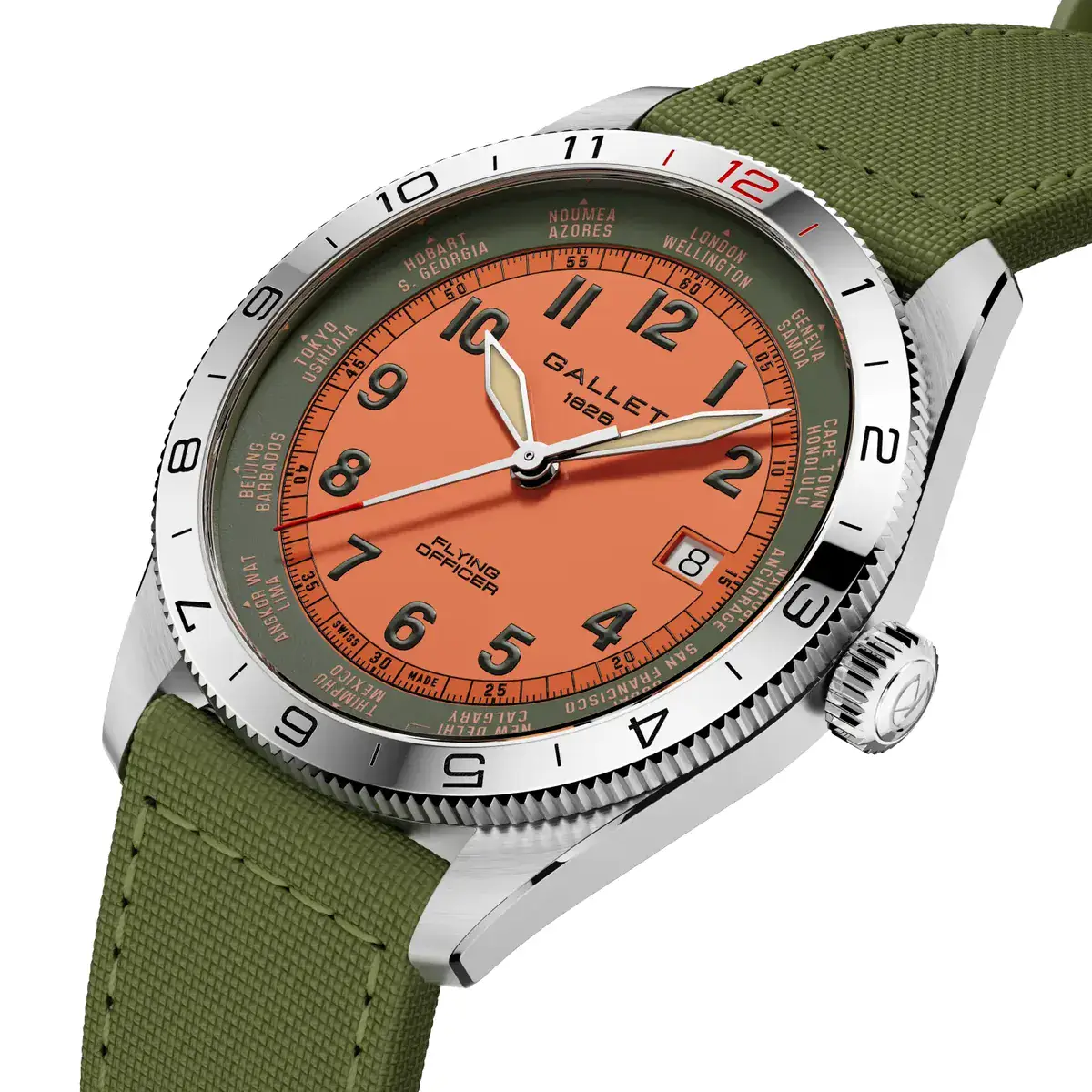
The collection splits into two families. The Flying Officer Automatic 40 measures 40mm by 10.67mm in stainless steel, is water resistant to 100 meters, and runs on the self-winding Gallet 17 at 28,800 vibrations per hour with roughly 38 hours of reserve. The Flying Officer Chronograph 40 keeps the 40mm diameter, grows to 15.02mm thick, and swaps in the self-winding Gallet 23, which records quarter seconds and 30 minutes and holds about 65 hours of reserve. Gallet lists more than 50 dial-and-strap combinations across fabric, leather, rubber, and steel, so this is a watch you configure as much as you choose. The Automatic starts at $2,900 (some variants are $3,100), and the Chronograph runs $4,400 to $4,600.
A brief digression on Hanhart, because the German pilot’s-watch specialist delivered this season’s best story in the bracket. Its Steve McQueen Limited Edition No.1 is dedicated to the actor’s own Hanhart 417 ES, the chronograph built between 1953 and 1962 for the newly formed West German air force, which photographs show on McQueen’s wrist from 1963 at races and on film sets. The reissue keeps the original 39mm case, adds McQueen’s small signature to the black dial, Old Radium-toned Super-LumiNova, Hanhart’s signature red pusher, and a hand-wound flyback, the Sellita AMT5100 M with 58 hours of reserve. It is limited to 300 pieces, and Hanhart’s own page now lists it as sold out, which tells you everything about demand at this level.
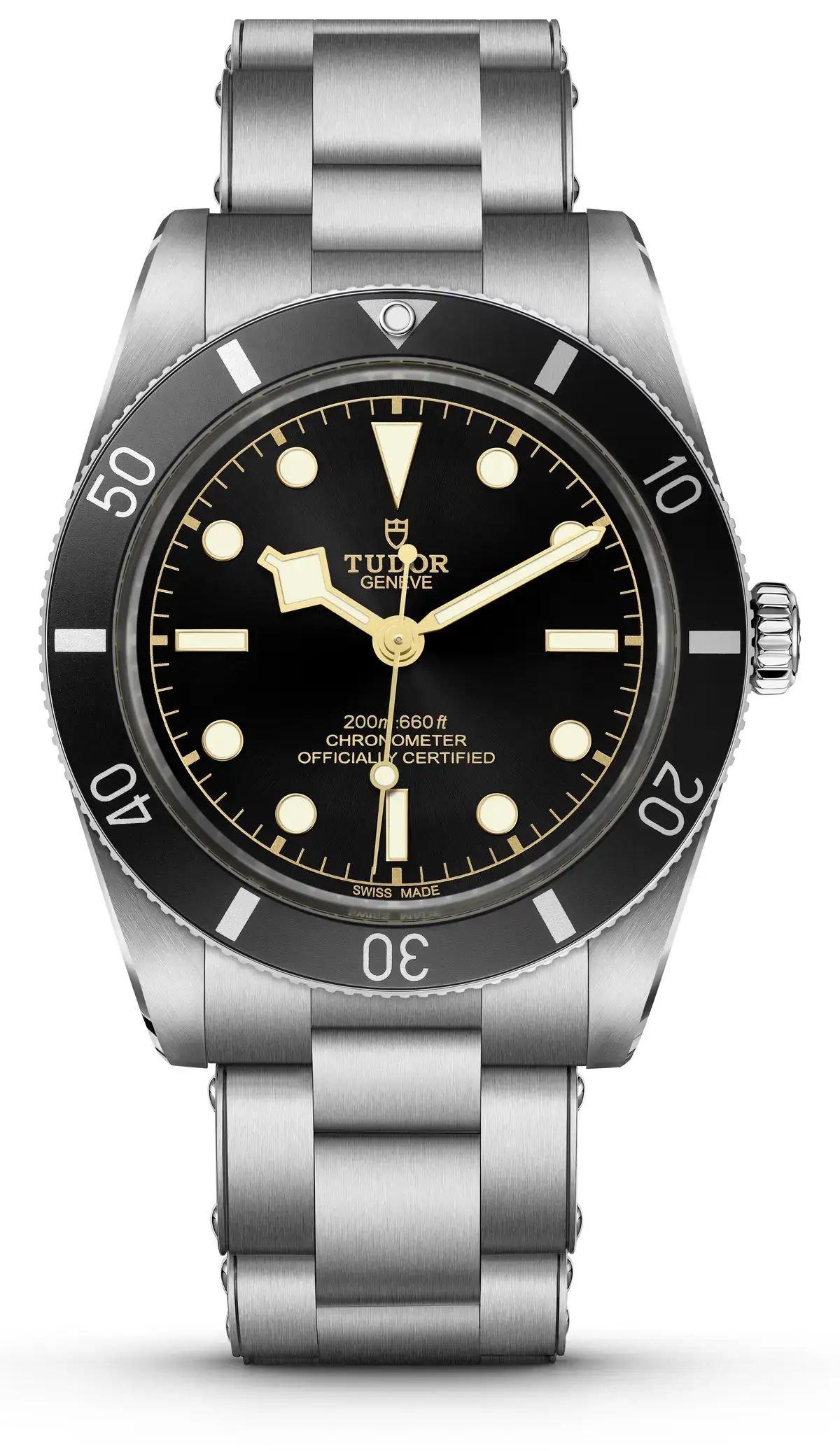
Tudor’s Black Bay 54 is the dive watch this bracket has been missing. The brand calls it “the most true-to-form example of TUDOR’s first divers’ watch, the reference 7922.” The case is 37 mm stainless steel and 11.2 mm thick, with a domed sapphire crystal and a screw-down crown stamped with the Tudor rose. The aluminum bezel insert is, in Tudor’s words, “devoid of minute graduations,” and the black dial is domed. Manufacture Calibre MT5400 is COSC-certified and self-winding, with a silicon hairspring, a tolerance of −2/+4 seconds, and a power reserve of about 70 hours that Tudor calls “weekend-proof.” It is waterproof to 200 meters. The steel bracelet with the T-fit clasp is $4,725. The black rubber strap is $4,475. Both carry a five-year transferable guarantee.
Under $10,000
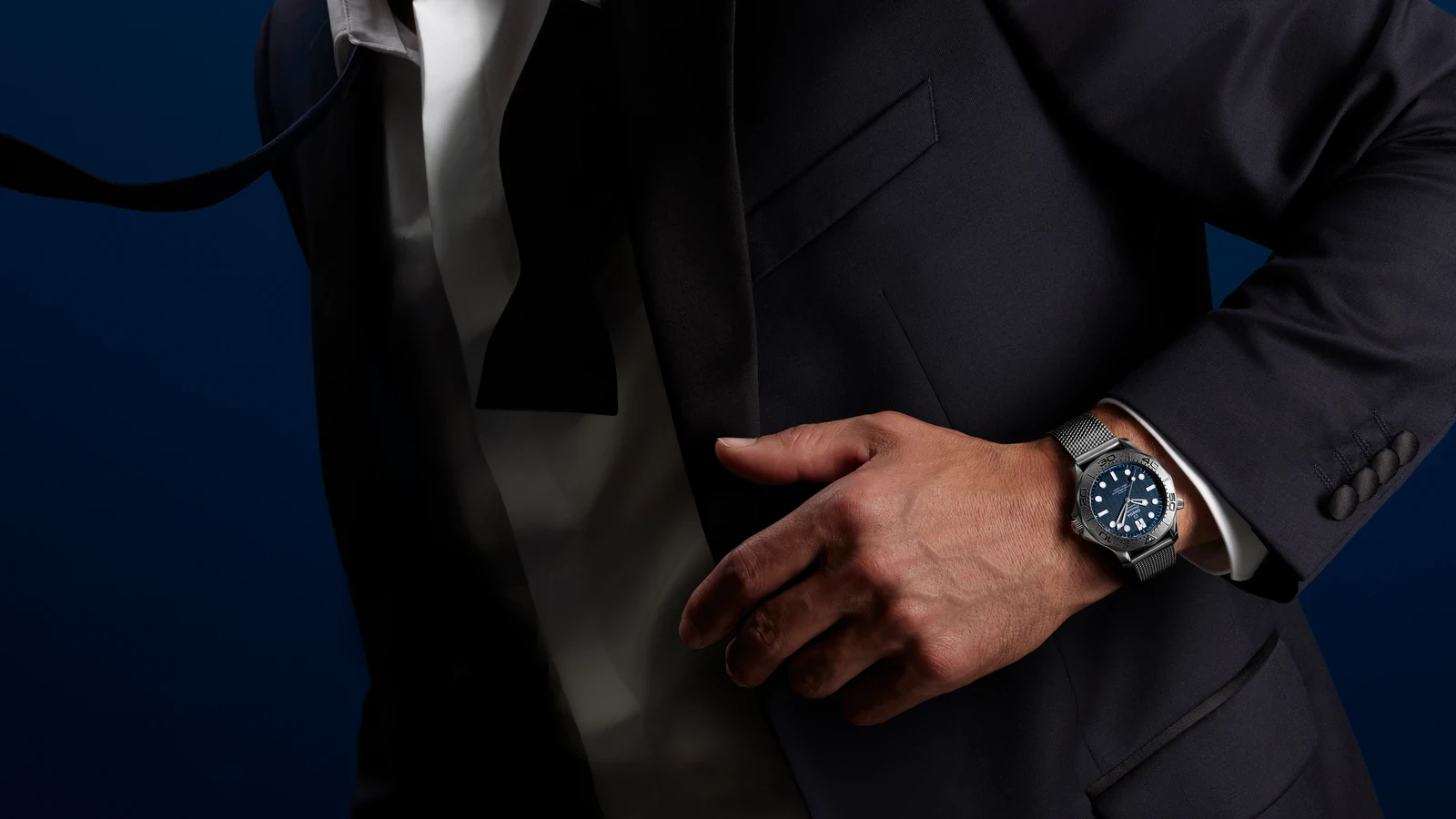
Step up a tier and the conversation turns to icons. Omega marked Global James Bond Day on October 5 with a new steel Seamaster Diver 300M James Bond edition, Ref. 210.30.42.20.03.004, and its Spectre counterpart. The Bond model has a 42mm steel case, 14.23mm thick, with a unidirectional bezel carrying a grade 5 titanium ring on which the diving scale is laser-ablated in positive relief, and a blue aluminum dial. Inside is the OMEGA 8806 James Bond calibre, a Co-Axial Master Chronometer certified by METAS and resistant to magnetic fields of 15,000 gauss, with a sun-brushed rotor bearing gun-barrel decoration and 55 hours of reserve. Water resistance is 300 meters. For a watch with this much cultural weight, it is also refreshingly available: the steel editions are not limited. Each steel edition is $8,600.
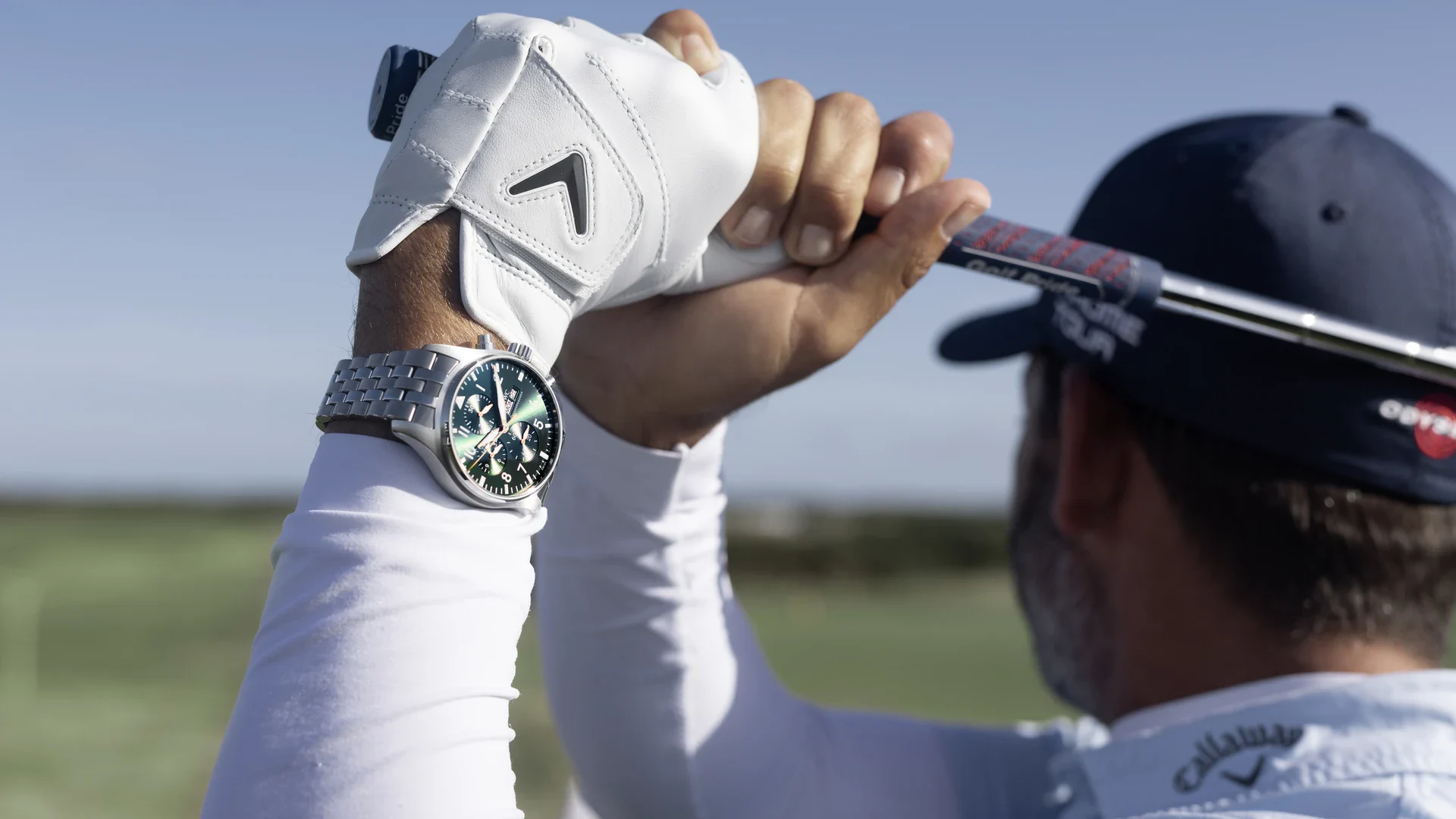
IWC, meanwhile, went to the golf course. At the 25th Alfred Dunhill Links Championship in St Andrews, where the brand is official timing partner for the sixth straight year, IWC brand ambassador Pablo Larrazábal wore the new Pilot’s Watch Chronograph Ref. IW378008. It is a 43mm stainless steel case, 14.8mm tall, with an olive-green dial, white Super-LumiNova numerals and indices, and gold-plated hands filled with luminous material. The day and date sit at 3 o’clock, the screw-in crown keeps it water resistant to 10 bar, and the IWC-manufactured 69385 caliber, a 33-jewel automatic chronograph of 242 components running at 4Hz with 46 hours of reserve, shows through a sapphire caseback.
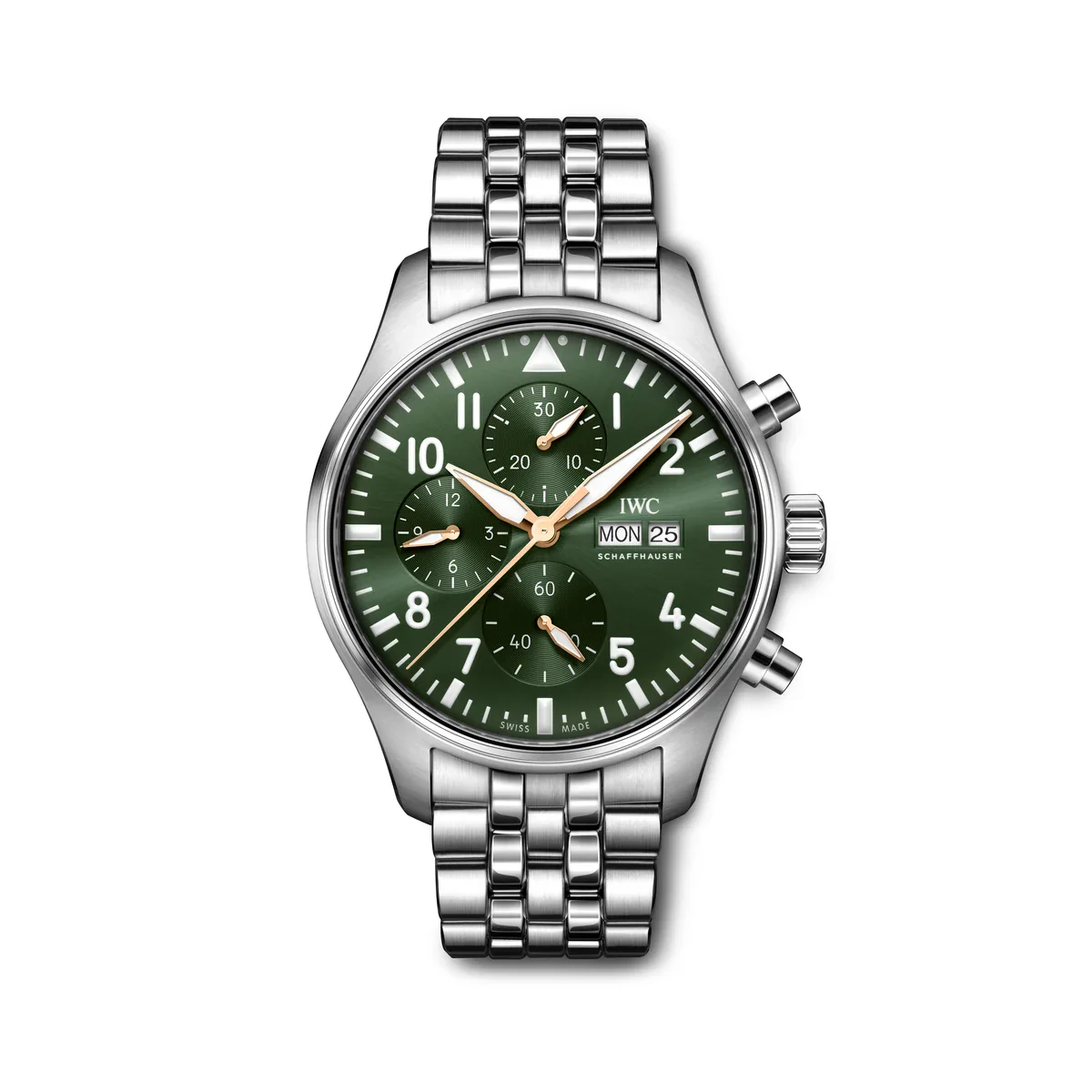
What sets it apart is the delivery box. IWC supplies both a five-link steel bracelet and an olive-green rubber strap, each fitted with its EasX-CHANGE system so you can swap them without tools, and the brand extends its standard two-year warranty to eight years when the watch is registered in its My IWC care program. That is two watches’ worth of personality in one reference, and a meaningful bit of peace of mind. The IW378008 is $9,500 (excluding tax) in the U.S.
Read together, these seven watches say a lot about where the market is heading. Every one of them leans on a real archive: a 1926 cushion case, a 1930s sector dial, a 1939 world-traveler’s bezel, a 1954 dive watch, a 1950s military chronograph, six decades of Bond, and IWC’s cockpit-instrument dials. Every one of them uses a movement with a pedigree, whether that is a modernized Peseux, a Longines self-winding caliber, a Breitling-made caliber, Tudor’s Manufacture Calibre MT5400, a Sellita flyback, a Master Chronometer, or an IWC-manufactured chronograph. And nearly all of them can be bought today, at a boutique or online, without a waitlist. If you have been following our look at the waitlist illusion, that last point matters more than it might seem.
Our pick for a first serious watch? The Hamilton, if you want to fall in love with small, slim, hand-wound watchmaking for about a thousand dollars, and the Gallet Flying Officer Chronograph if you want one watch that can handle travel, timing, and a dinner jacket. The Tudor is the one if that first watch should also be a real diver, at a 37 mm size the 1954 original would recognize. The Omega and the IWC are destination watches, the kind that end the search rather than begin it. Either way, entry luxury in 2026 is no longer the first rung of the ladder. For a growing number of collectors, it is the whole point.
Timely FAQs
What counts as an entry luxury watch?
How much is the Gallet Flying Officer?
What movement is in the Hamilton American Classic Cushion Mechanical?
Is the Omega Seamaster Diver 300M James Bond edition limited?
