Classic car collectors have had their concours for nearly a century: the lawns, the judges with clipboards, the long-hidden barn find that suddenly steals the show. Watch collectors, for all their obsession with provenance and originality, have never had quite the same stage. This November in Geneva, they finally get one, and it belongs to the oldest manufacture in continuous operation, Vacheron Constantin.
The Vacheron Constantin Concours d'Élégance Horlogère is the first Concours d'Élégance in haute horlogerie. Its jury shortlisted 34 Vacheron Constantin watches made between 1755 and 1999 from more than 550 entries, exhibited in Geneva November 4–8, 2026, with winners named November 10.
The Vacheron Constantin Concours d’Élégance Horlogère, an initiative by Phillips in Association with Bacs & Russo, has named its 34 finalists, chosen from more than 550 watches submitted by their owners. Billed as a first for a Concours d’Élégance in haute horlogerie, the competition opened in early 2026 to pocket watches and wristwatches made in the Maison’s workshops between 1755 and 1999. The finalists will be shown to the public at the Hôtel Président Wilson from November 4 to 8, during Phillips’ Geneva auction week, before going home to their owners.
The prize-giving follows on November 10 at the same hotel, where the jury will reveal a winner in each of seven categories: Chronographs, Métiers d’Art, Chronomètre Royal, Astronomical Complications, Multiple Complications, Design, and Chiming Mechanisms. The ceremony may also see an eighth award, Best in Show – the Jury’s Special Prize. If the calendar sounds familiar, it should, since the same fortnight also brings the GPHG awards to Geneva, making early November the busiest stretch of the horological year.
How 550 Entries Became 34
The vetting sounds closer to a museum acquisition than a beauty contest. Every submission was first examined by Vacheron Constantin’s master watchmakers and specialists from its Heritage department, who checked authenticity, eligibility, documentation or certification, and whether each watch suited the category its owner had chosen. From there, 95 timepieces went to the jury, selected on criteria including history, rarity, and impact on watchmaking in general and on Vacheron Constantin in particular.
Working under sworn supervision, the jurors assessed each of those 95 individually and collectively, then awarded points to their favorites in every category. The highest scorers became the finalists. The jury is co-chaired by Aurel Bacs, senior consultant at Phillips in Association with Bacs & Russo, and Christian Selmoni, Vacheron Constantin’s director of style and heritage, and brings together watchmakers, historians, designers, collectors, and authors.

“Dedicated to the world of watchmaking and specifically to Vacheron Constantin, this first Concours d’Élégance is a rare opportunity for our clients to share their passion for our Maison’s creations,” says Selmoni. “Our aim was to engage the community of Vacheron Constantin watch collectors and enthusiasts, and we have had a fantastic response, with an impressive number of entries in all seven categories. This includes watches that are not only remarkable but also rare and, in some cases, the only known example of their kind. The high number of entries and exceptional quality of the shortlisted watches presented the jury members with some real challenges in selecting the winners. There were some lively discussions!”
That last line is easy to believe once you see the field. The Maison also notes that a few of these pieces are helping it fill gaps in its own archives, which is a striking admission from a house that has been keeping records since the 18th century.
The Finalists
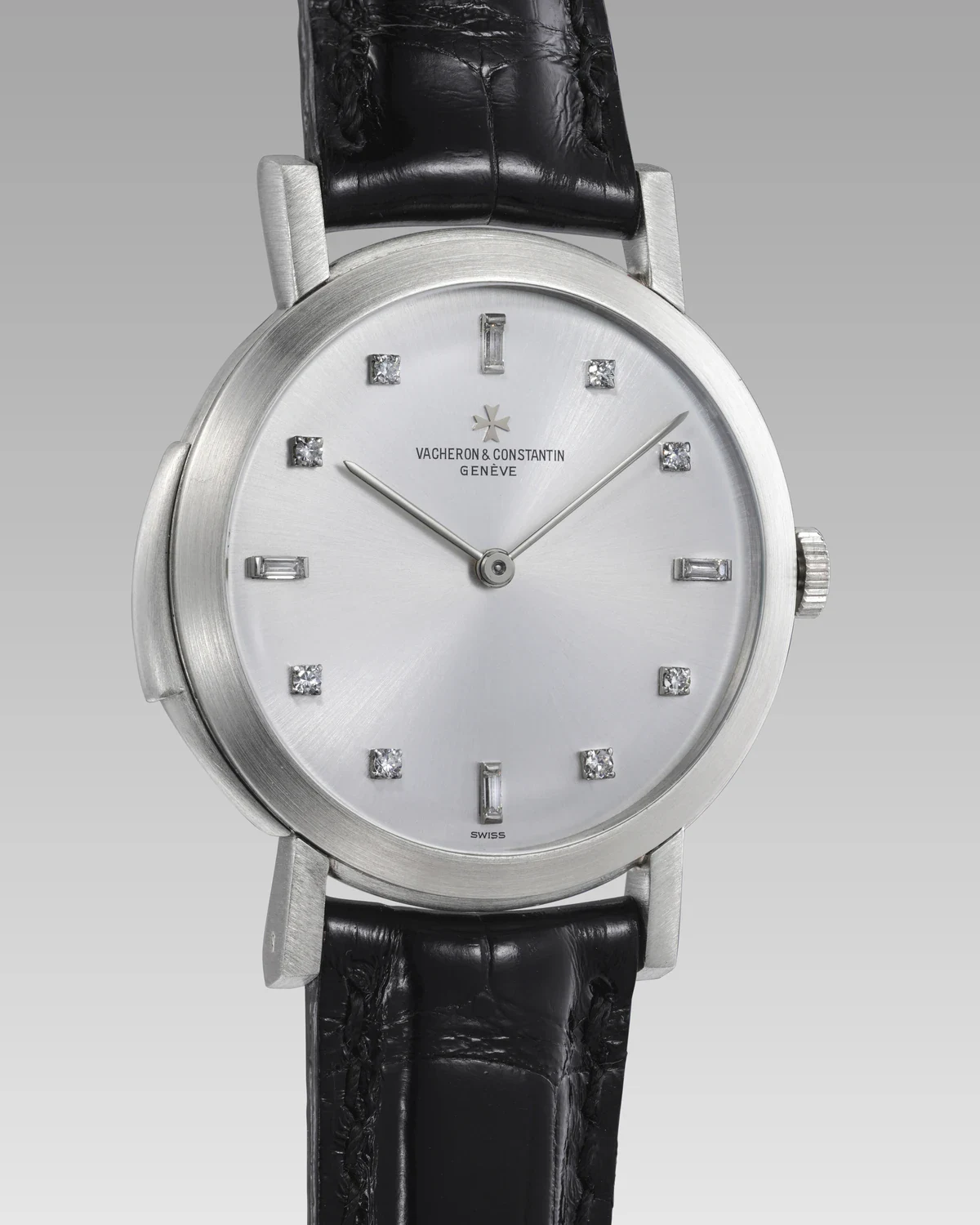
The oldest finalist is a quarter-hour repeater pocket watch from 1822/1823, wound and set by key, in a red gold case with a guilloché dial. At the other extreme of the chiming category sits a one-off platinum minute repeater from 1962, Ref. 6448, with an ultra-thin 13-ligne movement and diamond hour markers, alongside two skeletonized Ref. 30030 repeaters from 2003 and 2006 and a 1926 platinum repeating pocket watch.
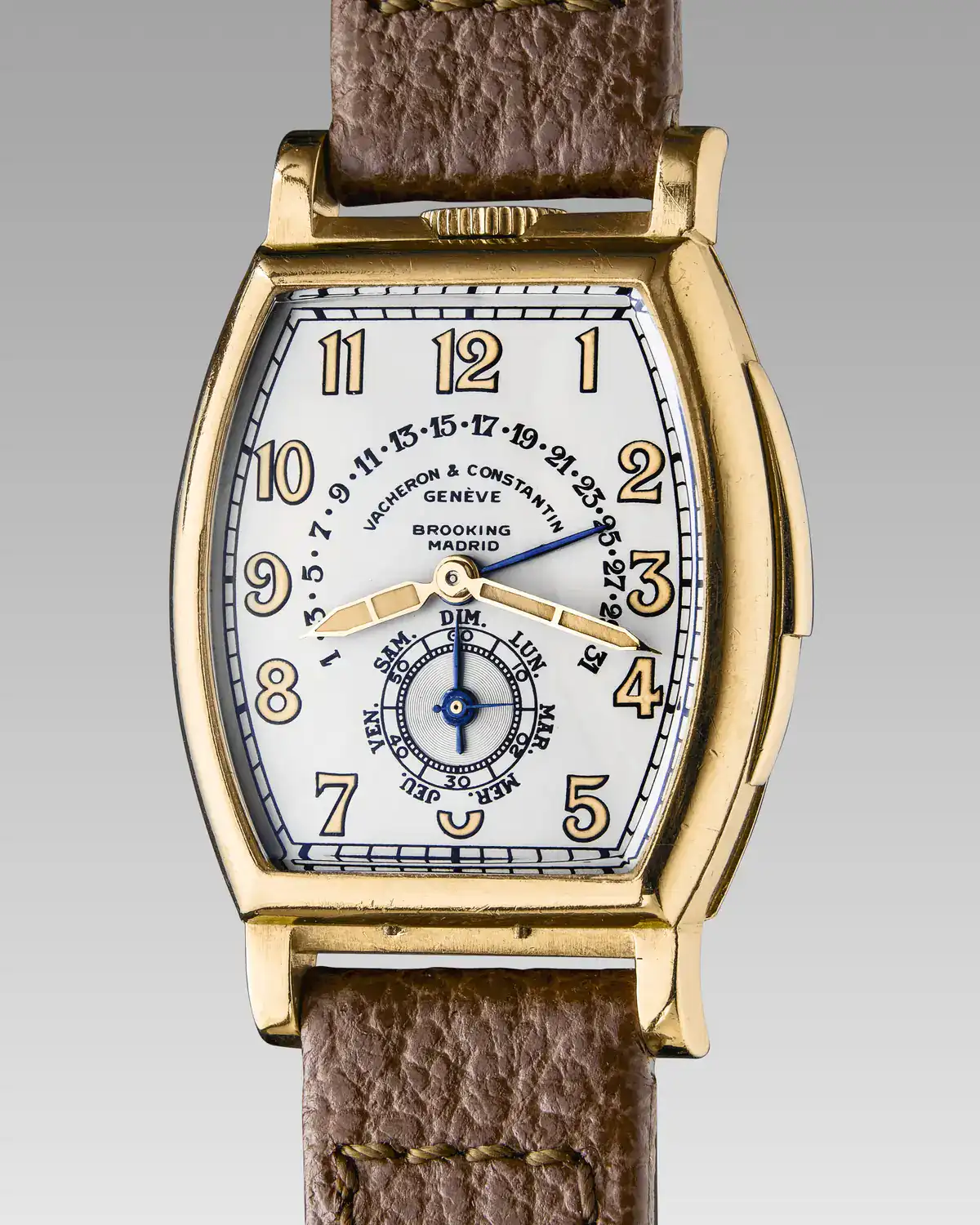
Multiple Complications may be the most dramatic shortlist. It includes a bespoke 1940 tonneau minute repeater nicknamed “Don Pancho,” a one-off with a retrograde full date and a dial faithfully reproduced to match the original, as well as a 1901 red gold pocket watch combining a minute repeater with a split-seconds chronograph. Two 1993 Ref. 30020 perpetual calendar minute repeaters, one platinum and one yellow gold, and a 1992 platinum Ref. 49005 perpetual calendar chronograph made for Asprey in an edition of fewer than five complete the group.
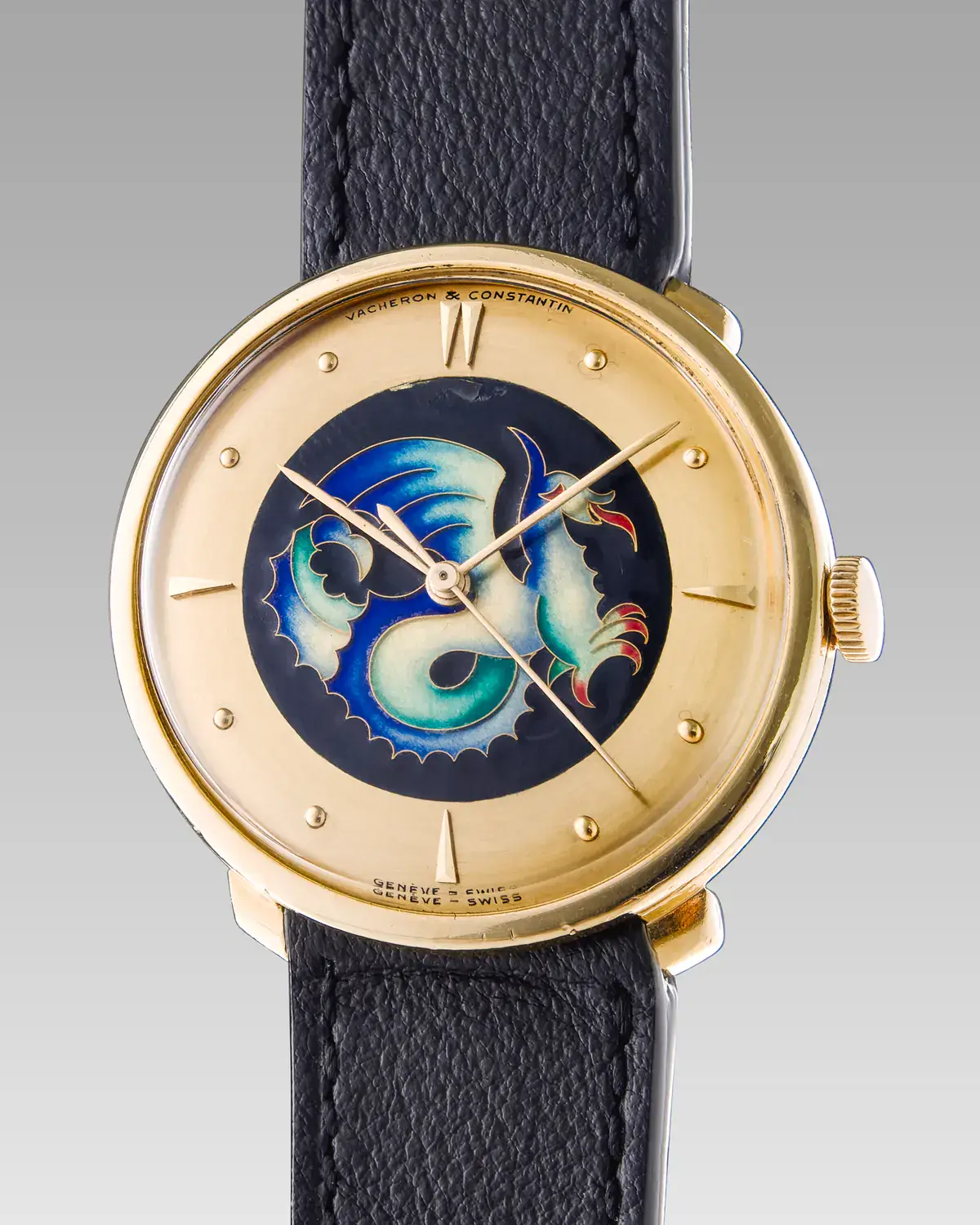
The Métiers d’Art finalists read like a tour of mid-century enamel. A 1957 Ref. 6187 carries a Grand Feu cloisonné and miniature enamel dial with a dragon on the rear dial, while the 1950 Ref. 4308 and the 1951 Ref. 4724 “Les Amériques” both feature a map of the Americas. They are joined by a 2002 Ref. 43050 with a polychrome enamel map of Europe and a 1930 pocket watch with sapphire-set bezel and markers, sold to King Alexander I of Yugoslavia. Readers who followed the Maison’s artisan residency with The Met will recognize the lineage.
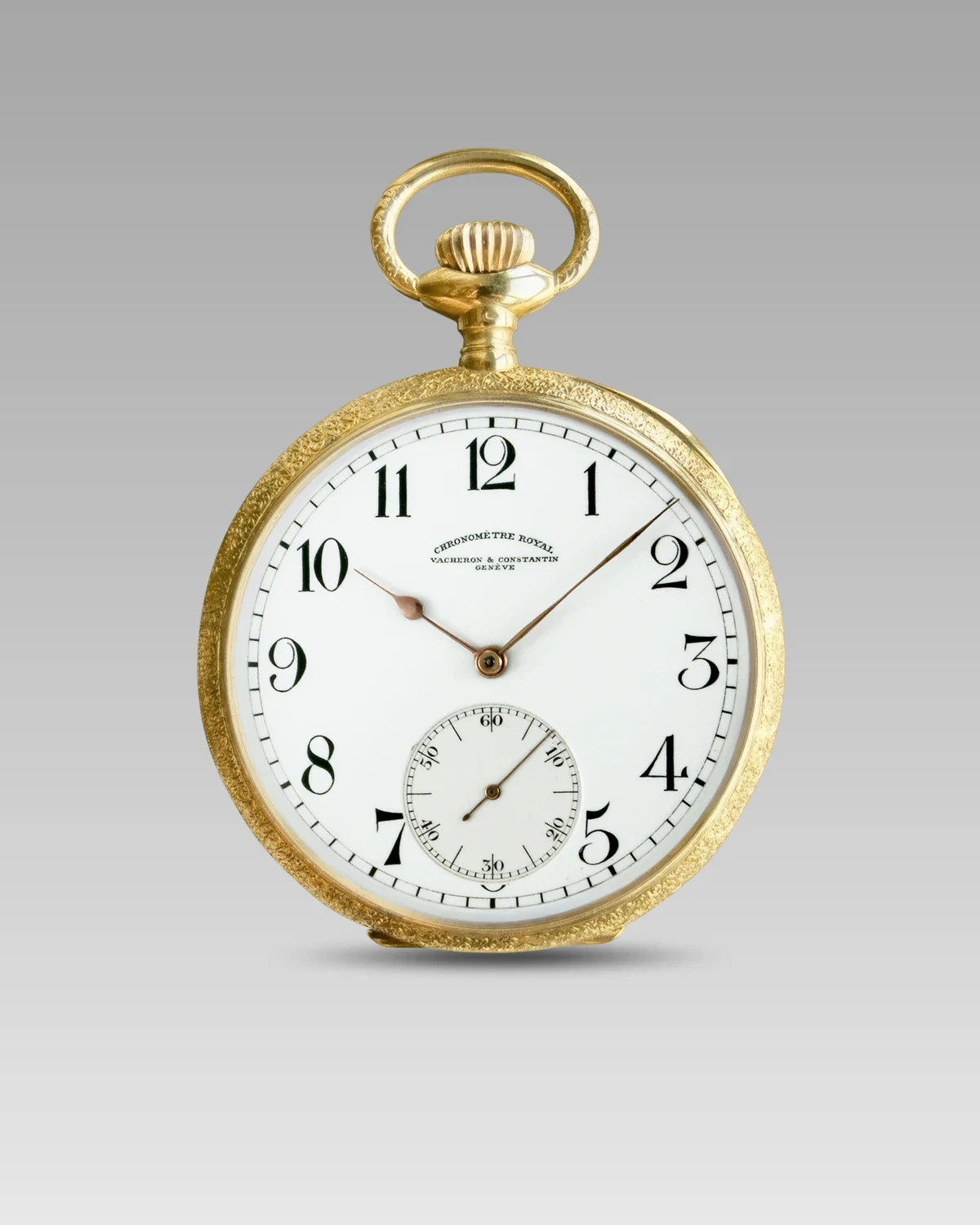
The Chronomètre Royal category spans more than half a century, from a 57mm 1911 pocket watch with remarkable case engraving and blue enamel hour markers to a 1976 Ref. 2215 in a steel case somewhere between square and rectangular. In between are a 1956 Ref. 6111 with its complete set, including the original chronometer certificate and gold strap, a 1957 Ref. 6167 double-signed by Türler and Gay Frères, and a 1966 Ref. 6694 with a diamond on the Maltese cross.
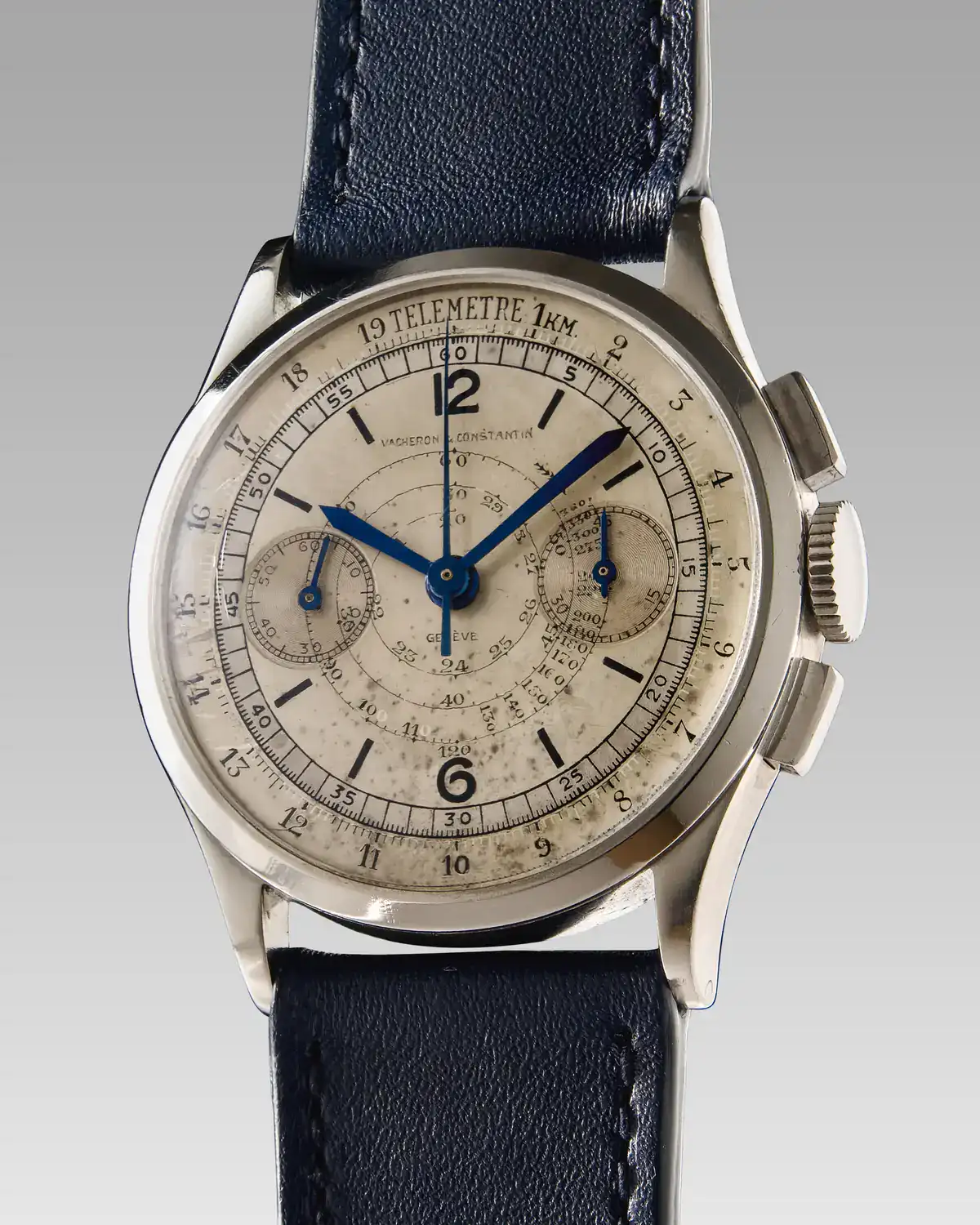
Chronographs lean on the 1940 Calibre 295, described as the first “modern” chronograph movement, found here in an extremely rare steel Ref. 4072 and a rose gold Ref. 4083 with a uniquely shaped case, alongside a 1947 Ref. 4178 and a 1929 single-pusher pocket chronograph. Astronomical Complications brings full-calendar moon phases from the 1940s and 1950s, including a single-piece platinum Ref. 4764, plus skeletonized perpetual calendars from 1987 and 1999. Design, our favorite category on paper, includes a 1952 Ref. 4695 known as the “Horn of Plenty with Ears,” a probable one-of-a-kind 1957 Ref. 6213 world timer with Louis Cottier’s universal time mechanism, and a 1997 Ref. 43050 with an engraved map of Thailand.
“Driven by its own history, each watch on display has made this first Concours d’Élégance Horlogère truly remarkable,” says Bacs. “It is a dream for me to take part in such an event in our field of expertise. I was deeply moved to discover the number of entries, having been completely unprepared for such an enthusiastic response from the international community. As the quality of the watches was so exceptionally high, it proved almost impossible to weigh beauty against rarity, and incredibly difficult to strike the right balance between family history (inherent in a watch) and horological complexity. The jury nevertheless succeeded, which is a great achievement!”
Coming from the man who has hammered down many of the most important watches of the past two decades, that is no small compliment. The auction room rewards rarity with a number, and the brand’s newest pieces, like the Overseas ultra-thin perpetual calendar, are judged on the present. This concours asks a gentler question: which watches, worn and handed down for generations, best tell the story of a 271-year-old house. The exhibition is open to the public at the Hôtel Président Wilson in Geneva from November 4 to 8, 2026, and the winners will be revealed on November 10.
| Specification | Detail |
|---|---|
| Event | The Vacheron Constantin Concours d'Élégance Horlogère |
| Organizers | Vacheron Constantin; an initiative by Phillips in Association with Bacs & Russo |
| Eligible Watches | Vacheron Constantin pocket watches and wristwatches made 1755–1999 |
| Entries | More than 550 |
| Jury Shortlist | 95 timepieces |
| Finalists | 34 |
| Categories | Chronographs, Métiers d'Art, Chronomètre Royal, Astronomical Complications, Multiple Complications, Design, Chiming Mechanisms |
| Jury Co-Chairs | Aurel Bacs and Christian Selmoni |
| Public Exhibition | November 4–8, 2026, Hôtel Président Wilson, Geneva |
| Awards Ceremony | November 10, 2026, Hôtel Président Wilson, Geneva |
| Prizes | Seven category winners, plus a possible Best in Show – the Jury's Special Prize |
Timely FAQs
What is the Vacheron Constantin Concours d'Élégance Horlogère?
When and where can the public see the finalists?
What are the categories in the Vacheron Constantin Concours d'Élégance Horlogère?
