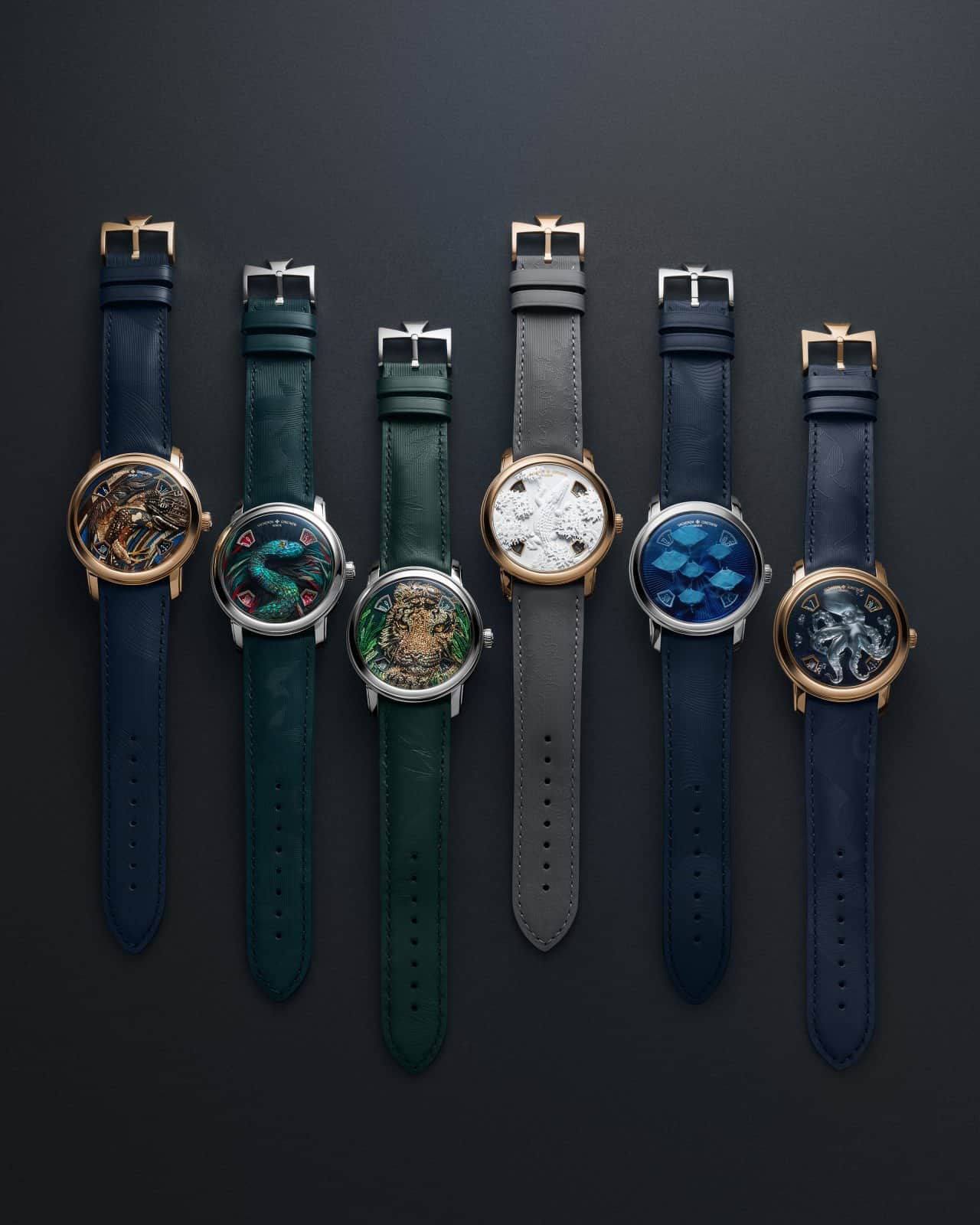
Vacheron Constantin has unveiled Métiers d’Art Tribute to the Animal Kingdom: six concept watches created under its “One of Not Many Crafts Programme,” each pairing an outside artisan with the Maison’s watchmakers. Featherwork, glass sculpting, micro-origami, gold embroidery, paper sculpting and wood marquetry — crafts rarely if ever seen in horology — each rendered as a wildlife scene on a dial freed by the Calibre 2460 G4’s peripheral displays.
Vacheron Constantin's Métiers d'Art Tribute to the Animal Kingdom is a series of six concept watches made with six outside artisans, each practicing a craft new to watchmaking: featherwork, glass sculpting, micro-origami, gold embroidery, paper sculpting and wood marquetry. Every piece runs the Calibre 2460 G4, whose four peripheral apertures leave the dial free as a canvas, and each artisan had to work within 4 millimeters between dial and crystal inside a 42-millimeter case.
The world’s oldest continuously operating watch manufacture has spent more than 270 years accumulating the traditional métiers d’art — guillochage, engraving, enameling, gem-setting. What it announced this week is something different: an admission that the most interesting crafts of the next century may currently live outside watchmaking entirely, and a programme built to bring them in.
What Is the One of Not Many Crafts Programme?
The initiative invites artisans whose disciplines exist far from horology — a feather artist trained at the atelier of Jean Paul Gaultier, a glass sculptor working in the Venetian tradition, a micro-origami master — and challenges them to transpose their craft onto the scale of a watch dial, within the constraints of a fully functional timepiece. Vacheron Constantin frames it as creative incubation rather than commission work.
“By inviting practices rarely associated with horology onto the watch dial, the ‘One of Not Many Crafts Programme’ expands the creative vocabulary of Métiers d’Art within watchmaking,” said Christian Selmoni, the Maison’s Legacy and Style Director, in the announcement. Product & Creation Director Sandrine Donguy called it part of a mission of “pioneering unique techniques… often integrating crafts previously unseen in watchmaking.”
The exchange ran in both directions: the finished watches emerged from dialogue between the independent artisans and Vacheron Constantin’s own specialists, producing new tools, techniques and working methods on both sides. It is the same instinct behind the Maison’s recent Métiers d’Art Tribute to the Quest of Time, pushed a step further outside the walls of the manufacture.
Why the Calibre 2460 G4 Makes It Possible
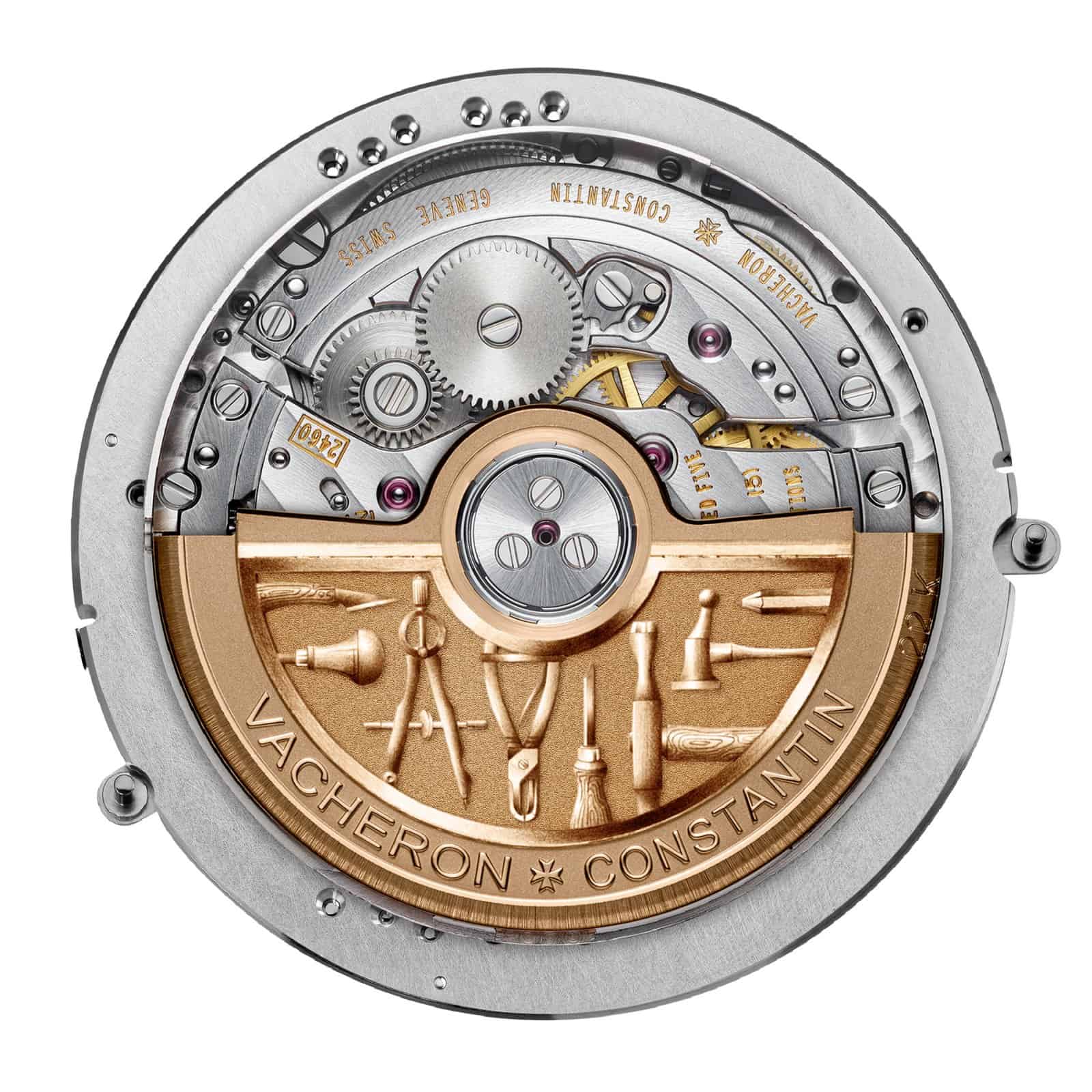
Every watch in the series runs the Calibre 2460 G4, Vacheron Constantin’s unconventional movement that displays hours, minutes, day of the week and date through four apertures at the extremities of the dial. With no hands sweeping the center, the entire dial becomes a canvas — which is precisely the point. The Maison’s watchmakers adapted the calibre’s features and finishes to each piece, and two signature elements unite the series: a 22K gold oscillating weight hand-engraved with motifs inspired by artisans’ tools, and a dedicated embossed strap echoing each dial’s visual language.
The constraint the artists worked inside is brutal: a 42-millimeter case, 12.9 millimeters thick, offering no more than 4 millimeters between the dial surface and the sapphire crystal.
The Six Watches
Feathersnake — Featherwork by Julien Vermeulen
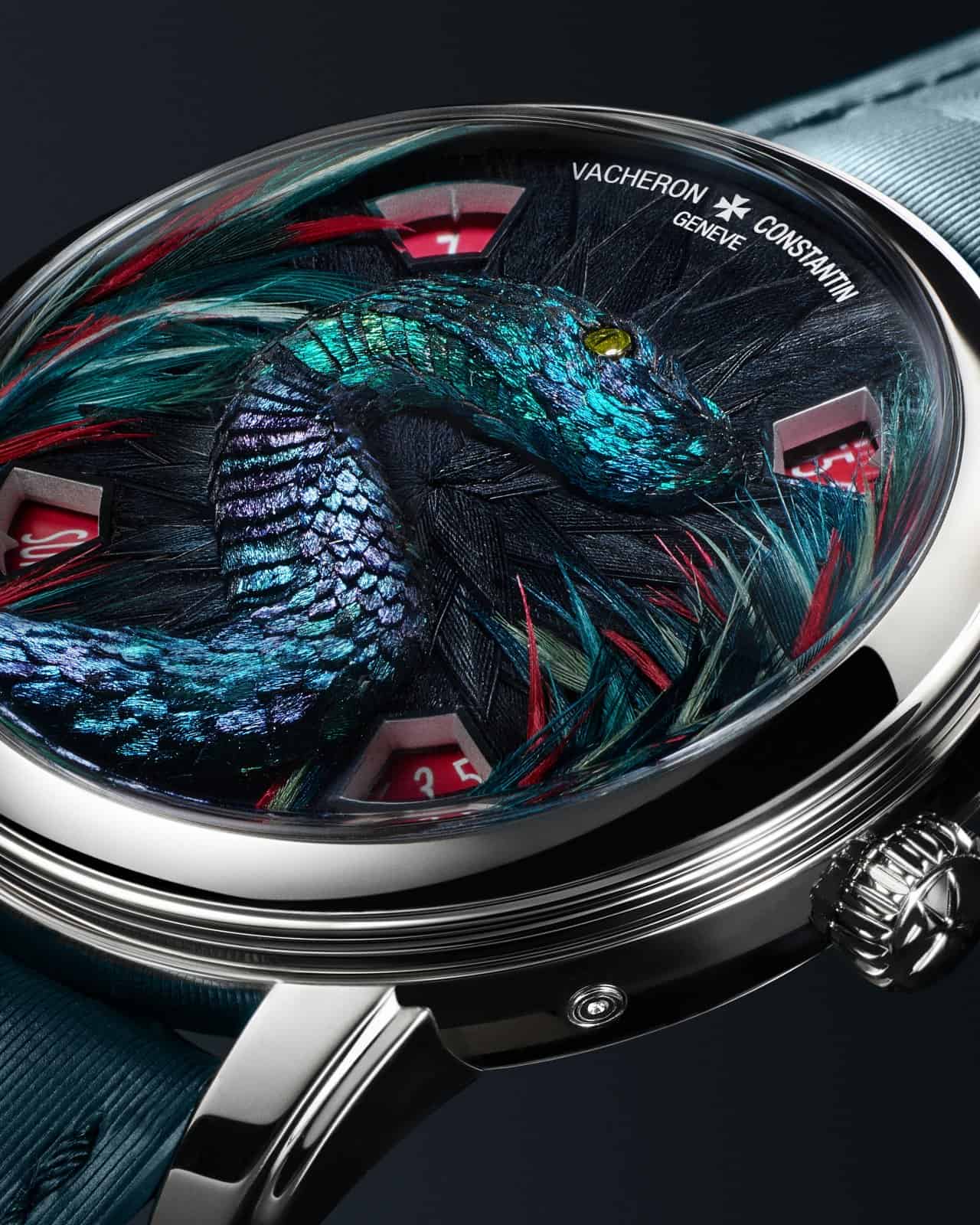
An imaginary serpent coils across the dial in micro-plumasserie: more than 200 pieces cut from seven rare Lophophore feathers, mounted on silk paper, applied to a metal appliqué and rising just three millimeters above the surface. The surrounding foliage and background are worked in goose feathers. Existing tools proved useless at this scale, so Vermeulen made a micro-scalpel from a reshaped needle; the work took roughly 250 hours including research and prototyping. “Even breathing too heavily could send them flying,” he said. “I could not work more than four hours per day.” The snake’s eye — 18-karat gold and enamel — is the one still point in the composition.
Glassoctopus — Glass Sculpting by Simone Crestani
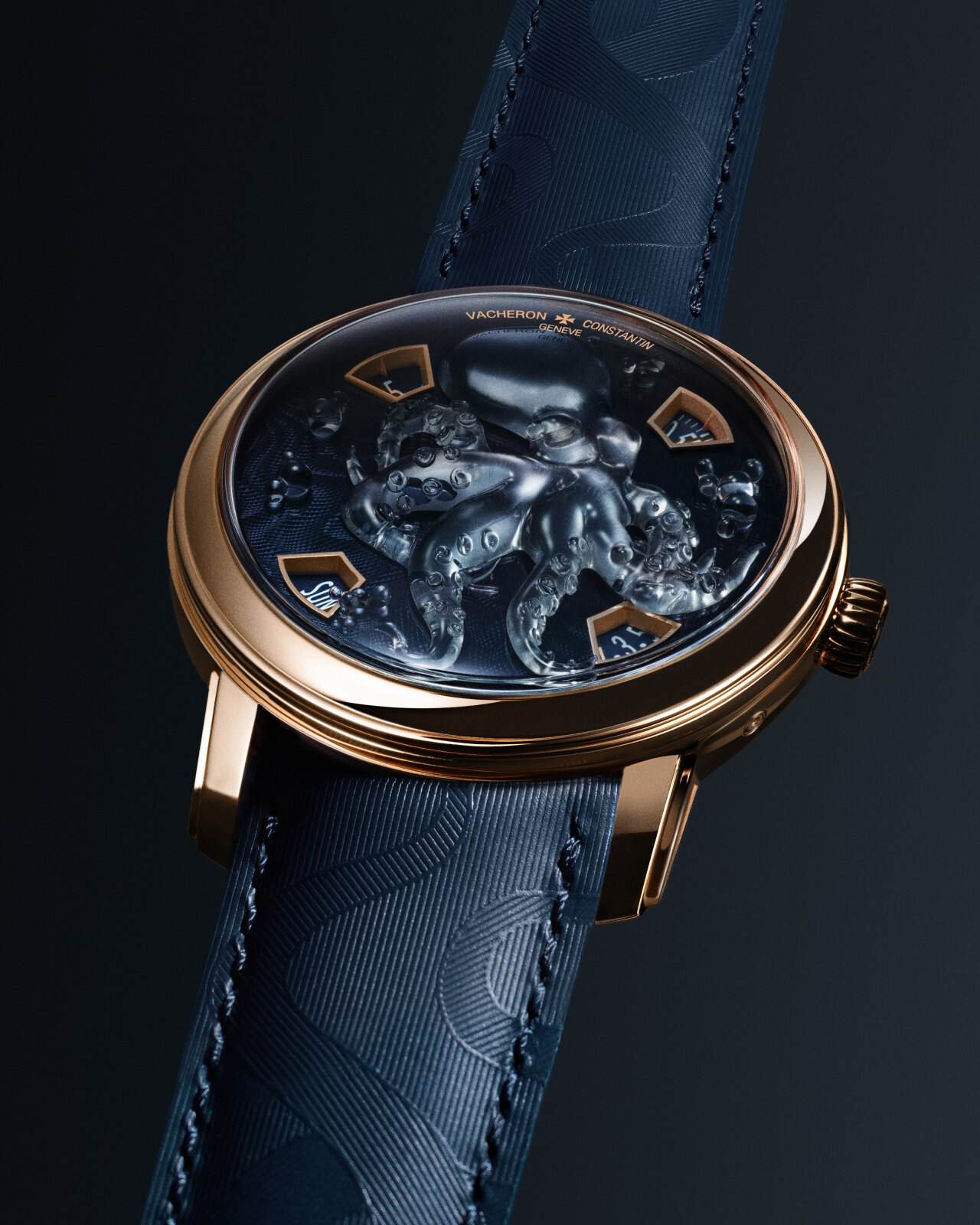
A transparent octopus drifts 3.5 millimeters above a hand-guilloché, deep-blue dial — among the most remarkable miniature glass sculptures ever attempted. Crestani built it piece by piece from melted glass rods shaped with custom tungsten tools, “a highly manual form of 3D printing,” each sucker added dot by dot because reheating threads that fine would collapse them into spheres. “In glassmaking, one usually thinks in centimeters,” he said. “Here everything had to be controlled to the tenth of a millimeter.” Development ran more than a year from the first prototypes in spring 2025; four finished octopuses were made and one was chosen.
Oraygami — Micro-Origami by Anja Midori
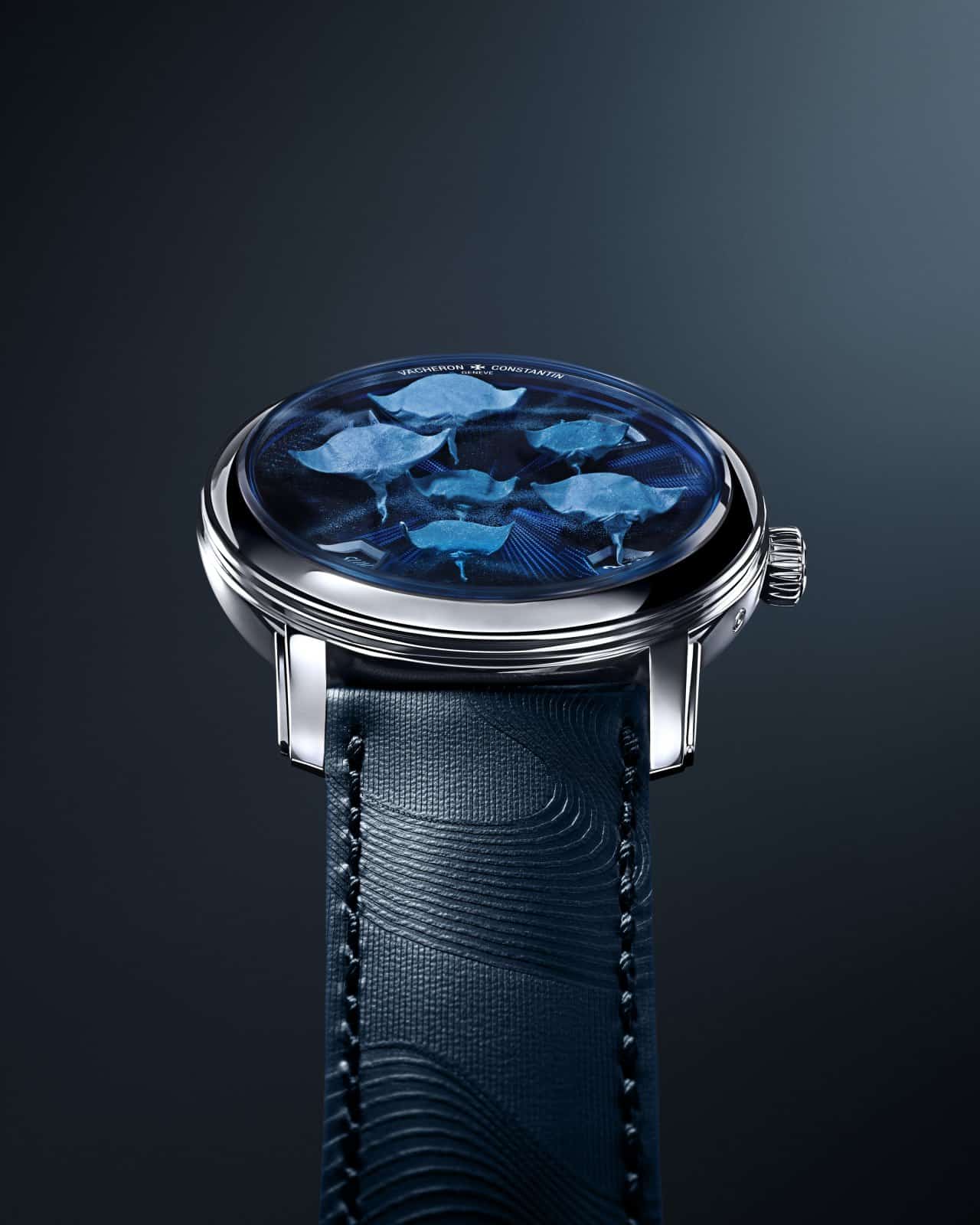
A group of manta rays, each between 5 and 10 millimeters long, floats on fine brass stems above a guilloché ocean, beneath a moiré-effect crystal that mimics light through water. Midori invented the folding sequence from scratch after studying photographs and footage of real rays, then folded each one using only fingers, fingernails and the tip of a toothpick — no magnification — from hand-dyed Japanese paper measuring 9 to 12 millimeters before folding. The paper weighed only 20 grams, roughly a quarter the thickness of copier stock, so it had to be dyed without ruining its behavior: a problem that consumed much of the project’s two-year development, from the first conversations in summer 2024 to the finished watch this year.
Tigerbroidery — Gold Embroidery by Laura Baverstock
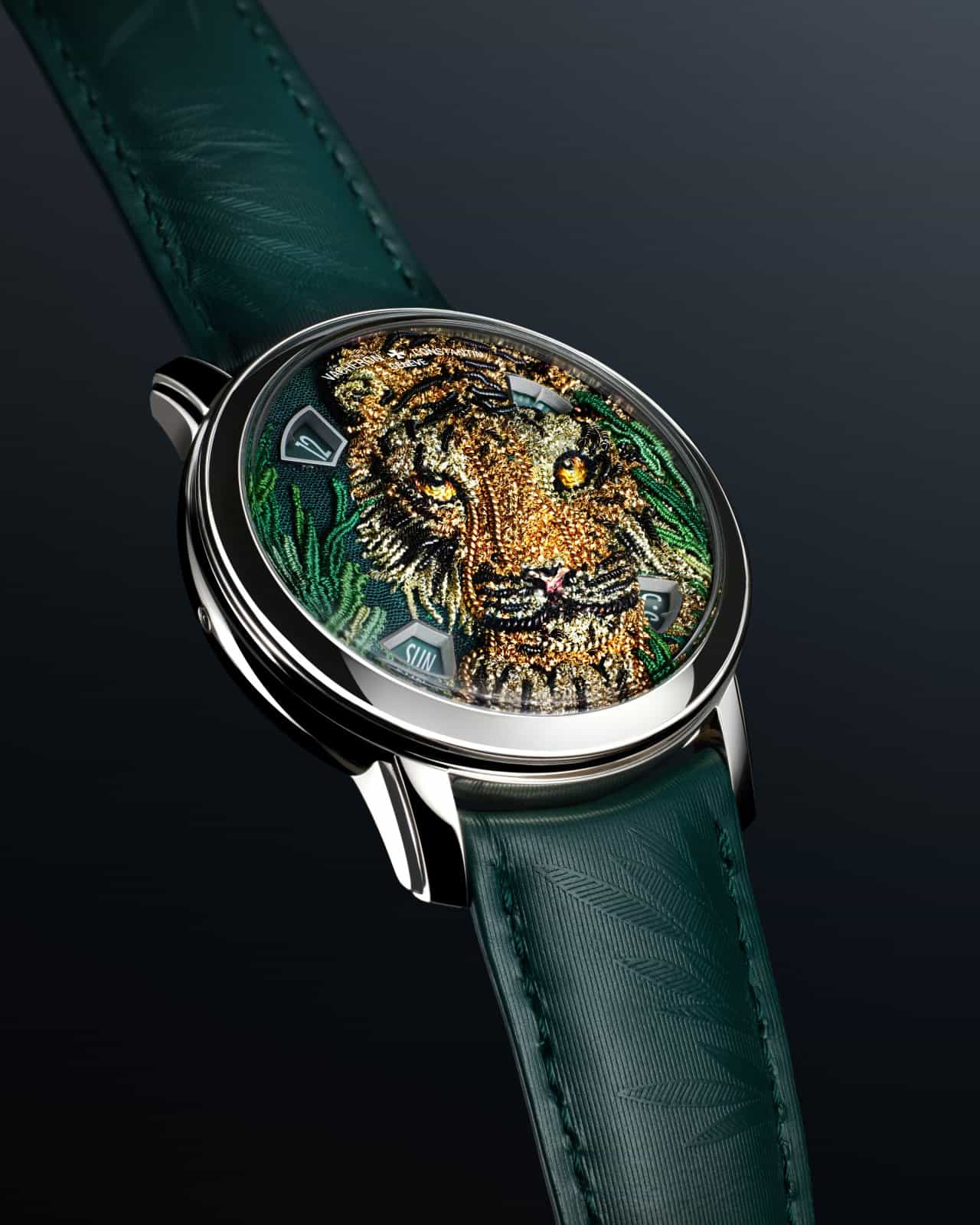
A tiger prowls a silk jungle, its coat stitched from 9-karat yellow and white gold wires — a major departure from traditional goldwork’s low-content gilt threads, requiring entirely new wire-making tools built with specialist British manufacturers. The stripes are ceramic-coated black wires laid over a copper base; the eyes alone took ten shades of silk; needles were developed as fine as 0.25 millimeters. The whole composition is stitched onto a bespoke perforated titanium dial plate and took roughly 210 hours. “I believe I have brought embroidery to the level of art,” Baverstock said.
Papercroc — Paper Sculpting by Marianne Guély
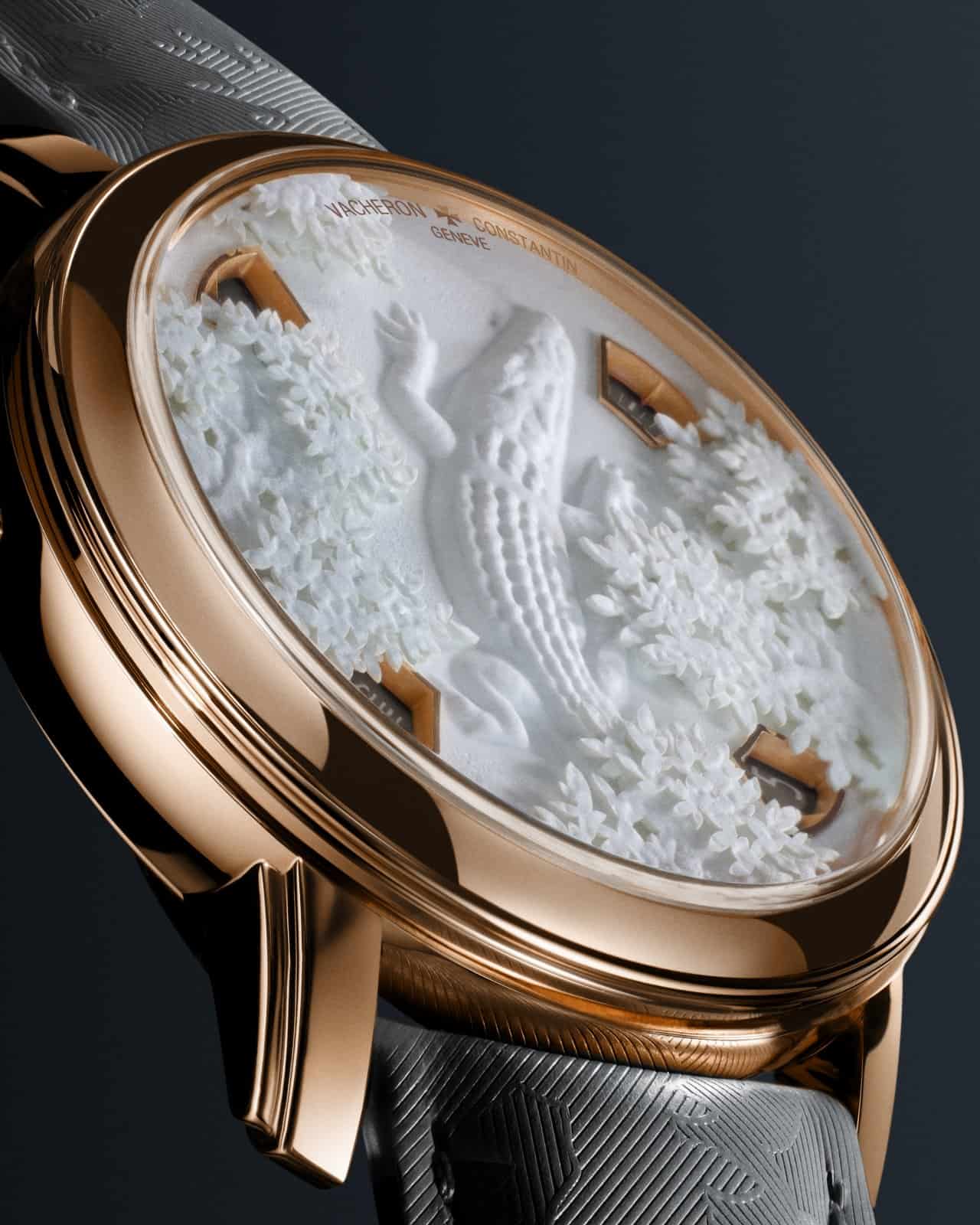
An all-white crocodile, seemingly carved from ice, is layered entirely from acid-free white cotton paper in two weights — 250 and 300 grams — combining embossing, ultra-precise laser cutting and hand assembly into a relief just 3 millimeters tall. Brass matrices engraved with scales and foliage were heated to 60–70°C and pressed into the sheets under intense pressure. Light does the coloring, sliding across the monochrome surface to define every scale. “In Europe, paper is still often considered merely a medium, associated with fragility,” Guély said. “This project allowed us to demonstrate that paper can enter the world of haute horlogerie as a true form of art.”
Woodenwings — Wood Marquetry by Anna Le Corno
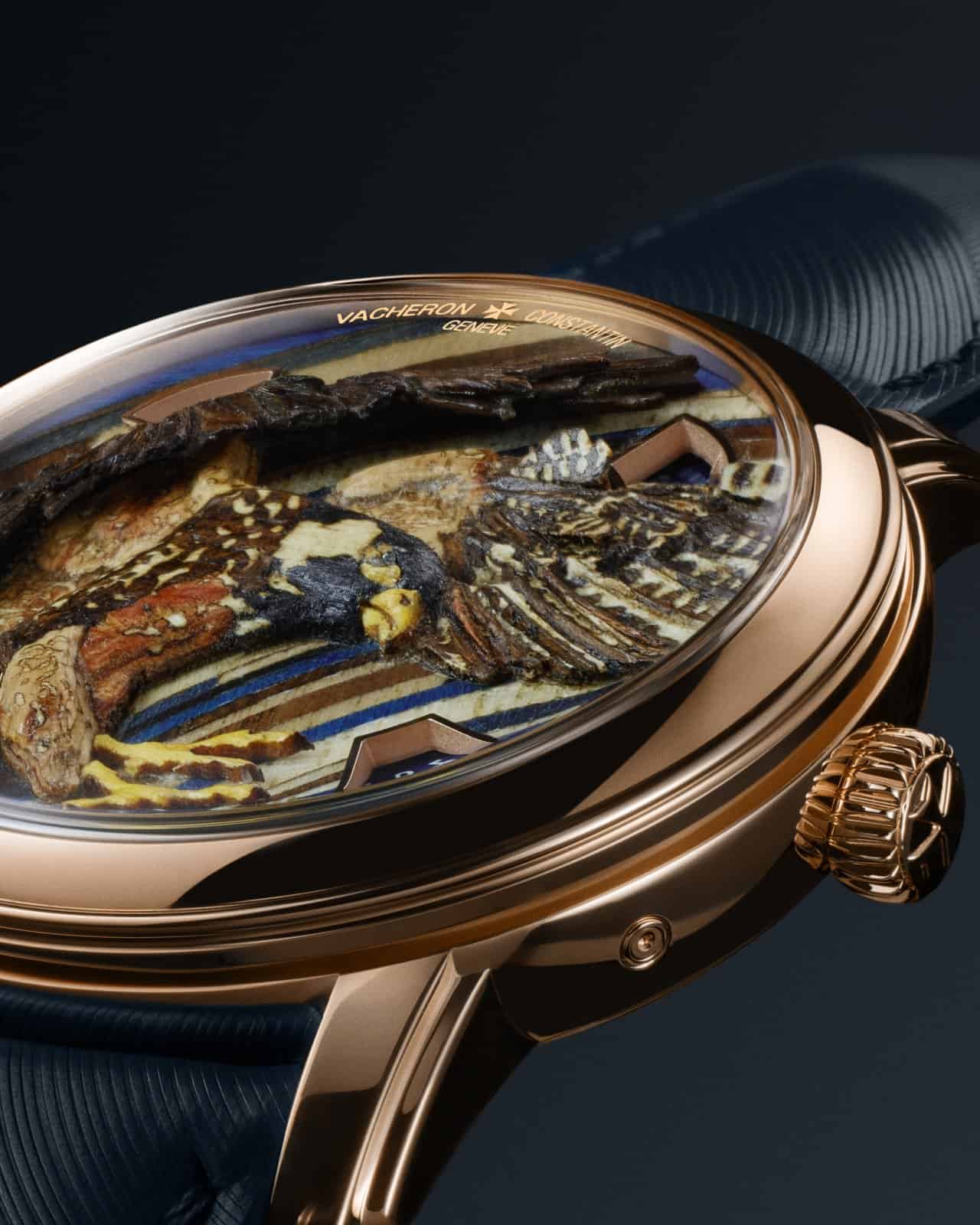
A falcon assembled from twelve wood species — smoked eucalyptus, madrone burl, ziricote and dyed birch among them — using three marquetry techniques, including a “feather-by-feather” assembly developed for the wing, which cantilevers over the dial with its tips at the very limit of the crystal. Le Corno, trained in architecture and then at École Boulle, worked under binocular magnification with surgical scalpels and Japanese and American micro-carbide bits. “The more I sculpted and experimented, the more I discovered entirely new possibilities within the material,” she said.
Two Centuries of Animals on the Dial
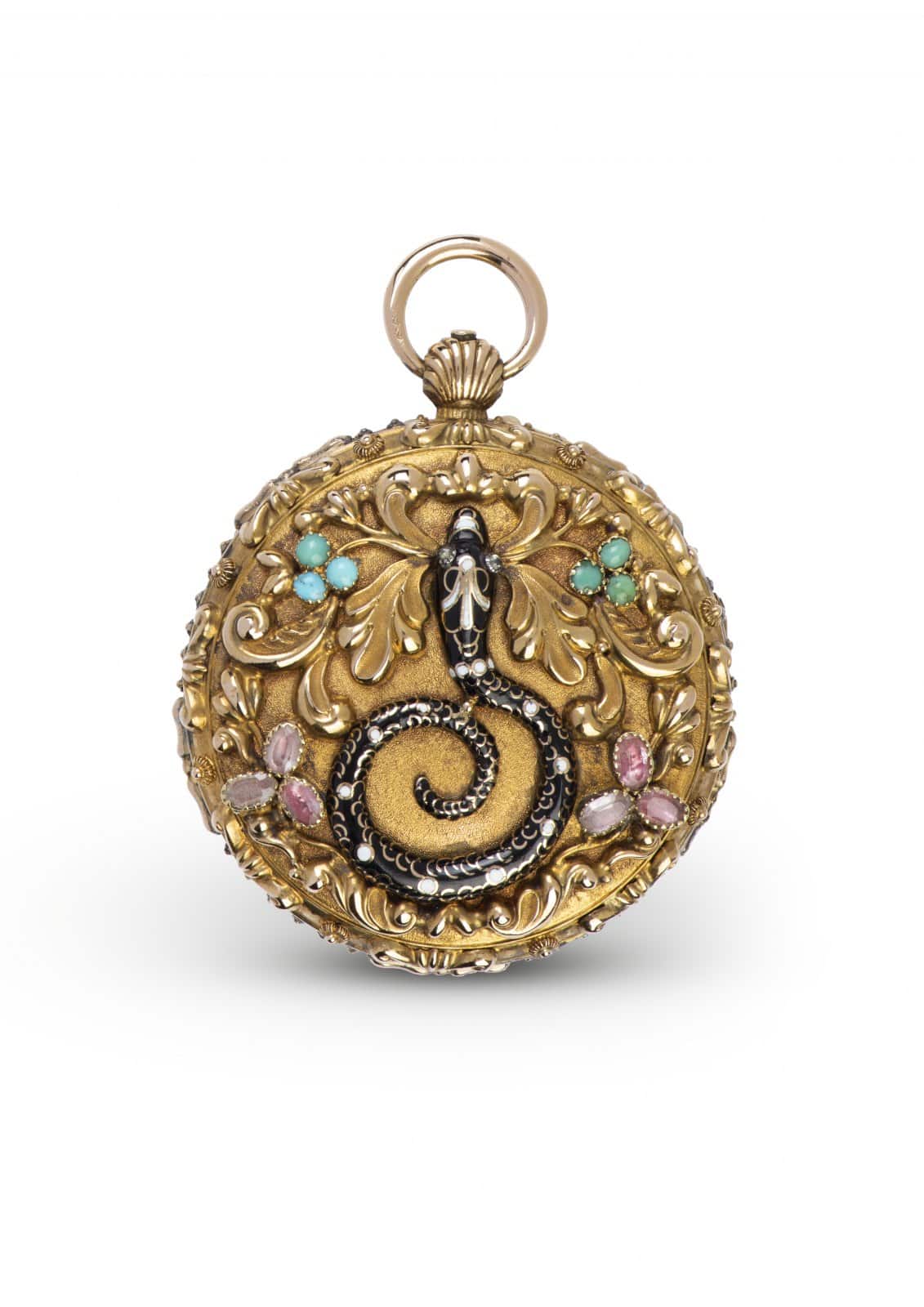
The animal kingdom is not a new muse in Geneva. The Maison traces the lineage deliberately: an 1826 serpent-adorned pocket watch in enamel, turquoise and amethyst — exactly 200 years old this year; a 1910 jeweled scarab pendant watch whose enameled wings, set with diamonds and rubies, open to reveal the time; a 1923 Chinese-lacquer Art Deco bird made in collaboration with Verger Frères; the 1996 Audubon “Birds of America” enamel series of about ten models that helped revive Grand Feu enameling in haute horlogerie; 2011’s Escher-inspired Métiers d’Art Univers Infinis; and the 2022 Les Cabinotiers Tourbillon Joaillerie – Hippocampe, a unique seahorse piece combining four crafts.
Seen against that history, Tribute to the Animal Kingdom is less a departure than an acceleration — the same instinct that put a snake on a dial in 1826, now extended to feathers, glass and folded paper.
Timely FAQs
What is the Métiers d'Art Tribute to the Animal Kingdom?
Can you buy these watches?
What is the Calibre 2460 G4?
Who are the six artists?