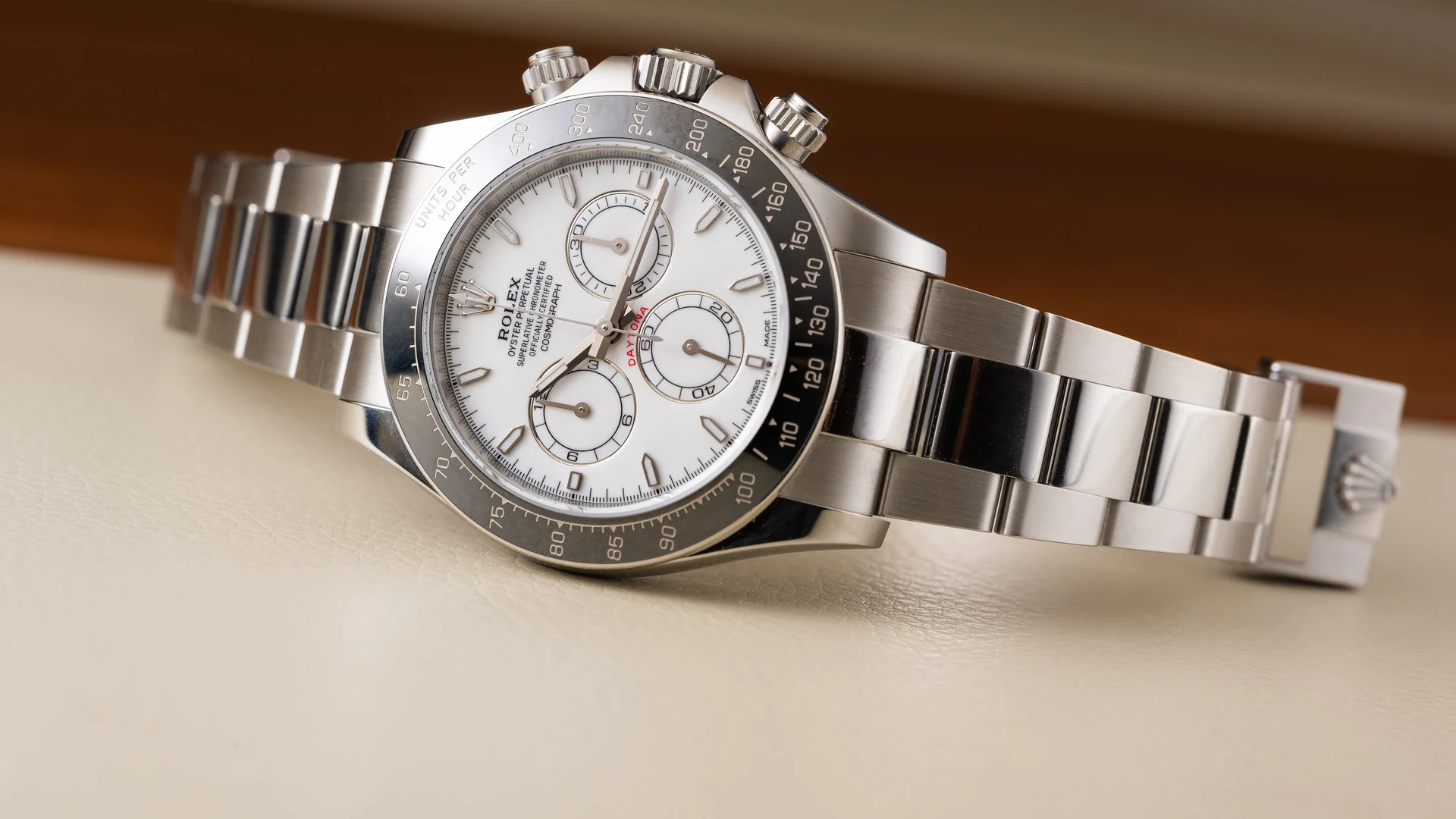
Everyone thinks they know the Cosmograph Daytona by heart, which is exactly why Ref. 126502 is easy to walk past. From across a room, it is a white-dial Daytona with a dark bezel. Up close, almost every surface has changed. The dial is white enamel, the bezel is a new shade of ceramic, platinum trims the case, and a yellow-gold rotor turns behind a sapphire case back.
The Rolex Cosmograph Daytona Ref. 126502 is the first Daytona to combine Oystersteel with platinum. It has a 40mm case, a white grand feu enamel dial, an anthracite ceramic bezel, and caliber 4131 with a yellow-gold rotor behind a sapphire case back.
The Daytona dates to 1963, when Rolex built it for professional racing drivers, and the tachymetric bezel is still its reason for being, turning the seconds it takes to cover a measured distance into an average speed. The 126502 arrived in Geneva in April as the first Daytona to combine Oystersteel with platinum, a pairing Rolex calls Rolesium. The layout stays put. The materials are what changed.
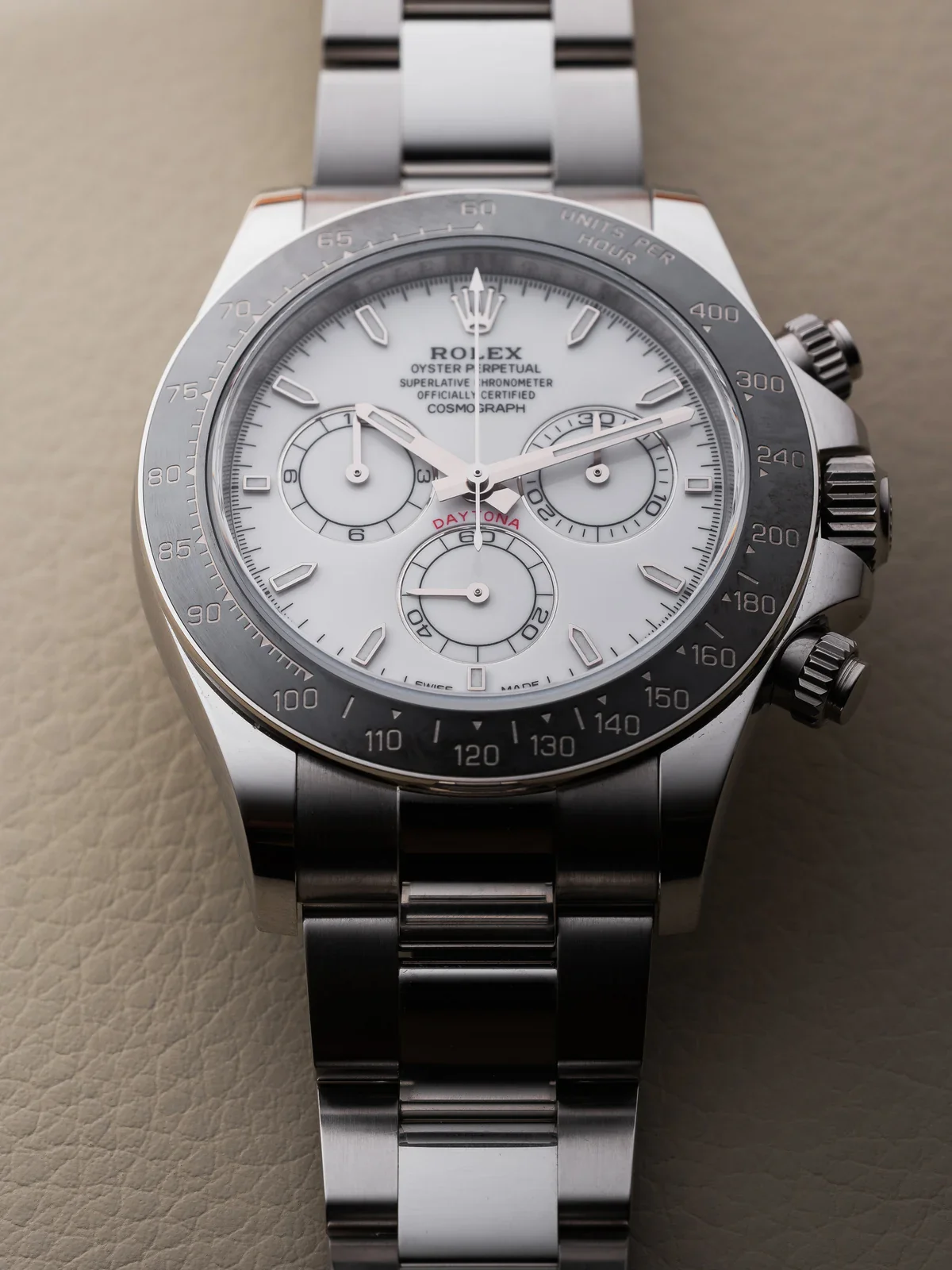
The 40mm Oyster case is cut from a solid block of Oystersteel and is water resistant to 100 meters, or 330 feet. The Triplock crown screws down under an integral guard, and so do the chronograph pushers. Platinum appears in two places, a band around the bezel and the ring that holds the sapphire case back, so it frames the watch without changing its color.
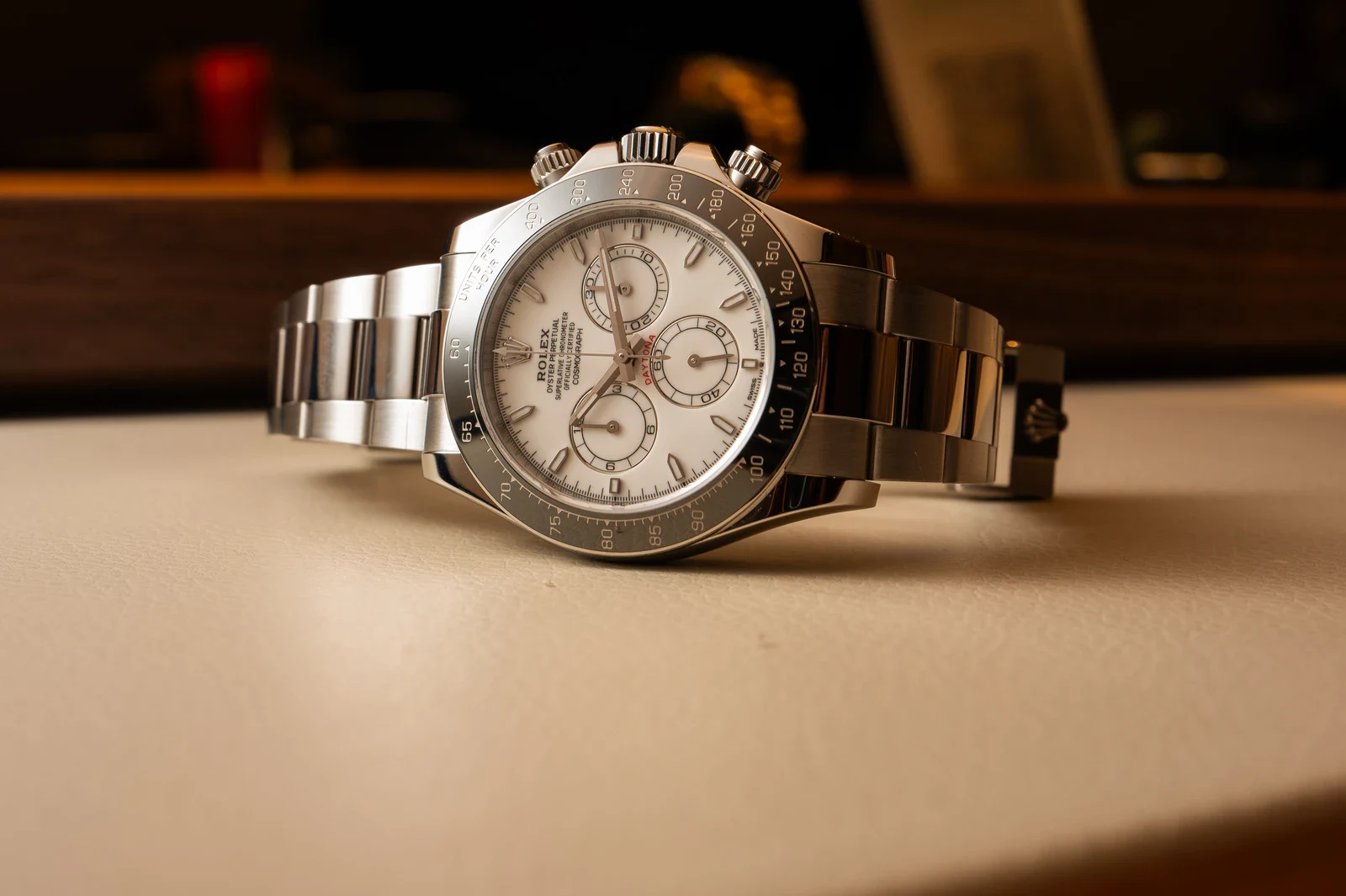
The monobloc Cerachrom bezel comes in anthracite, a new shade made from zirconia enriched with tungsten carbide, and Rolex has filed a patent application for it. The tachymetric numerals and graduations are molded into the ceramic and coated with platinum by physical vapor deposition.
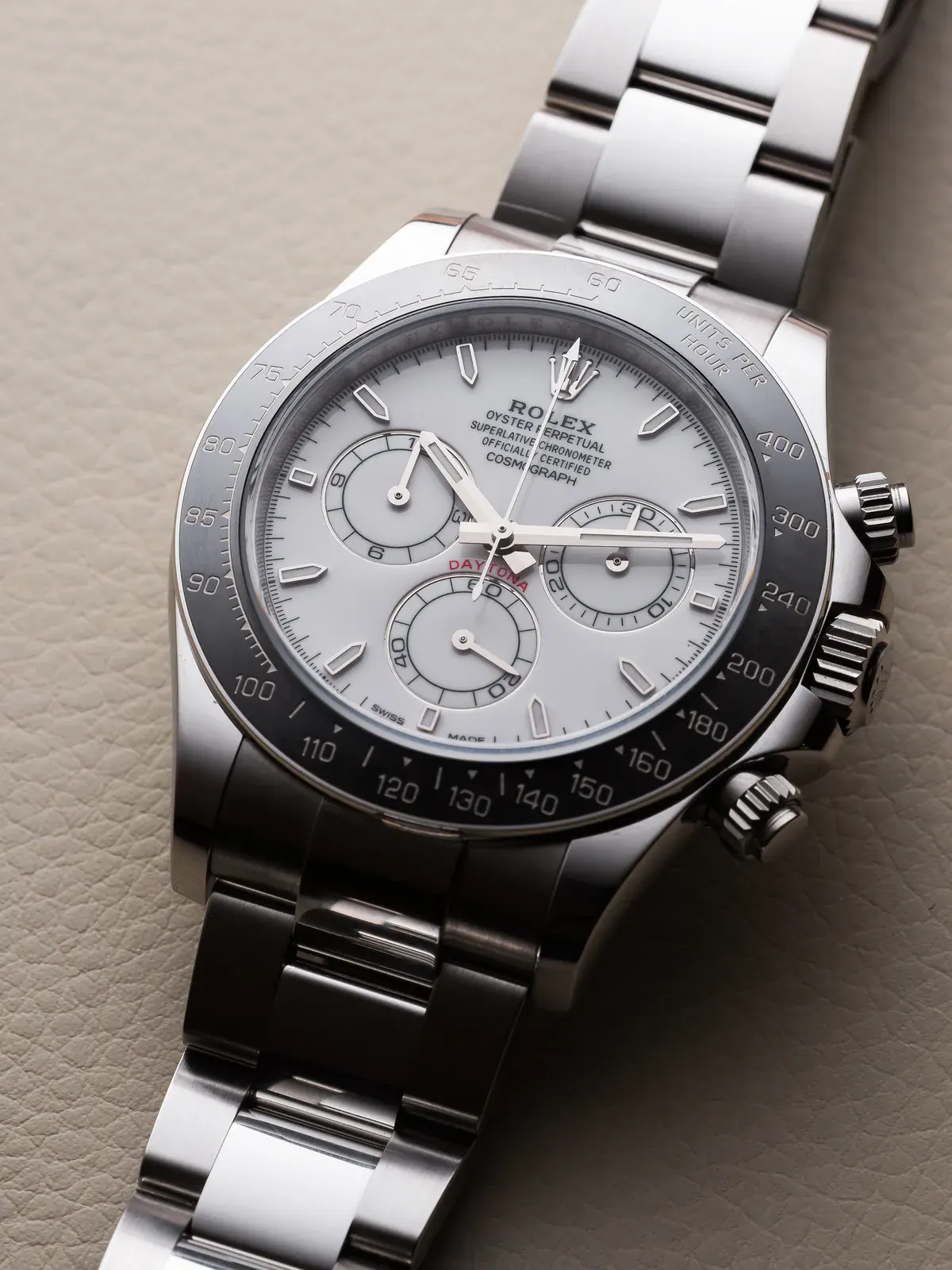
The numerals stand upright all the way around the ring instead of tilting with it, as they did on the original 1963 watch, though the font is contemporary. The scale starts with 60 at 12 o’clock, runs down the left side and across the bottom, and climbs the right side to 400, with “Units per Hour” near the top.
In our view, this is the best idea on the watch. A working scale becomes easier to read at a glance, and the bezel nods to the first Daytona without turning the watch into a reissue.
The dial is grand feu enamel, French for “high fire,” fired in a kiln at more than 800°C. Enamel usually goes onto a metal base. Here it is coated onto ceramic plates, one for the main dial and one for each of the three counters, which are fitted to a brass base after firing. Building the dial in pieces is the clever part, and it is what lets enamel live on a chronograph this busy.
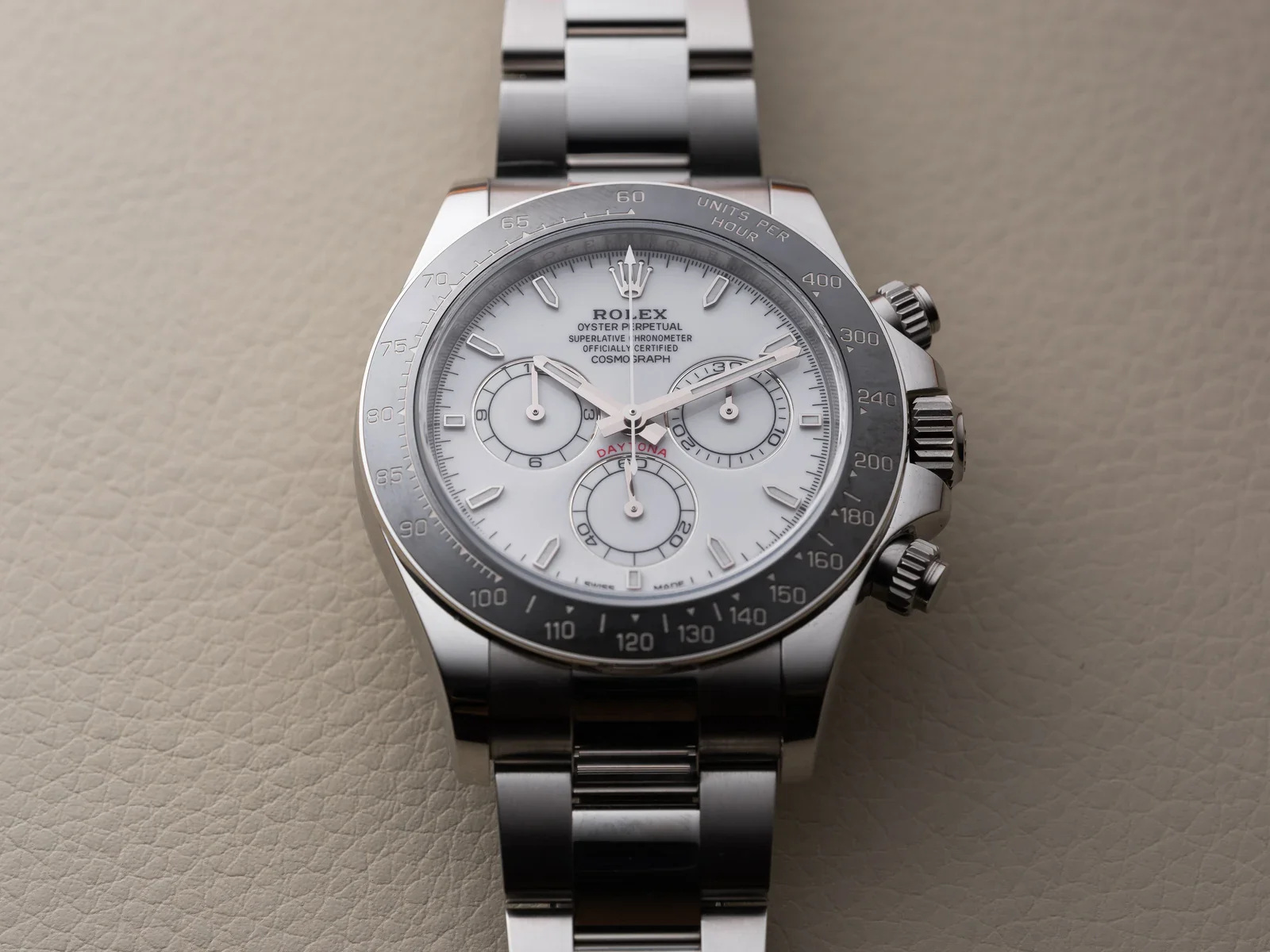
The counters sit at 3, 6, and 9 o’clock, each outlined by a fine ring, and the red Daytona sits just above the lower one. Applied baton markers with polished edges ring the dial, and the hands match them. Set against the anthracite bezel, the white enamel looks softer and the ceramic looks darker, and the two flatter each other.
Through the case back is caliber 4131, a self-winding chronograph that Rolex develops and makes in house. A column wheel and a vertical clutch run the chronograph, which is built with fewer components. The cut-out rotor is yellow gold, “4131” is engraved on a bridge, and the bridges carry Rolex’s Côtes de Genève with a polished groove between each band.
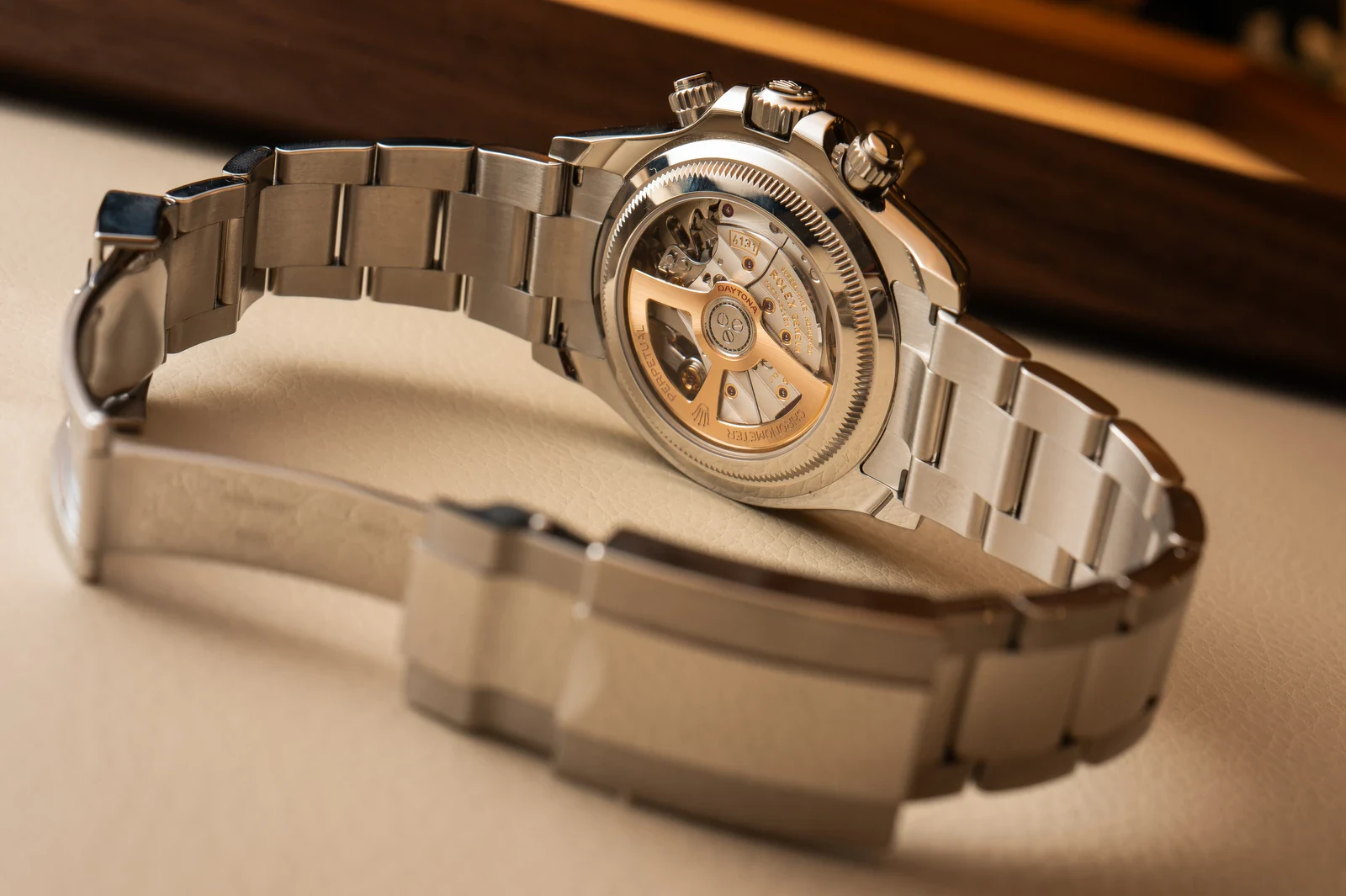
The Chronergy escapement is patented and made of nickel-phosphorus, paired with a blue Parachrom hairspring with an overcoil and Paraflex shock absorbers. The power reserve is about 72 hours. As a Superlative Chronometer, the cased watch is tested to within two seconds a day, fast or slow, and carries a five-year guarantee.
As for wearing it, this is a 40mm Daytona on the three-piece Oyster bracelet, with an Oysterlock folding safety clasp and an Easylink extension that adds about 5mm. That small link is the most useful detail on a summer afternoon, when wrists swell and a bracelet that fit at breakfast pinches by lunch. With screw-down pushers and 100 meters of water resistance, it is also a Daytona that can go in the water.
Our complete guide to every new Rolex at Watches and Wonders 2026 places the 126502 beside the rest of the lineup, and our explainer on how Rolex allocates watches like this one covers the buying side. No price is listed for this configuration, so it is price on request. The layout is the Daytona everyone knows, and to us, the enamel, the anthracite ceramic, and the platinum make the 126502 the most quietly luxurious steel Daytona yet.
| Specification | Detail |
|---|---|
| Model | Oyster Perpetual Cosmograph Daytona |
| Reference | 126502 |
| Case | Oystersteel (Rolesium: Oystersteel and platinum), 40mm; platinum bezel band and platinum case back ring |
| Bezel | Monobloc anthracite Cerachrom (zirconia enriched with tungsten carbide); upright tachymetric numerals, platinum-coated by PVD |
| Dial | White grand feu enamel on ceramic plates (main dial and three counters) fitted to a brass base |
| Crystal | Sapphire with anti-reflective coating; sapphire case back with anti-reflective coating |
| Movement | caliber 4131, self-winding mechanical chronograph; column wheel and vertical clutch; Chronergy escapement in nickel-phosphorus; blue Parachrom hairspring with overcoil; Paraflex shock absorbers; Côtes de Genève bridges; yellow-gold cut-out oscillating weight |
| Power reserve | About 72 hours |
| Functions | Hours, minutes, seconds, chronograph, tachymetric scale |
| Bracelet | Oyster, three-piece links; Oysterlock folding safety clasp; Easylink extension (about 5mm) |
| Water resistance | 100 meters (330 feet); Triplock screw-down crown and screw-down chronograph pushers |
| Certification | Superlative Chronometer, -2/+2 seconds per day after casing; five-year guarantee |
Timely FAQs
What is the reference number of the Rolex Cosmograph Daytona in steel and platinum?
How is the white enamel dial of the Daytona Ref. 126502 made?
What movement powers the Rolex Cosmograph Daytona Ref. 126502?
