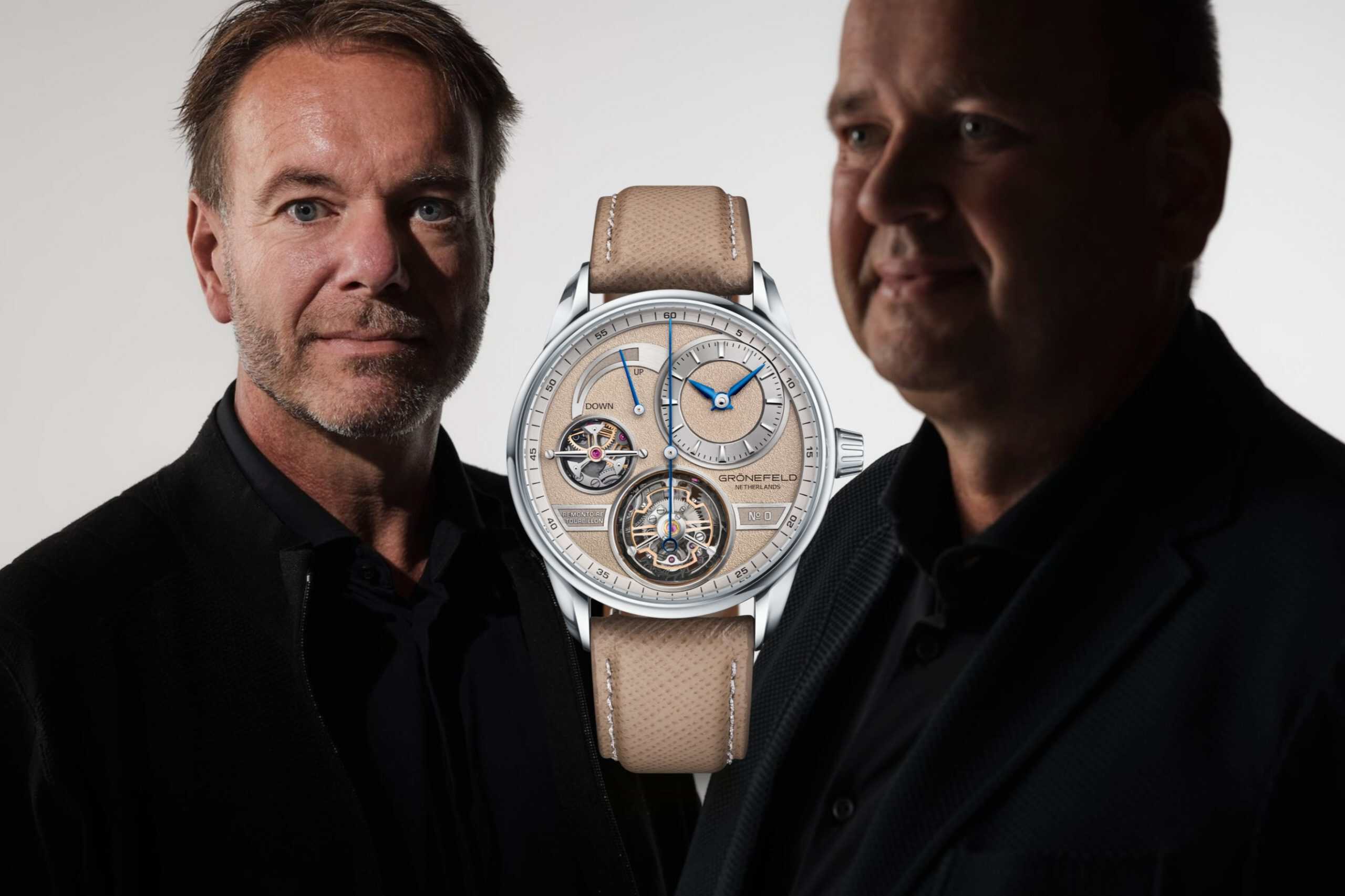
Who would have guessed that one of the most talented watchmaking duos of the 21st century would be Dutch? In an era defined by elite Swiss watchmakers routinely striking out on their own to craft top-tier timepieces in small batches, a soft-spoken independent brand headquartered in Oldenzaal, along the Netherlands’ border with Germany, has long been acknowledged as the gold standard of haute horlogerie.
Who says Geneva gets to keep all the glory? Tucked away near the Dutch-German border, the Grönefeld brothers prove that high horology speaks fluent Flemish. This deep dive explores the new 1941 Quadrivium—a hand-finished masterpiece that tames time with a flying tourbillon stop-seconds mechanism and deadbeat seconds (seconde morte). Pull the crown to pause the universe. Admire its raised tourbillon long enough, and you'll spot the Horological Brothers' proprietary remontoire mechanism peek out from beneath the tourbillon cage.
For over two decades, Tim and Bart Grönefeld have been rethinking the mechanics of the wristwatch, to spectacular effect. While the rise of avant-gardist watchmaking in the 2000s and 2010s benefitted immensely from the ingenuity of the “Horological Brothers”, the pair have never stopped introducing new technical solutions to mechanical timekeeping. And whenever Grönefeld reveals a new invention, flowers smell sweeter and food tastes better.
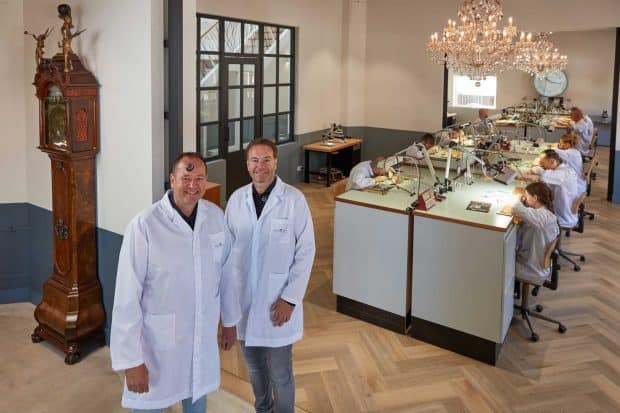
Besides helming the brand that their grandfather Johan founded in 1912, they also introduced a sister brand named Grøne in 2024 that makes their vaunted handiwork accessible to the everyman.
Their latest creation, the 1941 Quadrivium, is an engrossingly complicated timepiece that celebrates some of their most significant contributions to the craft.
Spellbinding Subdials and Tremblage
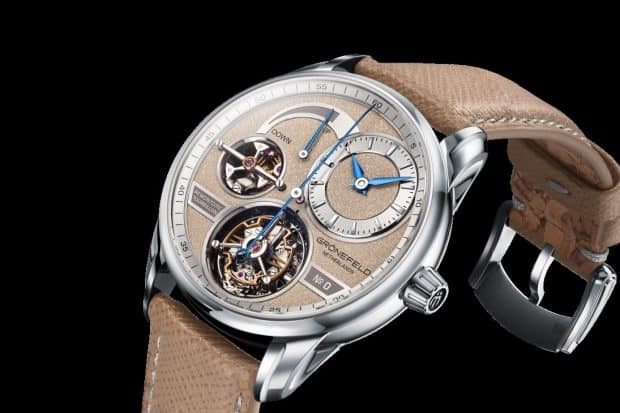
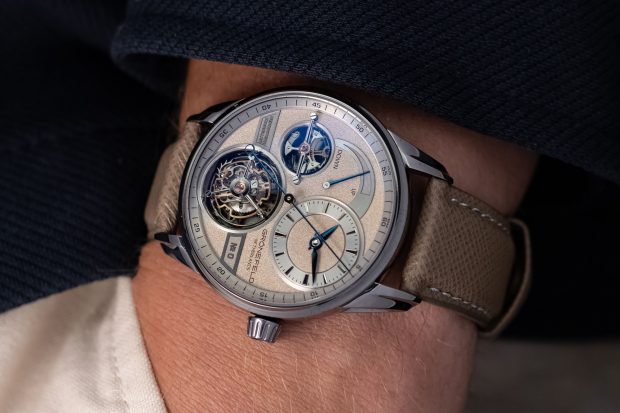
The Grönefeld 1941 Quadrivium has been engineered entirely from scratch in order to integrate: a raised one-minute flying tourbillon at the 6 o’clock position, an exposed governor at 9 o’clock that rotates every 7.5 seconds as the remontoire d’égalité mechanism re-arms, a central deadbeat seconds hand, a 50-hour power reserve indicator at 10 o’clock, and an off-center hours-and-minutes dial at 2 o’clock. All of this is powered by concentric twin barrels and set against a painstakingly hand-frosted (tremblage) dial plate.
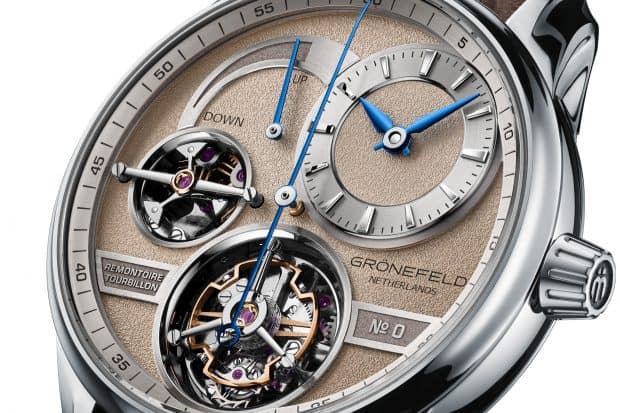
These functions pay homage to the historic references that embody the brand, including the Parallax Tourbillon (2014) and Remontoire (2016). Crafted and finished by hand, the tourbillon features a stop-seconds mechanism. This function pauses the balance wheel when you pull the crown, freezing the seconds hand so you can set the time down to the exact second—I elaborated on this ingenious function in a previous Lange article.
Not to be confused with the stop-seconds feature, the Quadrivium also sports a deadbeat mechanism (seconde morte) that causes the central hand to ‘jump’ exactly 60 times per minute.
The remontoire itself is a constant-force mechanism designed to solve the chronometric issue of decaying mainspring torque by releasing energy in uniform 7.5-second bursts. By putting this intricate system front and center on the dial, the 1941 Quadrivium reinforces the brand’s key role in the modern evolution of constant-force wristwatches.
This suite of complications is housed in Grönefeld’s trademark “1941” case. First introduced in 2016, it measures 40mm in diameter and is distinguished by sculpted lugs, flowing geometry, and a concave bezel—and was also the vessel for Grönefeld references like the Decennium, Principia, and Grönograaf.
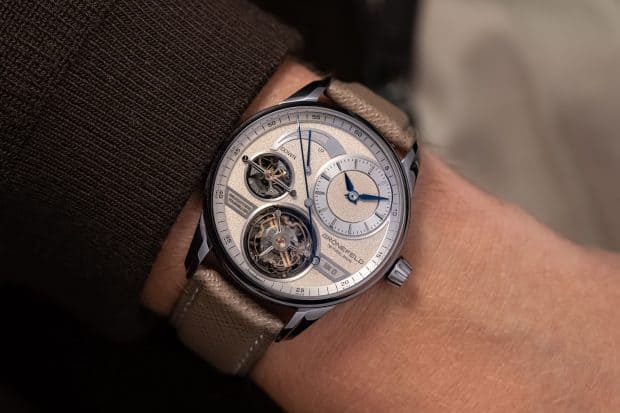
The 1941 Quadrivium is offered in tantalum (€280,000) and platinum (€310,000), each limited to 28 pieces and fitted with matching pin buckles. The brothers have long favored tantalum and platinum for their substantial heft and unique luster when polished, and their affinity for unconventional metals extends to the caseback architecture as well.
A Caseback That Steals the Limelight
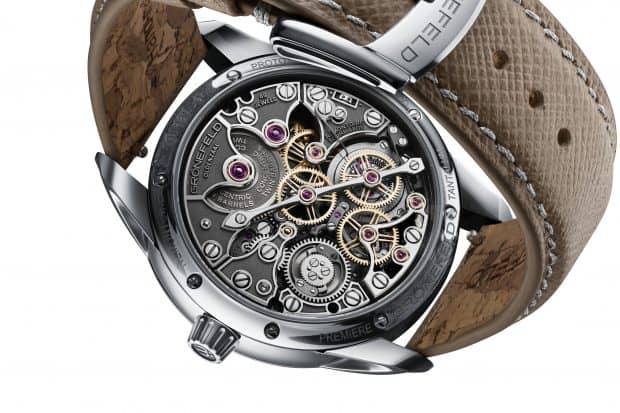
Flipping the watch over reveals a movement that will reel even the seasoned collector in like an infant to an iPad. Beyond the hand-beveled bridges and impeccable interior angles, Grönefeld remains one of the few manufactures to craft its bridges from stainless steel. While far more difficult to work with and finish than traditional brass bridges, steel yields a dramatic contrast against mirror-finished black polishing.
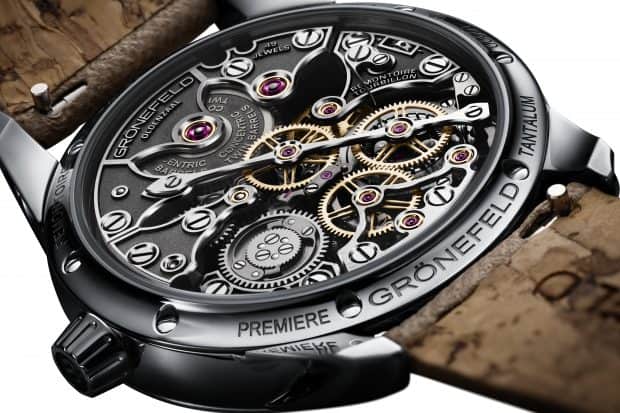
In signature Grönefeld fashion, the bridges feature frosted centers framed by satinated raised borders—a silhouette inspired by the iconic step-gabled roofs of traditional Dutch architecture.
With additional colorways set to roll out in the coming weeks, the 1941 Quadrivium is far more than just a fleeting showcase of high watchmaking—it is a protracted, triumphant victory lap by one of independent watchmaking’s most prolific vanguards.
| Housed in a 40 mm by 11.3 mm case (available in tantalum or platinum), the Grönefeld 1941 Quadrivium is powered by the hand-wound Caliber G-09, a 473-component movement with hand-finished steel bridges, 49 jewels, and a 50-hour power reserve supplied by series-connected twin barrels. Running at a frequency of 21,600 vph (3 Hz), it combines four distinct complications: an off-center time display at 2 o'clock, a power reserve indicator at 10 o'clock, a 7.5-second remontoire d'égalité at 9 o'clock driving a central deadbeat seconds hand (seconde morte), and a 6 o'clock one-minute flying tourbillon equipped with a stop-seconds hacking brake for exact synchronization. |
|---|
Timely FAQs
What makes the Grönefeld 1941 Quadrivium’s stop-seconds mechanism special?
What is the difference between stop-seconds (hacking) and deadbeat seconds (seconde morte) on the Quadrivium?
Who makes the 1941 Quadrivium, and where are they based?