On December 9, Sotheby’s closes its Shapes of Cartier series in Abu Dhabi with 58 lots, offered in one live session that opens at 6:30 PM GST, or 9:30 AM ET. The catalog is a primer on Cartier shaped watches and on how Cartier built a vocabulary out of unusual forms.
Cartier shaped watches grew from the 1904 Santos and 1906 Tonneau through the Tortue, Tank, Baignoire, and Cloche to Cartier London’s Crash, Maxi Oval, and Pebble. Sotheby’s Shapes of Cartier sale in Abu Dhabi on December 9, 2026, offers 58 lots.
There is a curved tonneau from around 1909 on its original Milanese bracelet, early Santos and Tank cases, a Tortue minute repeater estimated at $1 million to $2 million, and a late run of Cartier London designs called the Maxi Oval, the Decagonal, and the Maxi Pebble.
Sotheby’s describes the Abu Dhabi sale as the last chapter of a series spanning more than 300 historic Cartier watches from Paris, London, and New York, sold around the world from April to December 2026. Side by side, the lots show where Cartier started, how long it kept its shapes, and where, in London, it began to bend them.
The Paris Grammar
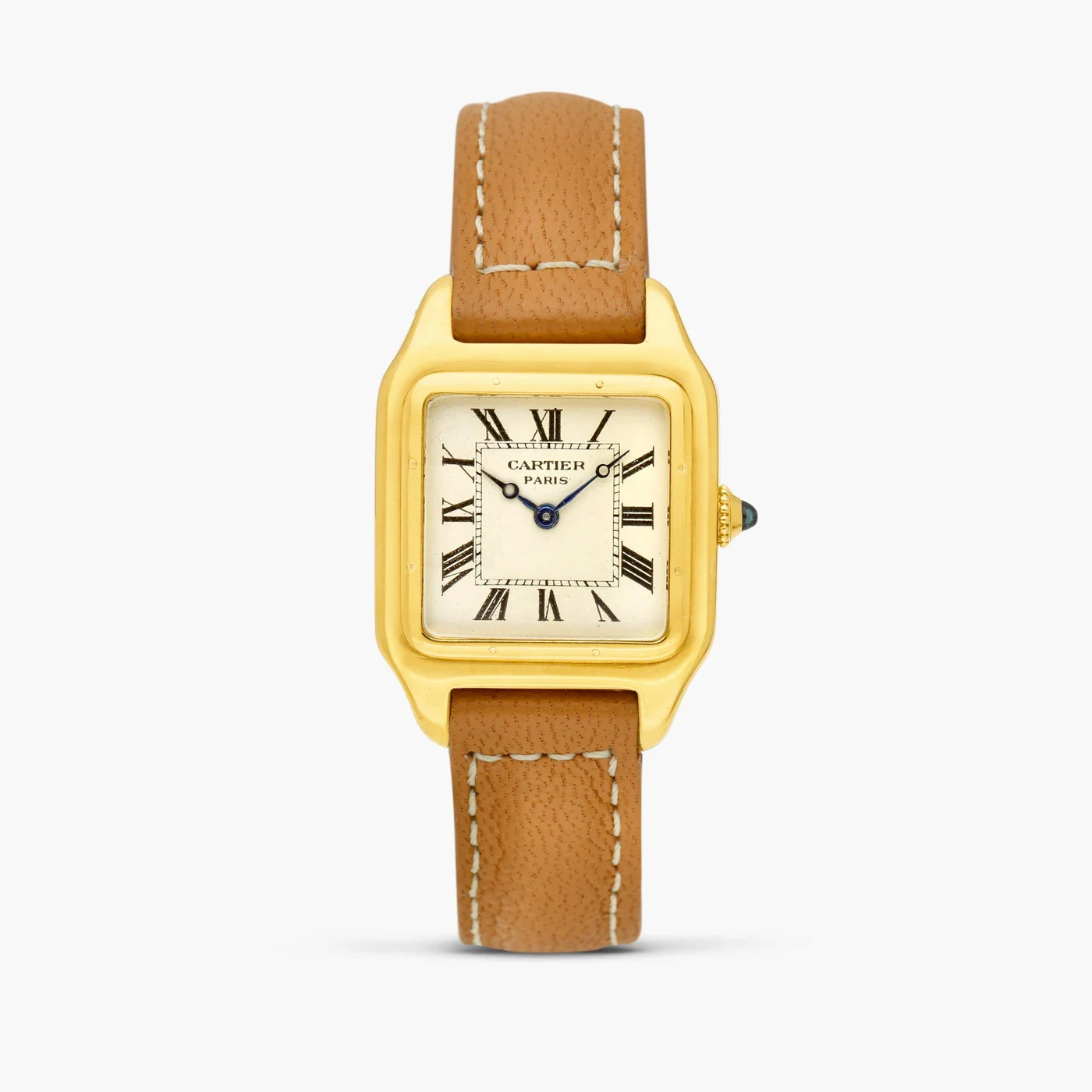
Cartier dates the Santos to 1904 and to a request from the aviator Alberto Santos-Dumont for a watch he could read in flight. Louis Cartier’s answer was a square case with its bezel screws left in view.
Lot 27, a Santos Carré from around 1911, follows a cushion-case patent that Edmond Jaeger filed on October 22, 1910, with a bezel held by eight screws whose ends reach its surface. Lot 25, retailed in London around 1913, sits beside it, and both are estimated at $20,000 to $40,000.
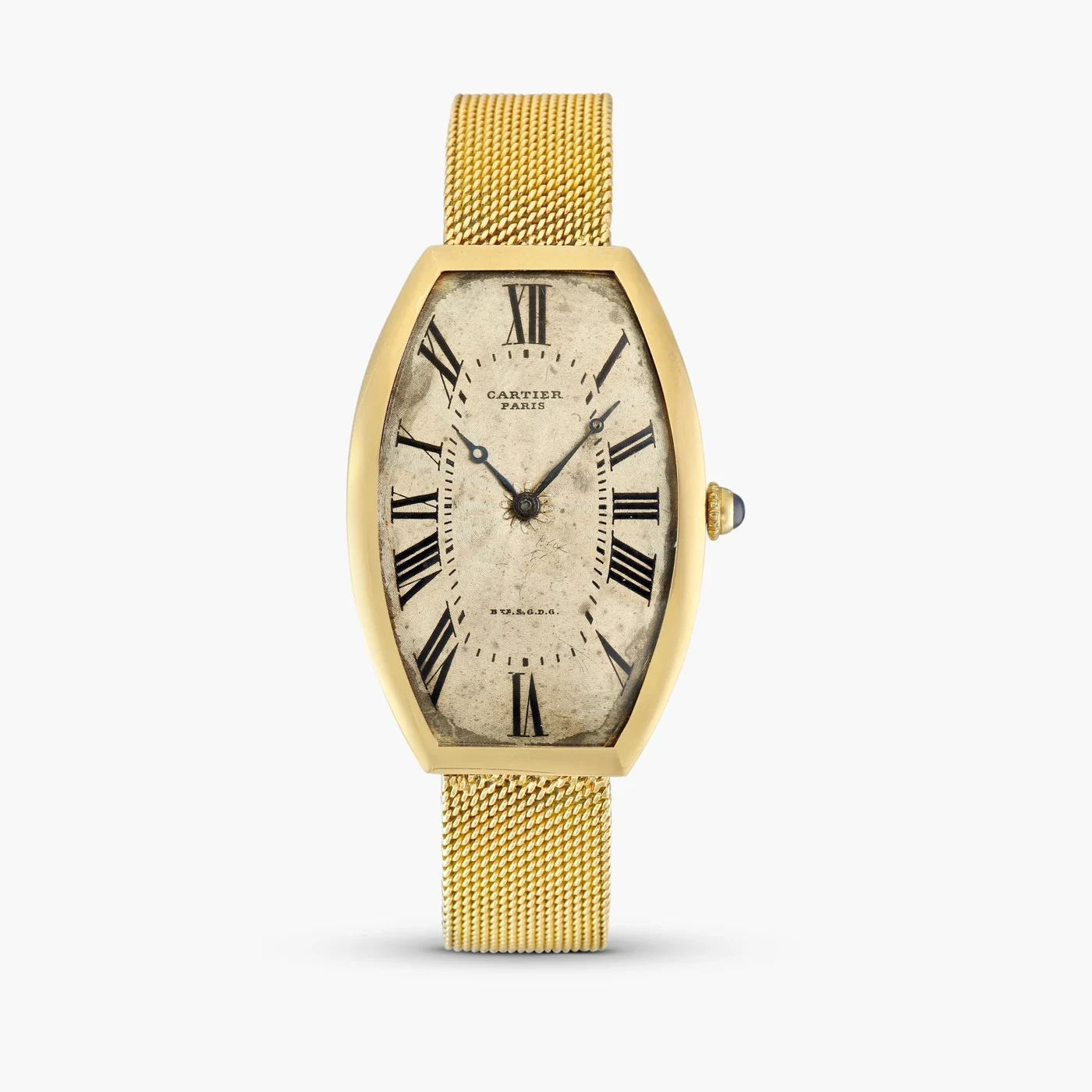
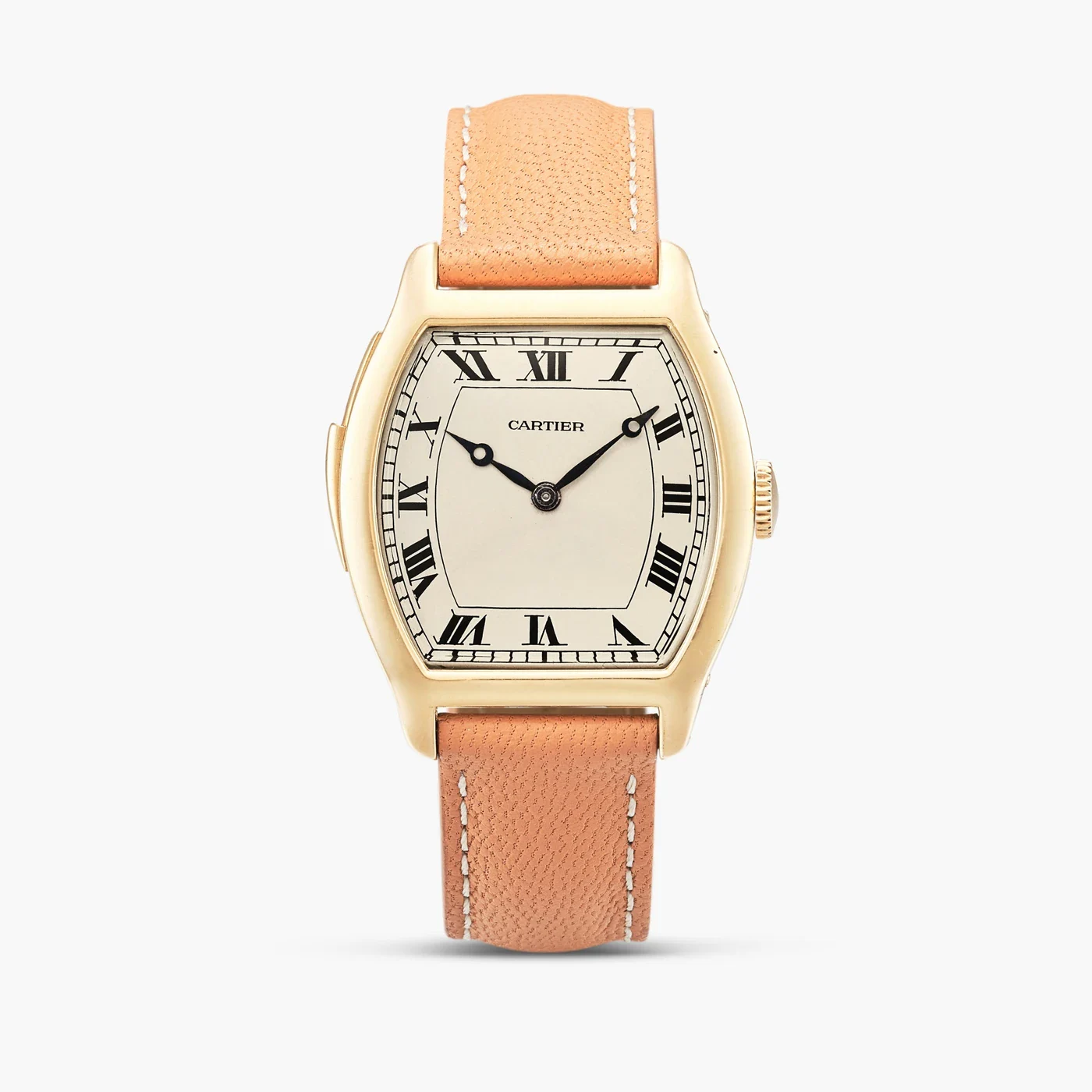
The Tonneau followed in 1906, by Cartier’s count. Lot 8, a curved tonneau-form watch from around 1909, measures 39mm by 26mm and still wears its original gold Milanese bracelet, closed by a deployant buckle made to Jaeger’s patent. The detail we like most is under the dial: Sotheby’s notes that the ends of the round LeCoultre movement’s dial plate were chamfered so it would sit inside the curve of the case. The estimate is $30,000 to $60,000.
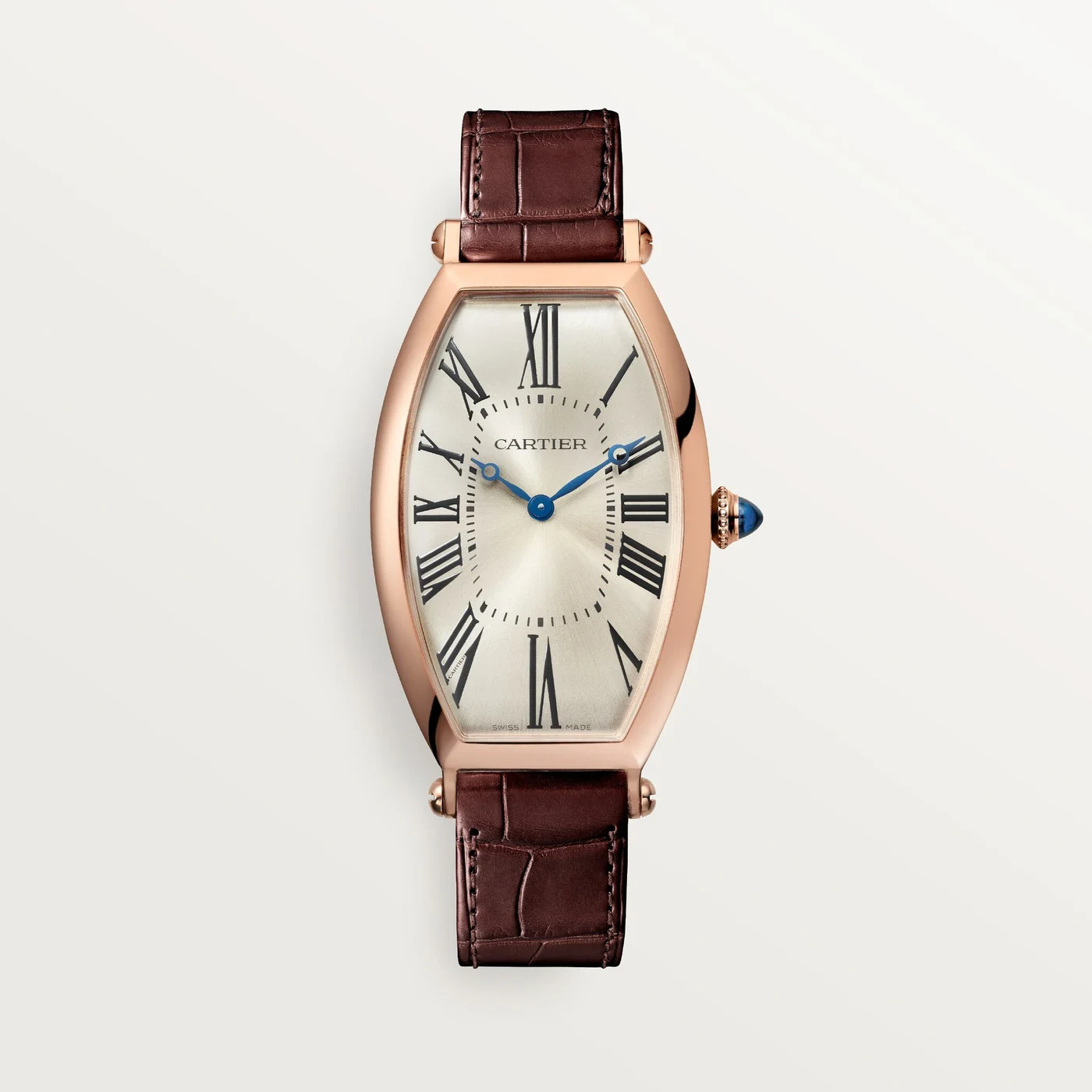
The barrel never left the catalog. The current Tonneau, large model, is 46.1mm by 26.2mm in 18k rose gold, and we covered its Cartier Privé skeleton dual-time version when it arrived.
Cartier gives the Tortue a 1912 start. Its case is broader than the Tonneau’s, and Sotheby’s points out that the lugs became part of the outline. Lot 32, a London-retailed Tortue in platinum and yellow gold from around 1917, is estimated at $18,000 to $25,000. Sotheby’s notes that the Tortue also became Cartier’s case for complications and dates the single-button chronograph’s arrival in the Tortue to 1928, in a series of about 15 pieces. Lot 21, a Monopoussoir Tortue à Pattes from around 1936, is estimated at $70,000 to $100,000.
Lot 30 is the Tortue minute repeater, entered into the Cartier register on April 24, 1929, and sold in 1931. Sotheby’s says only two Tortue minute repeaters from the period are publicly known, and that the other is in Cartier’s own collection, which lists a 1928 example worked by a repeating slide. By Sotheby’s account, lot 30 is the only known example in private hands. It carries the sale’s top estimate, $1 million to $2 million.
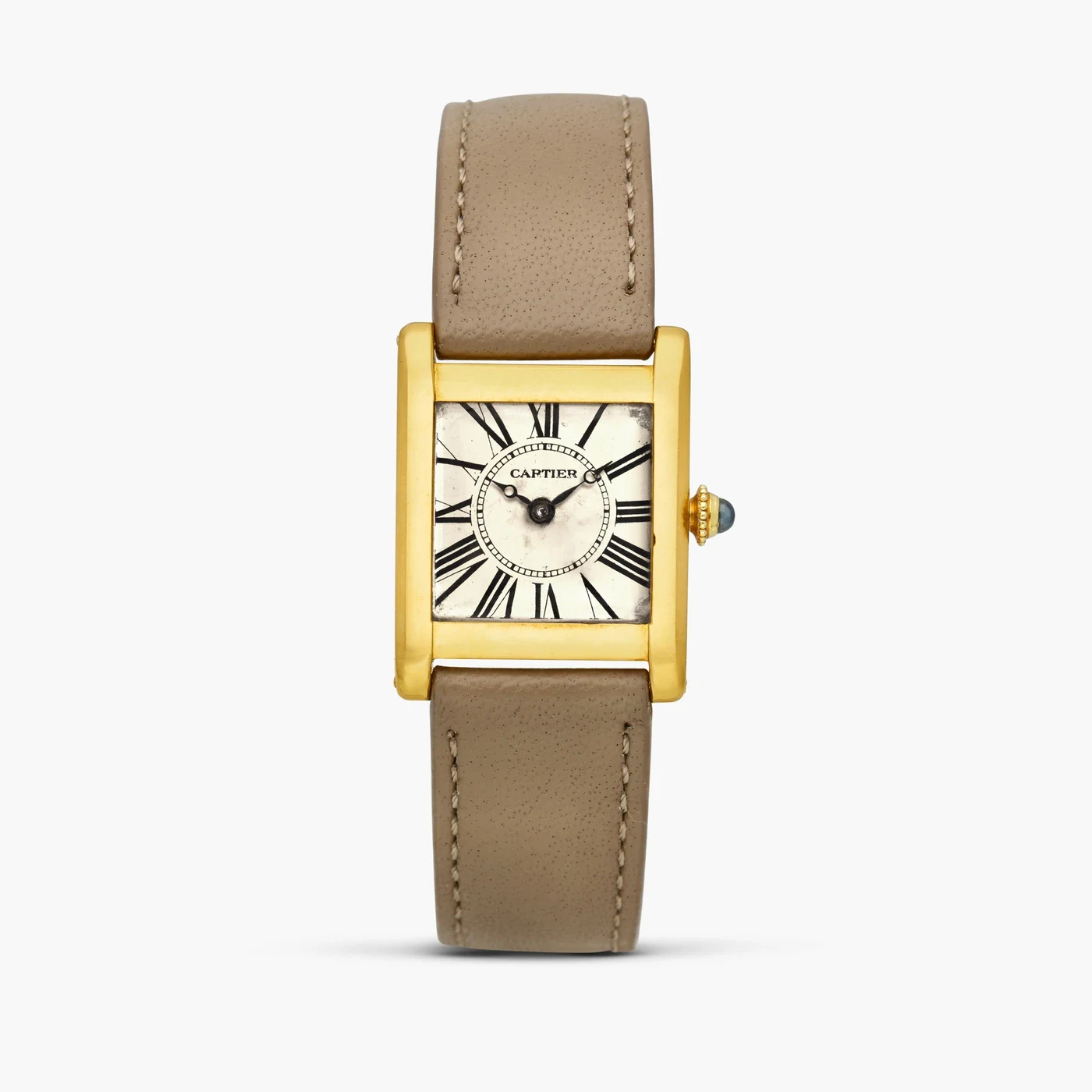
Cartier puts the Tank at 1917, a rectangle by Louis Cartier with two parallel brancards that carry the case into the strap. Sotheby’s notes that Cartier made just 33 Tanks in 1920, after the first wristwatches of 1919, and lot 35, a London-retailed Tank Normale hallmarked for 1920-21, is one of them, estimated at $40,000 to $60,000.
Cartier London was still making the Tank Normale half a century later. Lot 49, a black-dial example from around 1968-69, is estimated at $100,000 to $150,000.
Ovals and Bells
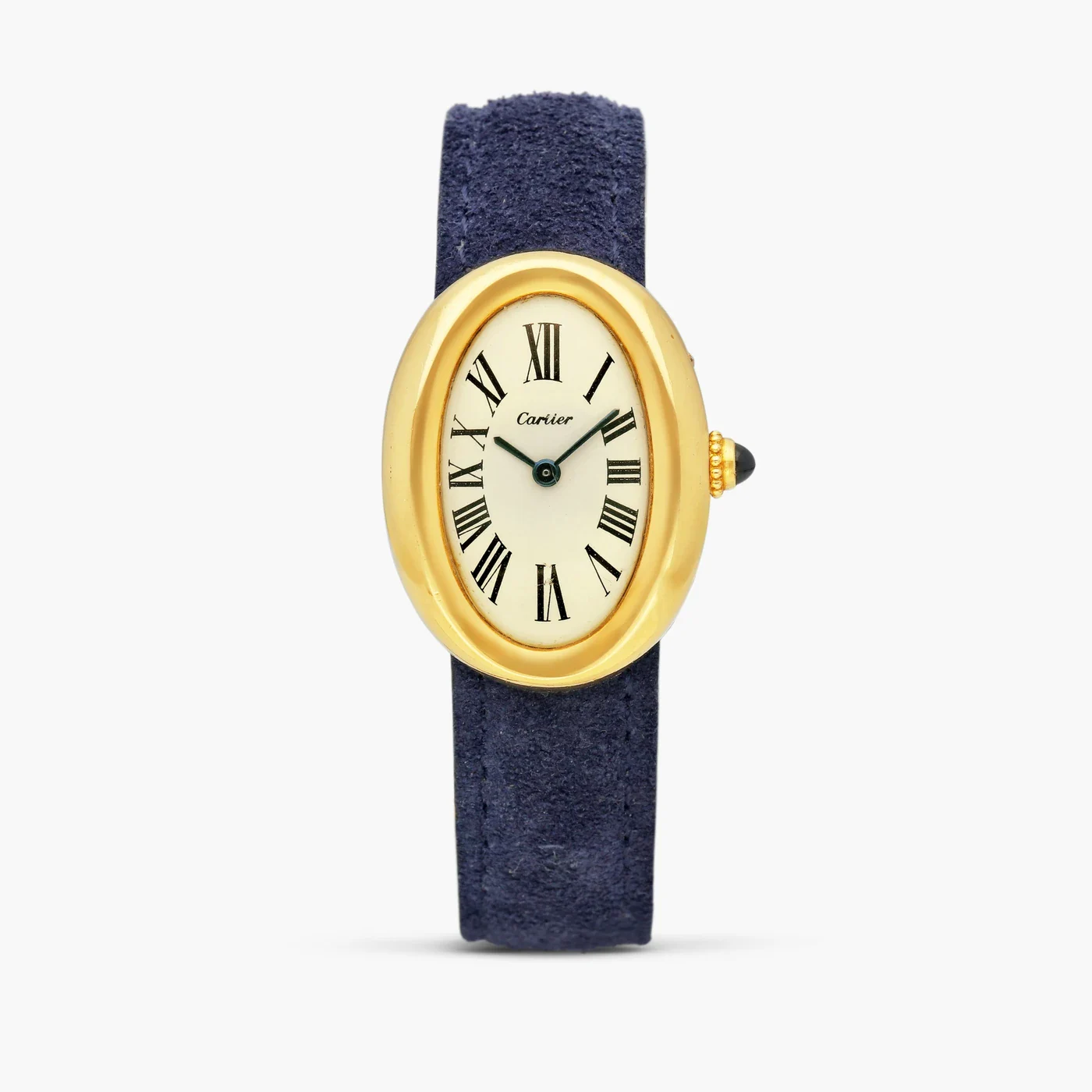
Cartier traces its oval to a 1912 design. A curved oval, the Ovale cintré, appeared in 1958 and took the Baignoire name in 1973. Lot 53 is a London version from around 1976-77, 31mm by 23mm, with a bezel that slopes in toward the dial. In England, Sotheby’s adds, the model was simply called the Oval. The estimate is $20,000 to $30,000, and the shape is still in production, as Cartier’s 2025 Baignoire collection shows.
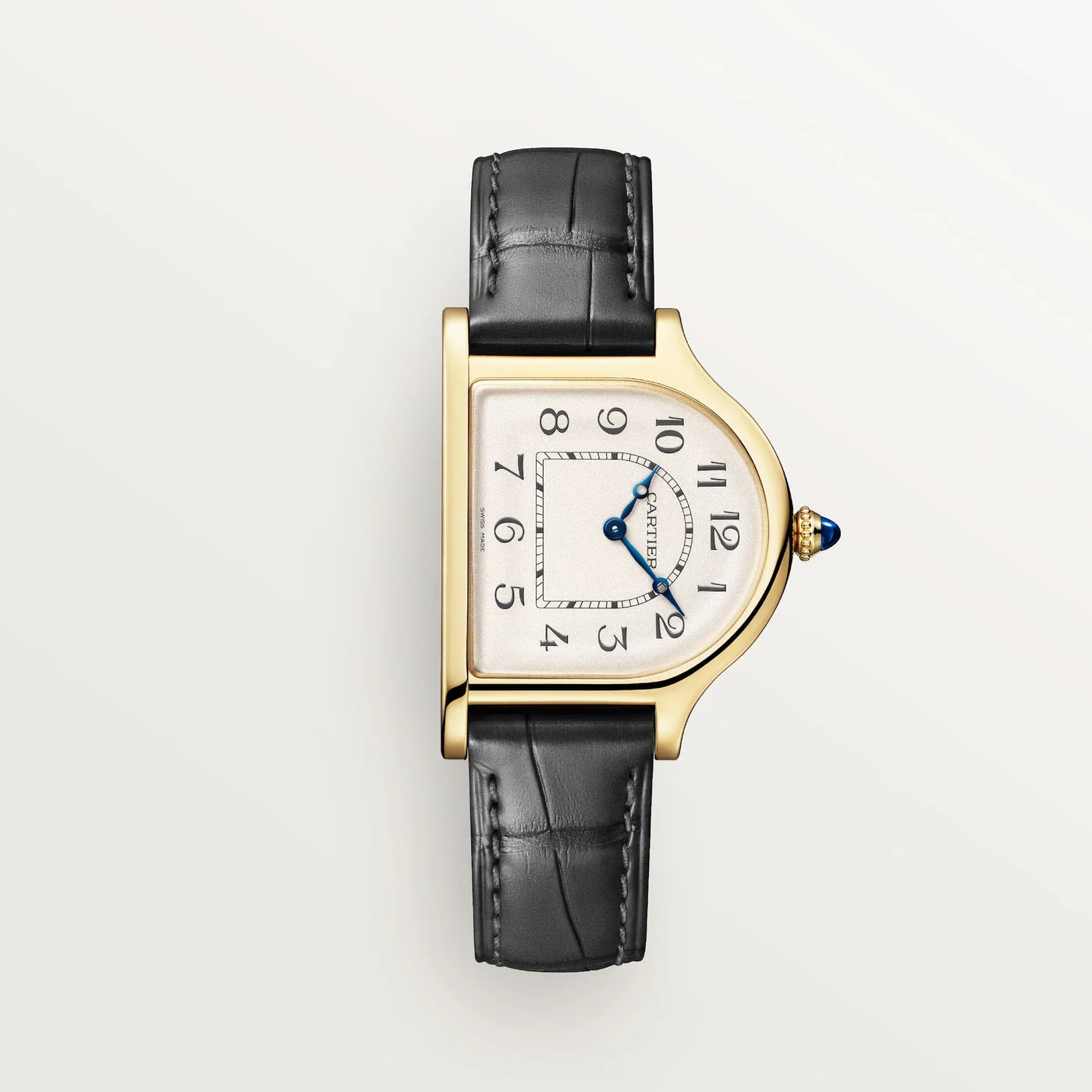
The Cloche is not in the sale, but it belongs in the vocabulary. A 2024 Sotheby’s catalog note dates the first piece to 1920, as a watch brooch, and a platinum and diamond wristwatch to 1921. It adds that the bell reads as easily on a desk as on the wrist.
Today’s Cloche de Cartier in yellow gold measures 37mm by 28.65mm, is 5.7mm thick, and runs on the manual-winding caliber 070. In our view, it is the clearest example of Cartier designing an object first and a wristwatch second, because the bell works whether it is worn or set down.
London Bends the Rules
In the 1960s, Cartier’s London branch largely set its own course under Jean-Jacques Cartier, and Sotheby’s credits the designer Rupert Emmerson with working closely with him on new forms. Cartier lists the results in order: the Crash in 1967, the Maxi Oval in 1969, and the Double Strap in 1970, then a pebble-shaped watch in 1972.
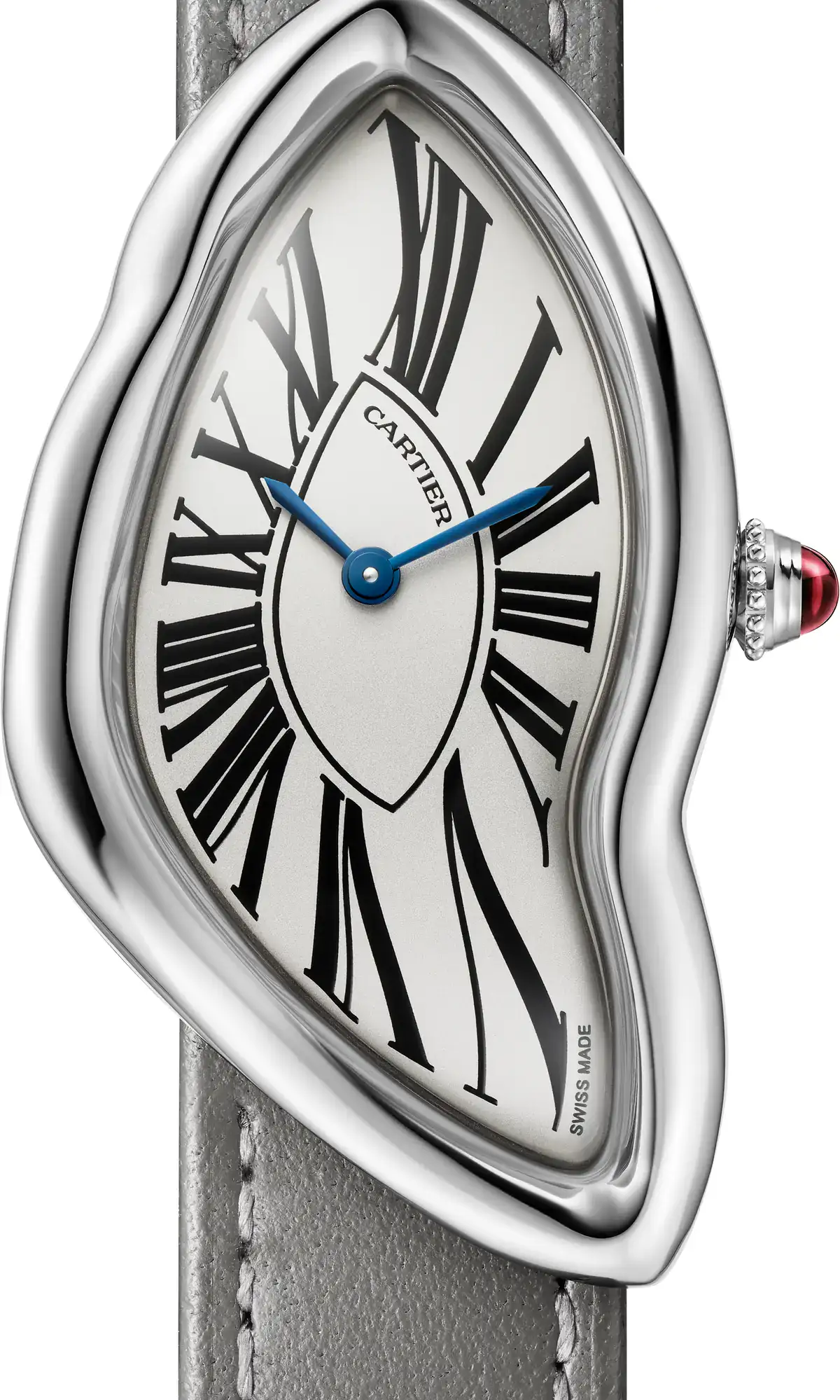
The Crash is the famous one, and it is the one shape missing from this sale. Cartier’s own collection presents its 1967 London Crash with the traditional story that it interprets a watch damaged in a crash. Sotheby’s calls the car-accident story a popular myth. For us, the origin story matters less than the drawing. The Crash keeps Cartier’s Roman numerals and blued hands and pulls them out of true.
Sotheby’s says Paris reissued it in 1991 as a limited edition of 400 yellow gold watches, and Cartier’s UK site lists a platinum Crash with a case back engraved with the New Bond Street boutique coat of arms.
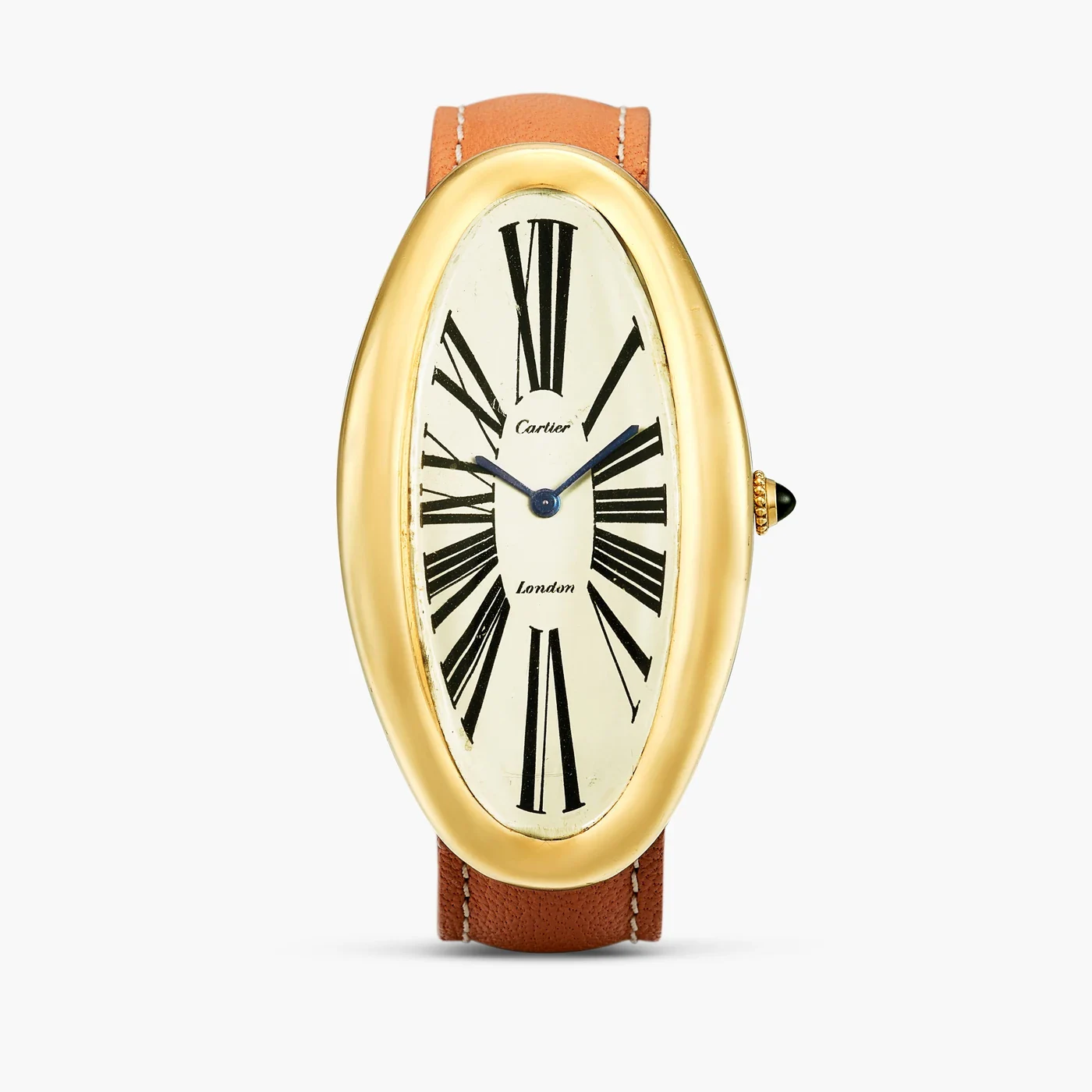
The Maxi Oval, lot 43, is the Baignoire stretched. This one, from around 1968-69, measures 57mm by 31mm, with T-bar lugs fixed to the case back so the outline stays unbroken. It is estimated at $150,000 to $200,000.
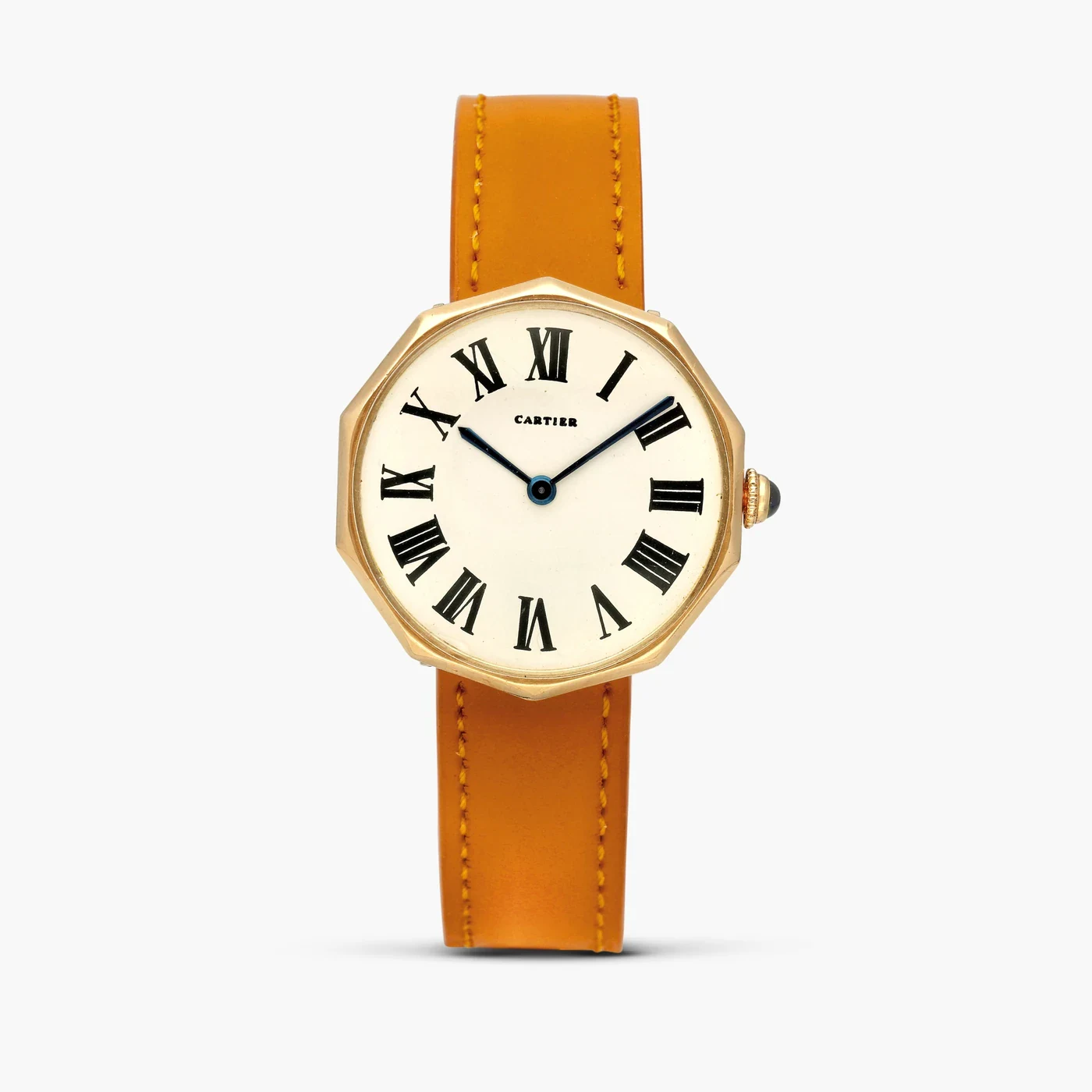
Lot 44 is the Decagonal, with a ten-sided, faceted bezel, a 31mm case, and concealed lugs. This example dates from around 1970-71. Sotheby’s has traced five examples, all in a men’s size, and dates the earliest to 1965-66, ahead of the London Crash. The estimate is $60,000 to $80,000.
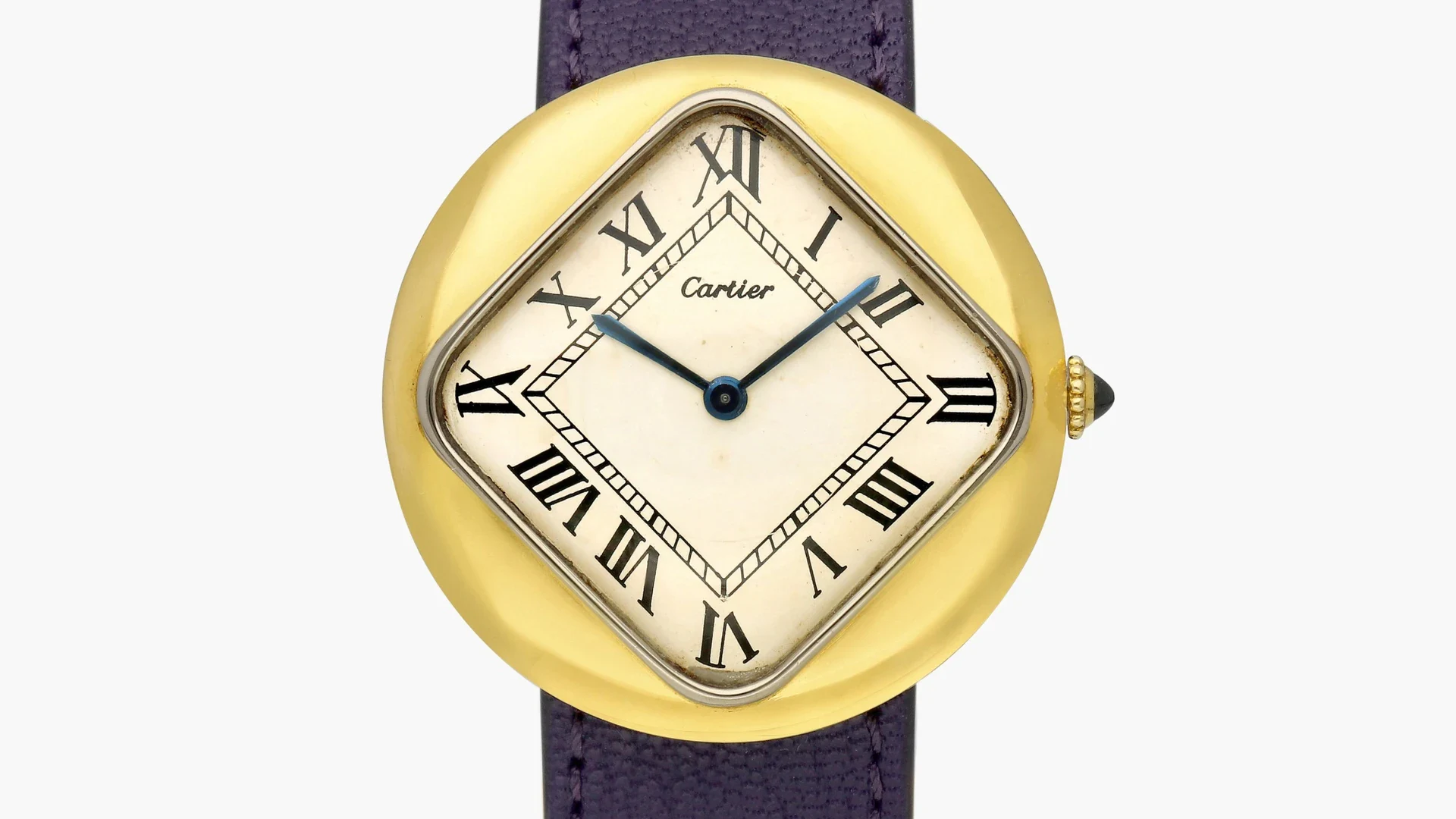
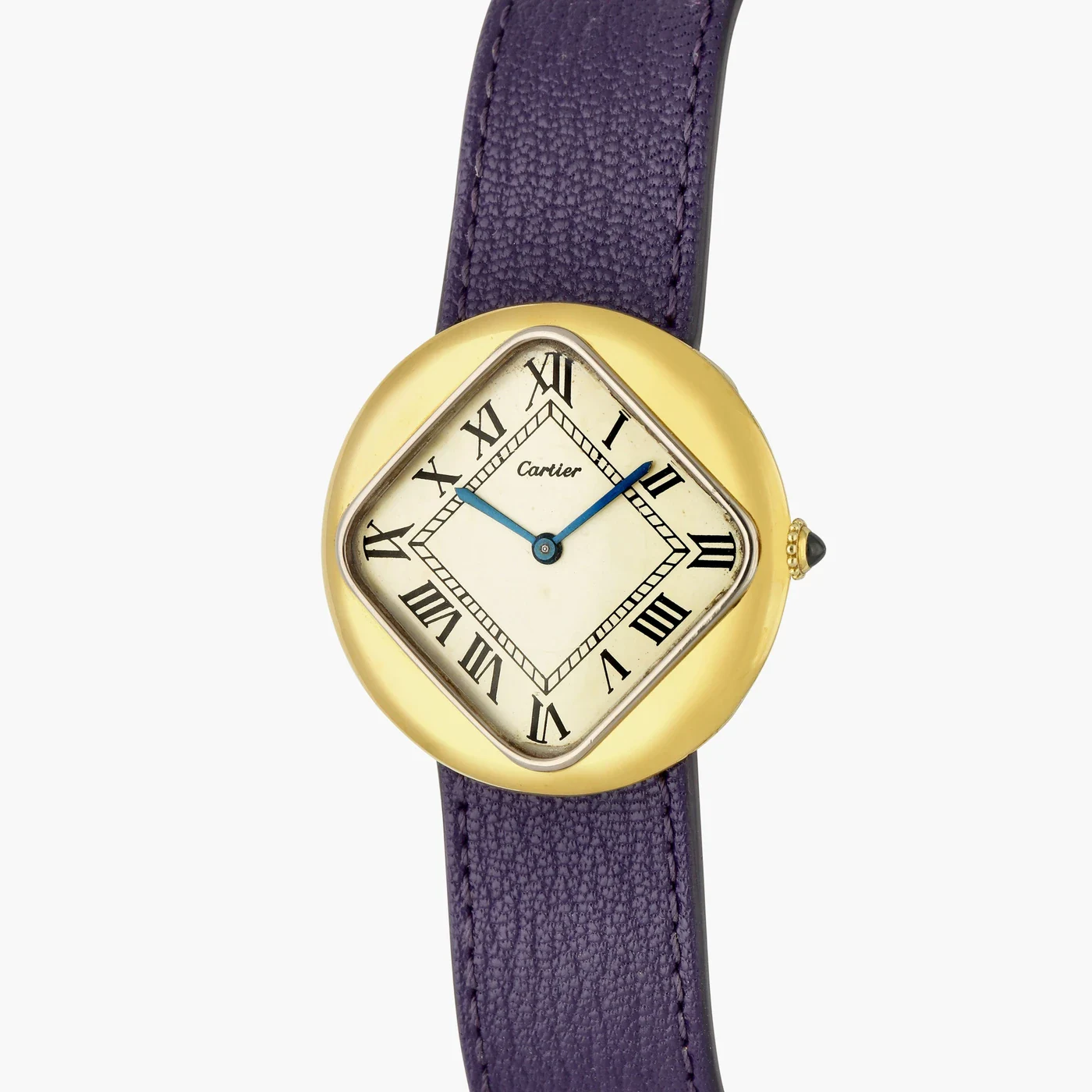
Lot 45, the Maxi Pebble, puts a square dial inside a round 35mm case. This one, from around 1971-72, pairs a yellow gold case with a white gold bezel and hidden lugs. Sotheby’s credits Emmerson with the Pebble, says the model is widely thought to have been released in 1972, and calls this the only known London Pebble with that combination. It is estimated at $220,000 to $280,000.
Cartier keeps a 1972 Pebble in its own collection and reissued the model in 2022 as a numbered edition of 150 with the hand-wound caliber 430 MC.
What the Sale Teaches
Our pick is lot 8. It is neither the rarest nor the most expensive watch here, but its chamfered movement plate shows the rule behind every shape in the sale. The case leads, and the movement is made to follow. Cartier still works that way. This year, Cartier Privé revived the Tank Normale, the Tortue Monopoussoir Chronograph, and a skeleton Crash, as we noted in our roundup of Cartier’s Watches and Wonders 2026 novelties.
Shapes of Cartier: Watches is a live auction in Abu Dhabi on December 9, 2026, starting at 6:30 PM GST, or 9:30 AM ET, with lots 1 through 58 and estimates in US dollars on Sotheby’s sale page. Fifty-eight lots make a small dictionary, but every word in it is a shape, and Cartier has been adding to it for more than a century.
| Specification | Details |
|---|---|
| SALE | |
| Auction | Shapes of Cartier: Watches (sale AD2602), Sotheby’s |
| Location | Abu Dhabi |
| Date and time | December 9, 2026, live session opening 6:30 PM GST (9:30 AM ET) |
| Lots | 58 (lots 1–58), estimates in USD |
| Series | Described by Sotheby’s as the last and final chapter of its Shapes of Cartier series (more than 300 watches, April to December 2026) |
| Top estimate | Lot 30, Tortue Minute Repeater, entered into the register April 24, 1929, sold 1931: $1,000,000–2,000,000 |
| KEY MODELS | |
| Santos | 1904 (Cartier); lot 27 Santos Carré, circa 1911, $20,000–40,000; lot 25 London-retailed Santos, circa 1913, $20,000–40,000 |
| Tonneau | 1906 (Cartier); lot 8 curved tonneau-form wristwatch, circa 1909, 39mm x 26mm, $30,000–60,000 |
| Tortue | 1912 (Cartier); lot 32 London-retailed Tortue, circa 1917, $18,000–25,000; lot 21 Monopoussoir Tortue à Pattes, circa 1936, $70,000–100,000 |
| Tank | 1917 (Cartier); lot 35 London-retailed Tank Normale, circa 1920-21, $40,000–60,000; lot 49 Cartier London Tank Normale, circa 1968-69, $100,000–150,000 |
| Baignoire | Oval design 1912; Ovale cintré 1958; named Baignoire 1973 (Cartier); lot 53 Cartier London Baignoire, circa 1976-77, $20,000–30,000 |
| Cloche | Watch brooch 1920; platinum and diamond wristwatch 1921 (Sotheby’s); not offered in this sale |
| Crash | Cartier London, 1967 (Cartier); Paris limited edition of 400, 1991 (Sotheby’s); not offered in this sale |
| Maxi Oval | 1969 (Cartier); lot 43 Cartier London Maxi Oval, circa 1968-69, 57mm x 31mm, $150,000–200,000 |
| Decagonal | Lot 44 Cartier London Decagonal, circa 1970-71, 31mm, $60,000–80,000 |
| Pebble | 1972 (Cartier); lot 45 Cartier London Maxi Pebble, circa 1971-72, 35mm, $220,000–280,000; 2022 reissue, 150 numbered pieces, caliber 430 MC |
Timely FAQs
When is Sotheby’s Shapes of Cartier sale in Abu Dhabi?
What is the top estimate in the Shapes of Cartier Abu Dhabi sale?
When did Cartier introduce its first shaped watches?
