Nick Welsh, Cartier Collection © Cartier
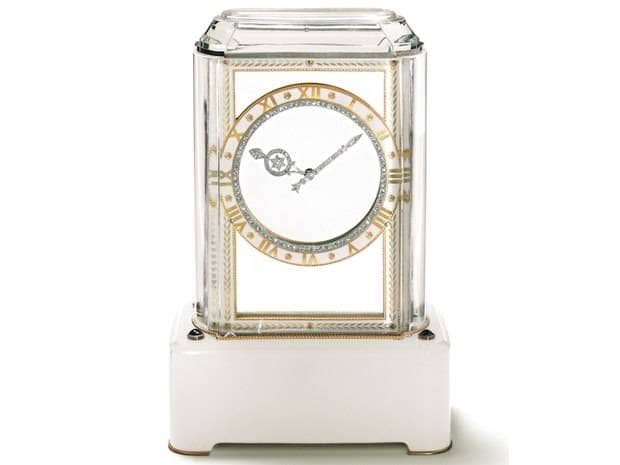
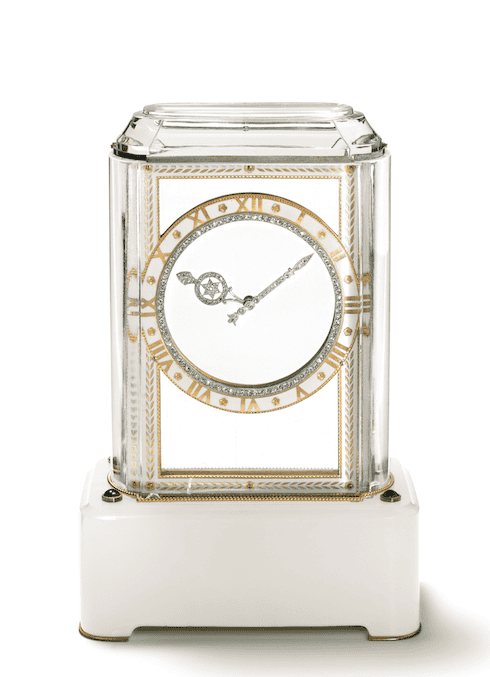
Cartier is famous for many iconic creations, but the Mystery clock has a special place in the company’s history. Louis Cartier formed a partnership in with Maurice Couet, a gifted clockmaker, and together they produced Cartier’s first Mystery clock in 1912, known as the Model A. Couet was inspired by the clocks of the French illusionist and inventor of modern magic Jean-Eugene Robert-Houdin. The basic principle was to create a clock in which the hands were not directly linked to the movement but were attached to two glass disks, each fitted into a metal border edged with gear teeth. The metal borders of the disks were hidden in the minute track, while the movement was housed in the clock case at the base. This base was often highly decorated, and the Model A was made in versions made of onyx, agate, nephrite and gold. The hands were often set with diamonds. The clocks were extremely rare, decorative objects, some involving over a year of work. Cartier’s Mystery clocks are still made today, more than a century after the first Model A emerged from the company’s Paris atelier in 1912. At the SIHH this year (2013), Cartier introduced wristwatches based on the mystery watch principle, using miniaturized sapphire disks that drive the hands.
Cartier is famous for many iconic creations, but the Mystery clock has a special place in the company’s history.
