Vacheron Constantin is one of the elite heritage brands whose complicated timepieces make headlines in the watch journals, so there was an audible gasp when the brand introduced nothing but ladies’...
Vacheron Constantin is one of the elite heritage brands whose complicated timepieces make headlines in the watch journals, so there was an audible gasp when the brand introduced nothing but ladies’ watches at the recent Salon International de la Haute Horlogerie. It’s not surprising, though, if you know a little bit about the company’s history.
The brand was one of the first to understand the potential of the ladies’ wristwatch, and began producing watches almost from the beginning that were designed to symbolize the status of their female owners. As early as 1810 it produced a quarter repeater for ladies. In the 1870s, the company was controlled for a time by two widows of the Vacheron family: Catherine Barthelemy Vacheron and Louise César Vacheron, who ran the company together with Jean-Francois Constantin, a great-nephew of the founding member of the Constantin family. The two women made a tremendous contribution to the development of the firm by establishing the arts of miniaturization and decoration in the manufacture, nurturing skills that only a few watchmakers at the time possessed. The brand thus helped pioneer what would become known as the Geneva-style of luxury watchmaking – highly decorated yet refined, and finished to the highest standards.
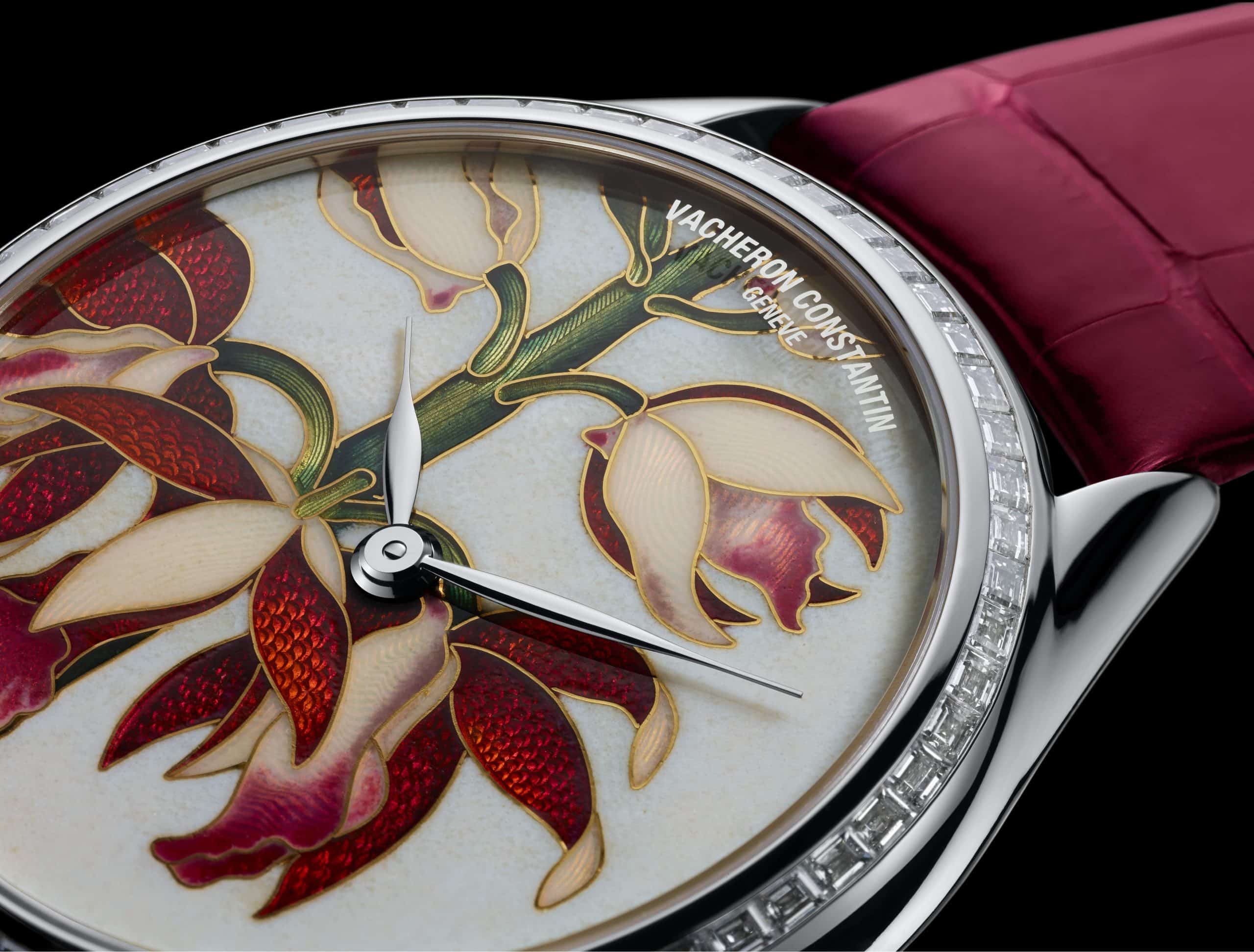
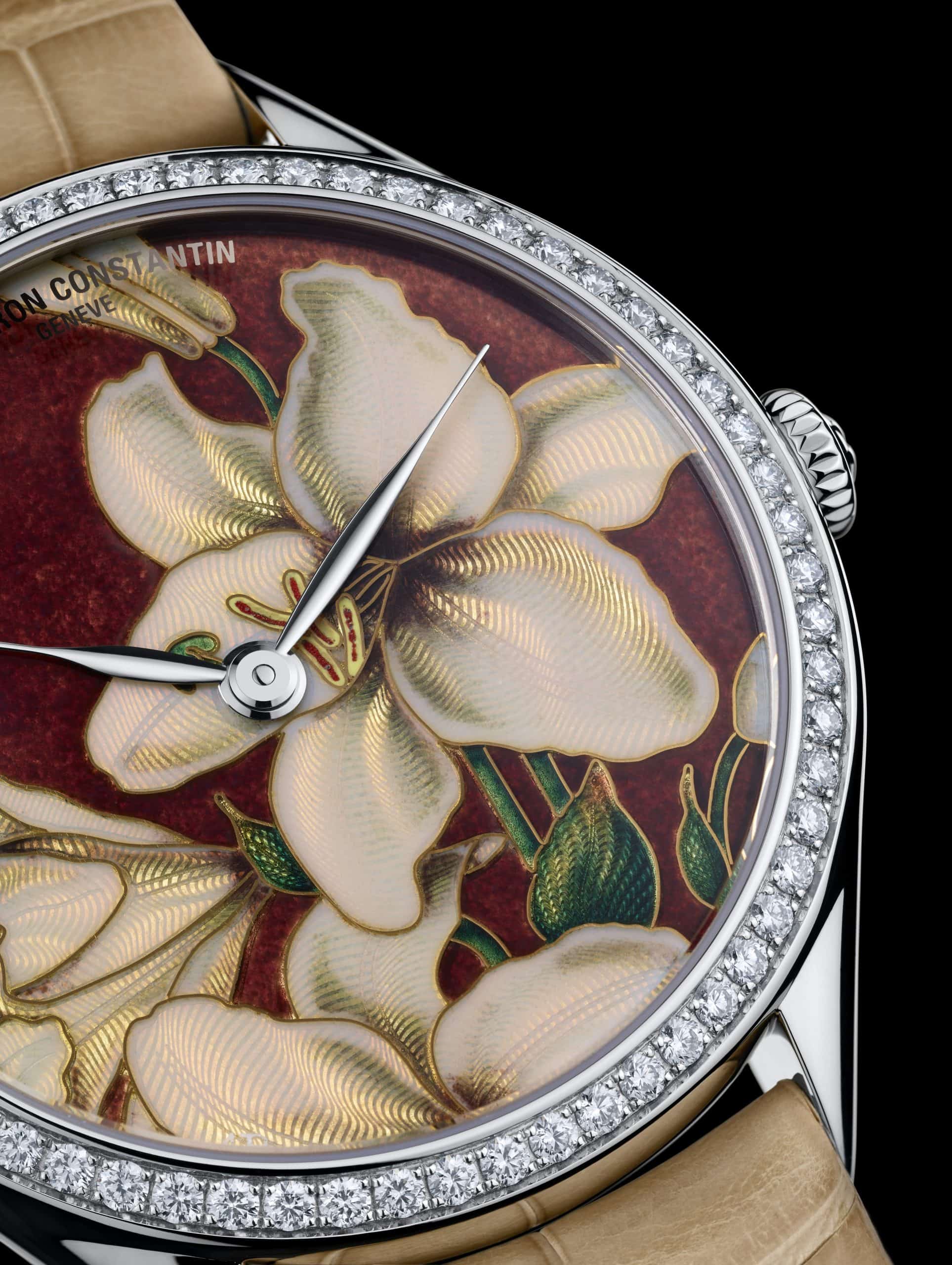
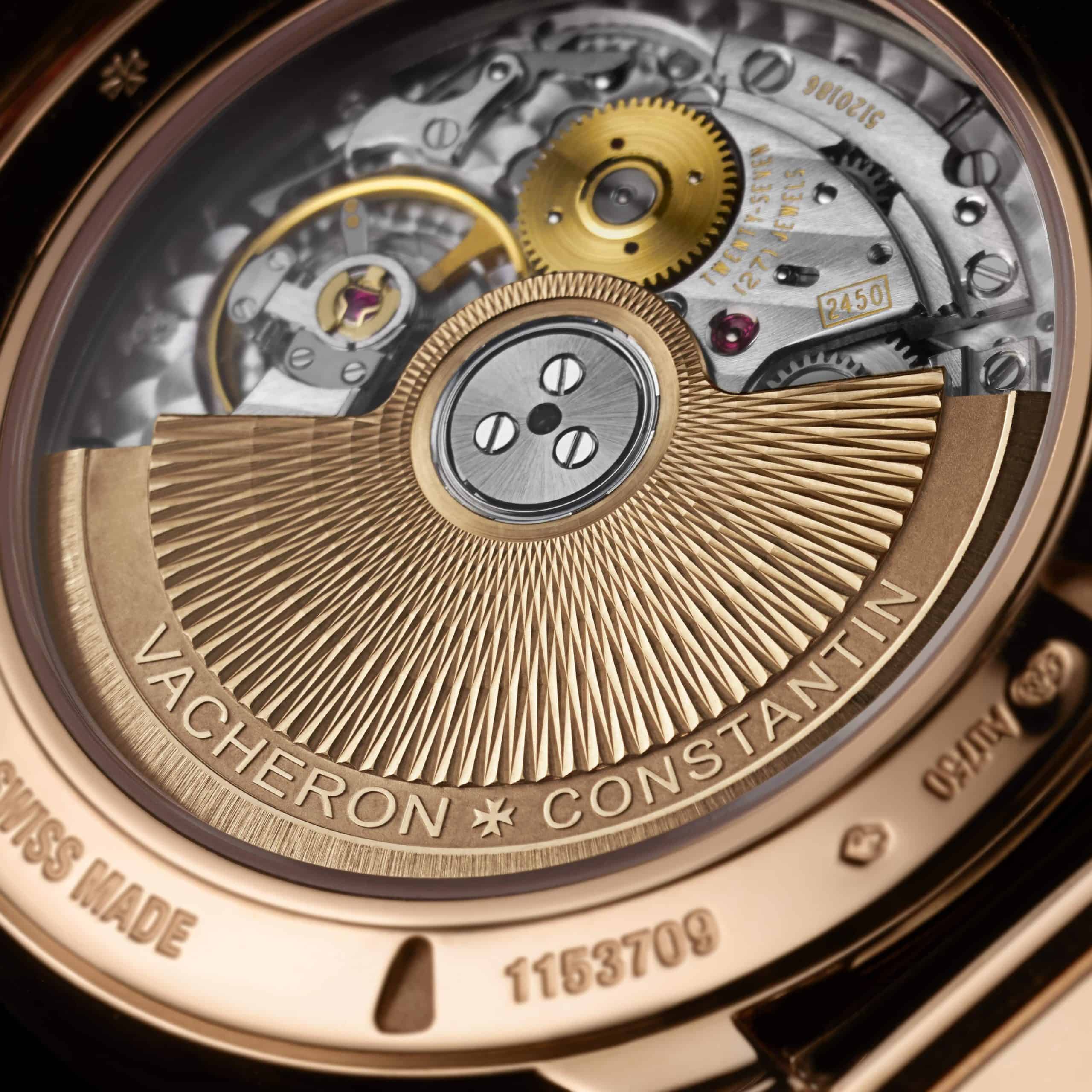
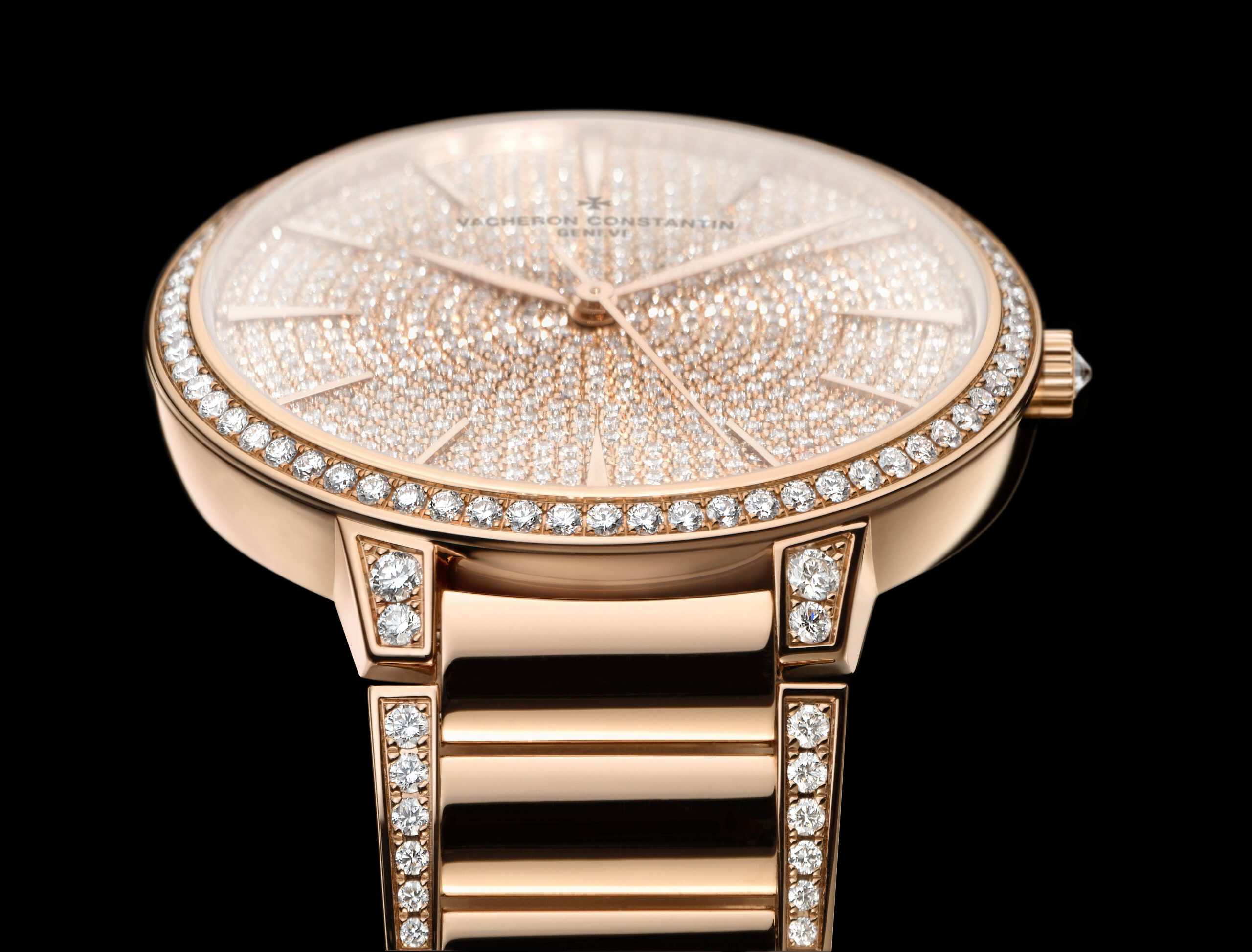
In 1889, the manufacture introduced a wristwatch for ladies that vindicated this reputation for workmanship. It was also a technical innovation, introducing a revolutionary way of winding the watch and setting the time by simply turning the bezel, thus avoiding the need for a winding crown. In 1914, the baguette watch was introduced, with the miniaturized caliber 1005, a version of which is still used today in the ladies’ Kalla collection. The brand’s cultivation of skilled craftsmen – the engravers, enamelists, engine-turners, jewelers and gemsetters – is still reaping dividends. At the SIHH, ladies’ pieces were introduced in three collections: Patrimony, Malte and Metiers d’Art. Three spectacular pieces from the Metiers d’Art collection stole the show. The Florilège is a trio of grand feu cloisonné enamel dials inspired by The Temple of Flora, a book of botanical illustrations written in 1799 by botanist/explorer Robert John Thornton. From the Patrimony collection came two models – the automatic Contemporaine, with a unique diamond-set minute track (set from underneath the dial) and a fully set version with 775 diamonds, and the Traditionelle, a manual-wound watch with a high jewelry masterpiece fully set with over 300 baguettes. Three models in the Malte collection include a fully paved dial version. All introductions are crafted according Geneva Hallmark standards.