The Blancpain Carrousel Incliné took four years of work to settle one question, the angle at which a flying carrousel keeps better time, and the answer is 30 degrees. The regulating organ sits on a bridge fixed at that tilt, inside the brand’s first case made entirely of sapphire, and every watch leaves with a certificate that records its rate in all six timing positions across a 100-hour power reserve.
The Blancpain Carrousel Incliné, Ref. 66222S, houses caliber 222ISQ, a one-minute flying carrousel inclined at 30 degrees, in a 40.30 mm sapphire case. Each watch comes with a Blancpain chronometry certificate for an average daily rate of 0 to +2 seconds.
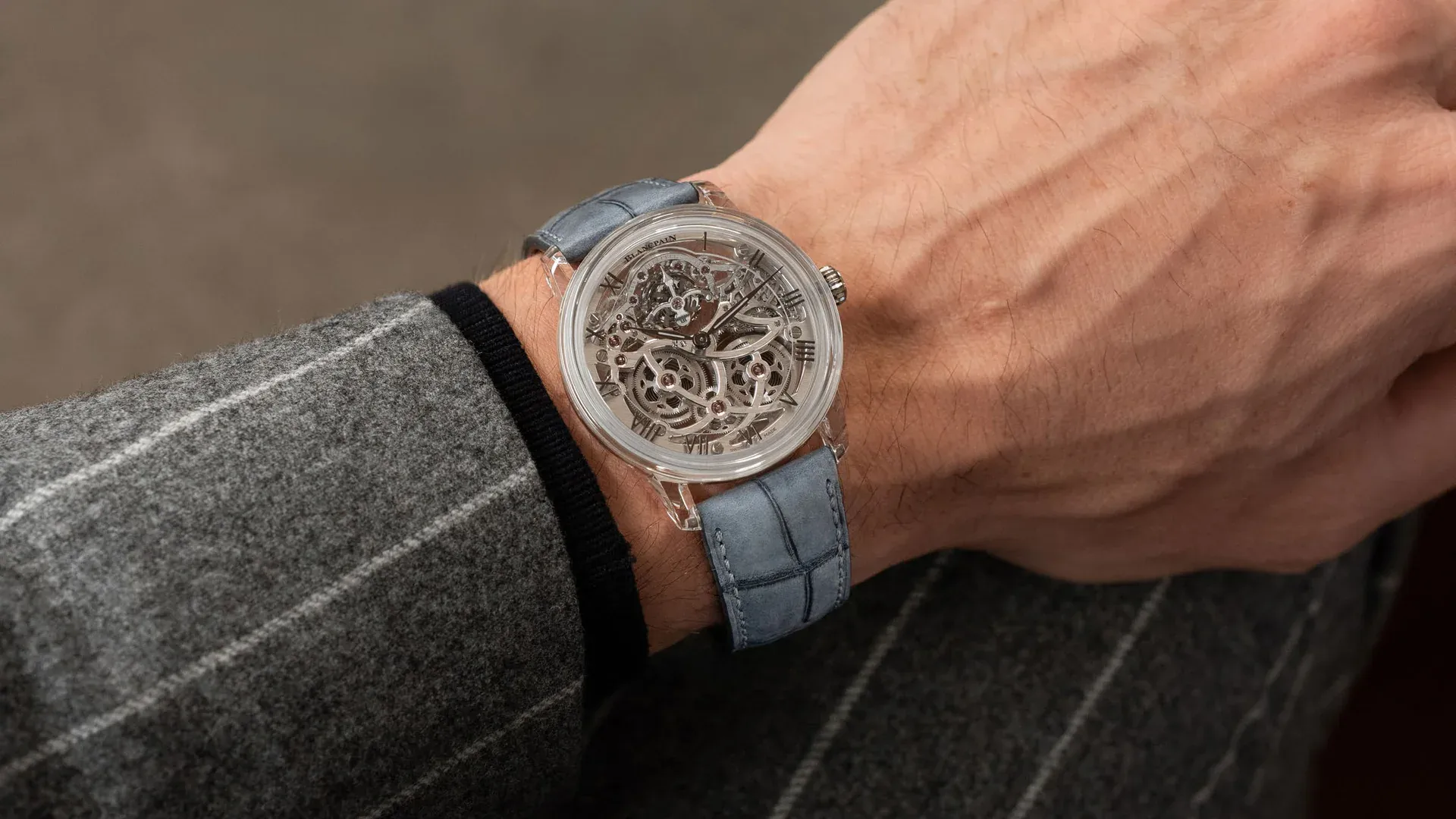
The carrousel has been a Blancpain signature since 2008, when Blancpain first put a one-minute flying construction on the wrist. Bahne Bonniksen had invented the mechanism in 1892, after which it slipped from view for much of the 20th century. Blancpain later paired it with a minute repeater, a flyback chronograph, and, in 2013, a tourbillon in the same movement, their rates averaged through a differential. The new movement, caliber 222ISQ, was drawn up as the base for Blancpain’s next generation of carrousels.
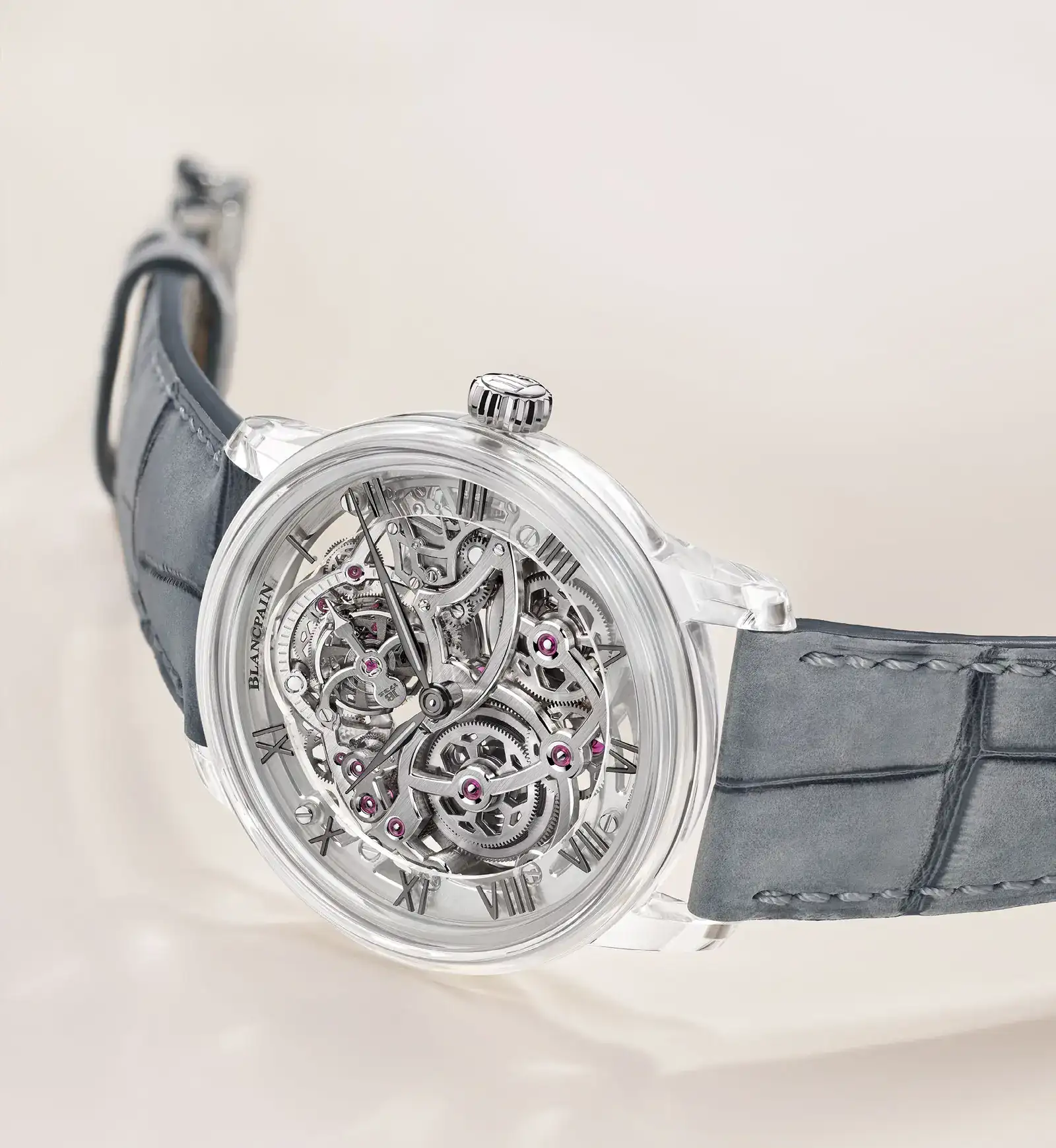
Marc A. Hayek, President and CEO of Blancpain, was not interested in tilting the cage for the sake of the view. “A carrousel only makes sense if it brings something meaningful to the watch,” he says. “Inclining the regulating organ for spectacle alone never interested me. What I wanted was a watch with impeccable precision, whether on the wrist or at rest. And I wanted its owner to be able to see, through the sapphire, all the research and craftsmanship that made it possible.”
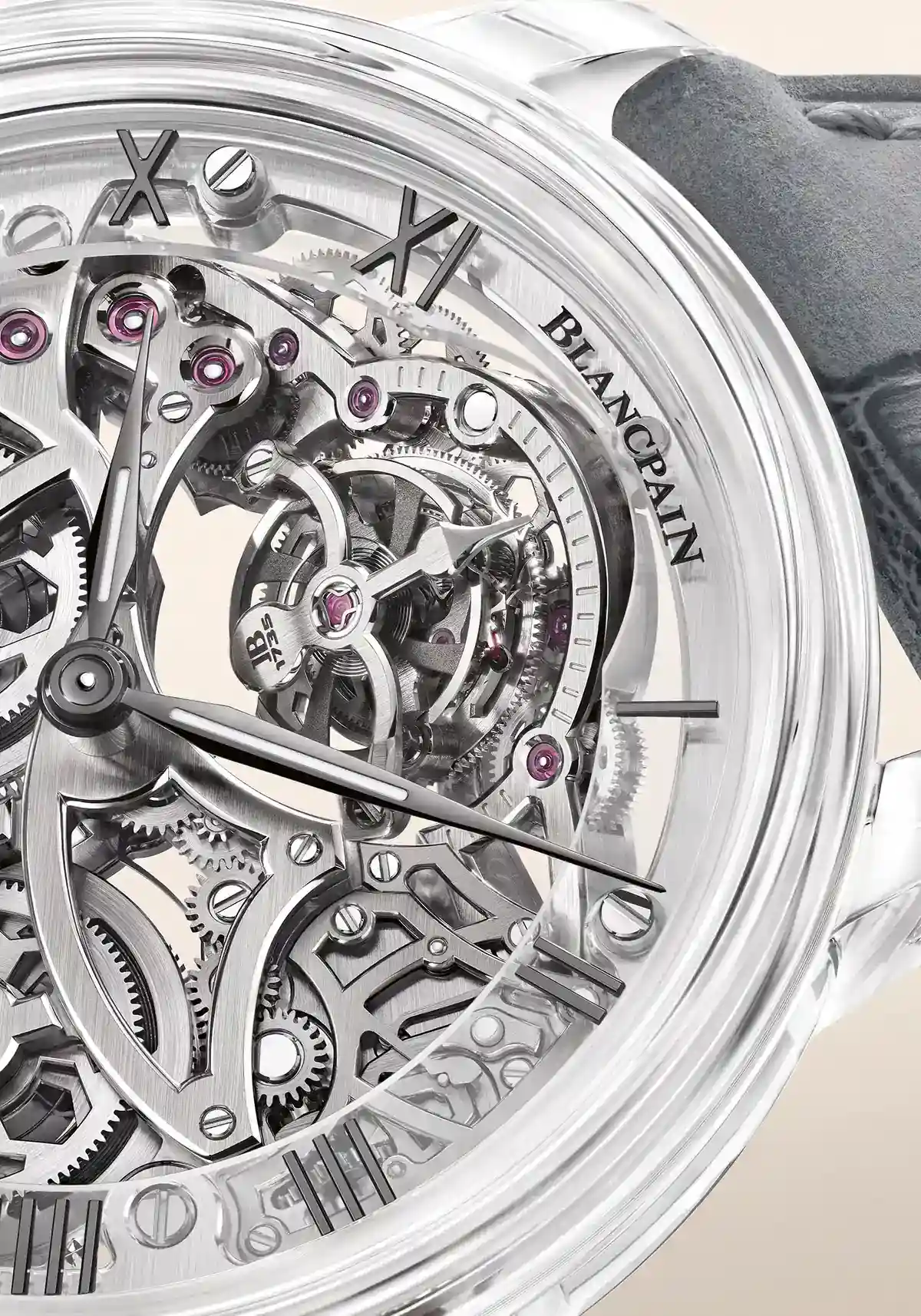
Blancpain’s movement designers measured rate, amplitude, and the greatest variation in six positions at five-degree steps from 0 to 35 degrees, using demonstrators built from existing calibers. Between 15 and 20 degrees, the positional spread began to tighten. At 30 degrees, the brand says, the daily rate stayed within 0 to +2 seconds, whether the watch was on the wrist, lying flat, or standing on its side. That tilt also keeps the regulator on an oblique path relative to gravity even when the watch is dial up or dial down, so the averaging does not stop when the watch is at rest.
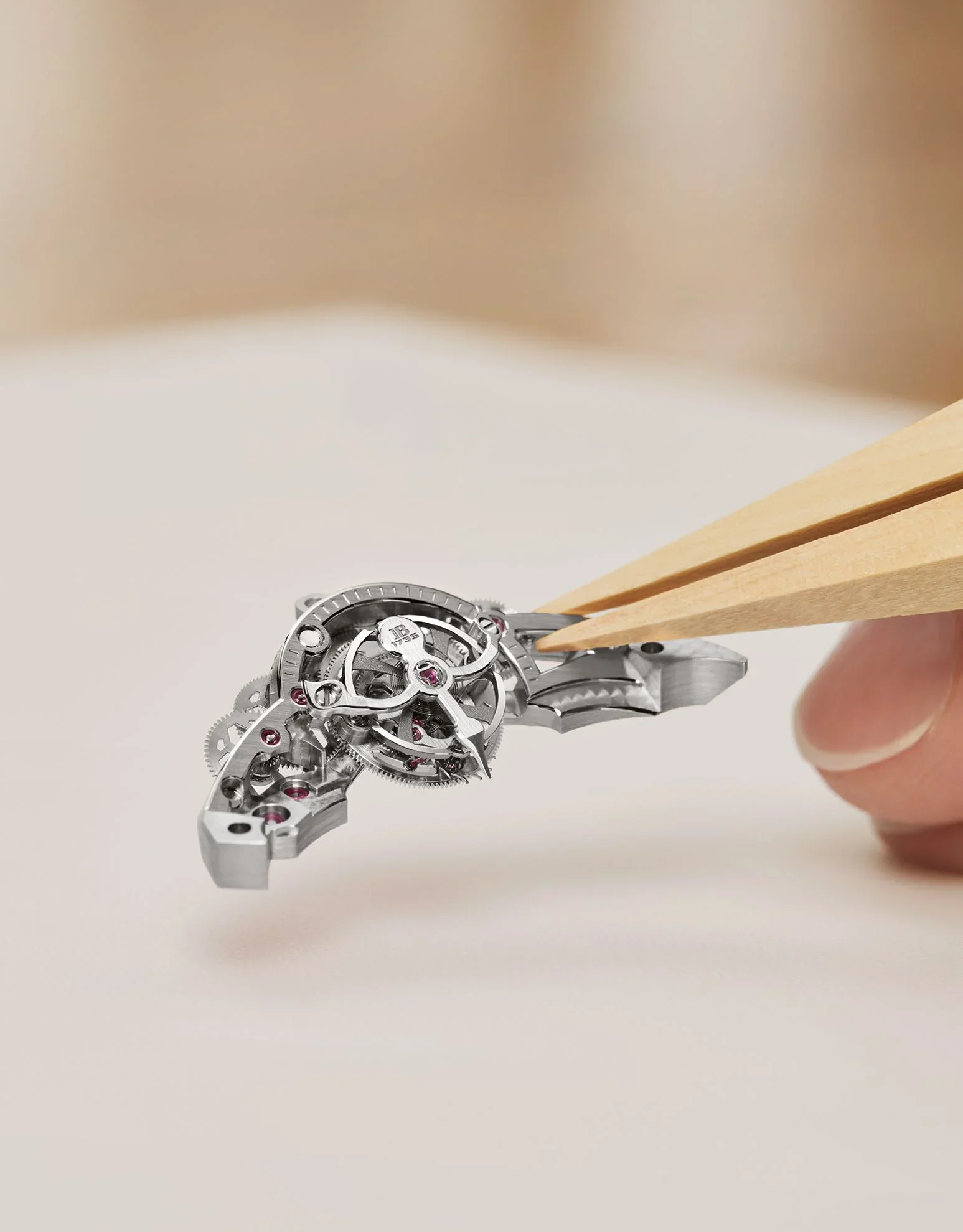
Getting energy to a balance that runs on an inclined axis is a packing problem as much as a timing one. To solve it, caliber 222ISQ splits the 30-degree change across two gear engagements, at 22 degrees and then 8 degrees, so both drive trains can run in the same inclined plane. A double ball-bearing support, the subject of a patent application, lowers the cage and leaves both drive inputs in view. The movement measures 35.20 mm by 5.30 mm, rising to 6.98 mm where the cage stands above the plate. The finished watch is 11.30 mm thick.

Two mainspring barrels, connected in series, deliver the 100-hour power reserve and are openworked so the state of wind is visible. The cage has been redesigned: mass is down 8.5 percent, and rotational inertia is down 30 percent. The balance has grown to 8 mm, with the same inertia, inset screws, and a silicon hairspring. The cage still turns once a minute, at 4 Hz. Unlike the 2008 wristwatch carrousel, caliber 222ISQ is manually wound. It has 224 components and 37 jewels, and is made in 18k gold, in rhodium-plated 5N gold or in 5N red gold.
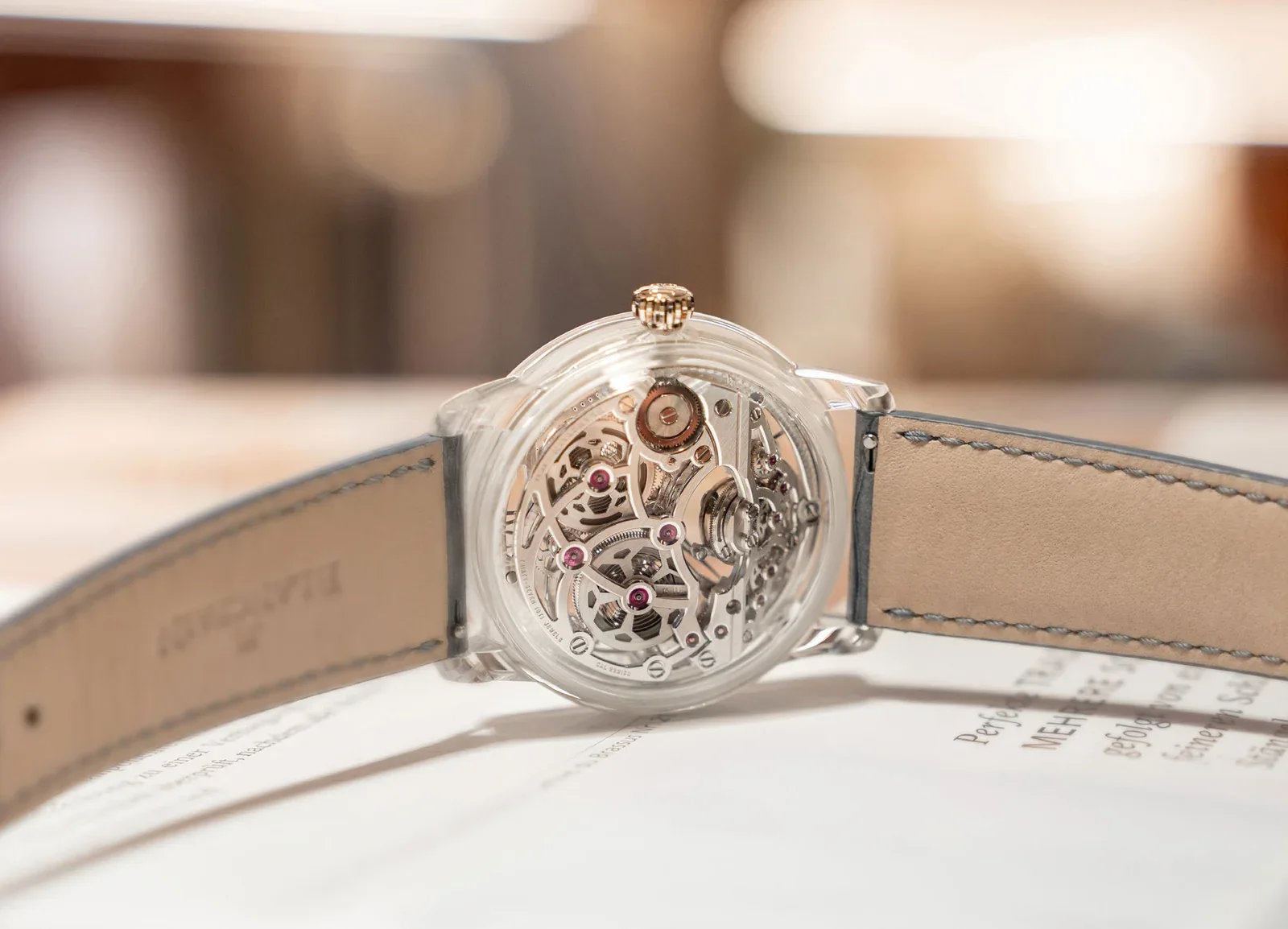
The case is the other first. It is made entirely of sapphire: an integrated middle and back, and an integrated bezel and crystal, each taking about 100 hours of machining and polishing. The crystal is grown in La Chaux-de-Fonds by the Kyropoulos method. A sapphire dial, with beveled, inclined gold appliques and leaf-shaped hands filled with Super-LumiNova, sits in front of the movement. The idea, the house says, was to show the movement at work, not merely to see through the watch. The barrels, winding click, setting lever, and inclined gear train are all on view, including from the sides.
That transparency leaves no hidden face to finish. The artisans in Blancpain’s Decoration Workshop in Le Brassus describe caliber 222ISQ as having two upper sides. Anglage is applied to the upper and lower edges of the mainplate and bridges, 30 degrees on top and 45 degrees below, a method first used on the Grande Double Sonnerie. The movement carries 253 sharp inward angles, each shaped and polished by hand. Finishing takes 210 hours, with the carrousel bridge alone taking a week and a half and the mainplate or barrel bridge 55 to 60 hours. A single master watchmaker assembles each movement from start to finish.
The watch measures 40.30 mm across and 46.45 mm lug to lug, with 22 mm lugs, and is water-resistant to 3 bar. It is offered in two versions, Ref. 66222S 0000 55B in rhodium-plated 5N gold and Ref. 66222S A 0000 55B in 5N red gold, on a glazed blue-gray alligator strap with a gold folding clasp. It is not a limited edition. The Blancpain Carrousel Incliné is priced at $502,600, and each example is delivered in a wooden box with marquetry.
Hayek puts the aim more simply. “Precision in an ideal position is a laboratory result,” he says. “Chronometry is about keeping accurate time at all times. It is the consistency of a watch that lives with its owner, moves with them and rests beside them at night. That, for me, is true chronometry.” Blancpain is treating caliber 222ISQ as the start of a new family, not a one-off experiment, and on this showing it is a strong base to build on.
| Specification | Details |
|---|---|
| WATCH | |
| Model | Blancpain Carrousel Incliné |
| References | 66222S 0000 55B (rhodium-plated 5N gold); 66222S A 0000 55B (5N red gold) |
| Edition | Not a limited edition |
| MOVEMENT | |
| caliber | Manufacture caliber 222ISQ, manual winding |
| Dimensions | 35.20 mm × 5.30 mm (6.98 mm at the projecting cage) |
| Material | 18k gold, in rhodium-plated 5N gold or 5N red gold |
| Functions | Hours, minutes, and seconds |
| Regulating organ | One-minute flying carrousel inclined at 30 degrees |
| Frequency | 4 Hz (28,800 vibrations per hour) |
| Hairspring | Silicon |
| Jewels | 37 |
| Components | 224 |
| Power reserve | 100 hours, two mainspring barrels connected in series |
| Power-reserve display | Skeletonized barrels; the going-train barrel marked E (Empty) and F (Full) |
| Cage | Mass reduced 8.5 percent; rotational inertia reduced 30 percent; 8 mm balance with inset screws; cage wheel 9 mm |
| Drive | 30-degree change split across gear engagements at 22 degrees and 8 degrees; double ball-bearing support (patent application) |
| Certificate | Blancpain chronometry certificate, average daily rate tolerance of 0 to +2 seconds/day, recorded in six positions over the 100-hour reserve |
| Finishing | 210 hours of hand finishing in Le Brassus; 253 sharp inward angles; anglage on upper and lower sides (30 degrees above, 45 degrees below) |
| CASE | |
| Material | Sapphire (Blancpain's first full sapphire case): integrated middle and back, integrated bezel and crystal |
| Sapphire | Grown in La Chaux-de-Fonds by the Kyropoulos process; about 100 hours of machining and polishing per component |
| Diameter | 40.30 mm |
| Thickness | 11.30 mm |
| Lug-to-lug | 46.45 mm |
| Lug width | 22 mm |
| Water resistance | 3 bar (30 meters) |
| Crystal and back | Sapphire, integral with the case |
| DIAL AND STRAP | |
| Dial | Sapphire dial with beveled, inclined gold appliques |
| Indexes | Applied, baton-style polished black gold |
| Hands | Leaf-shaped, with white Super-LumiNova (daytime) and blue emission at night |
| Strap | Glazed blue-gray alligator leather, interchangeable |
| Clasp | Gold folding clasp with safety system |
| Presentation box | Wooden box with marquetry |
Timely FAQs
What is the Blancpain Carrousel Incliné?
What is caliber 222ISQ?
Is the Blancpain Carrousel Incliné a limited edition?
