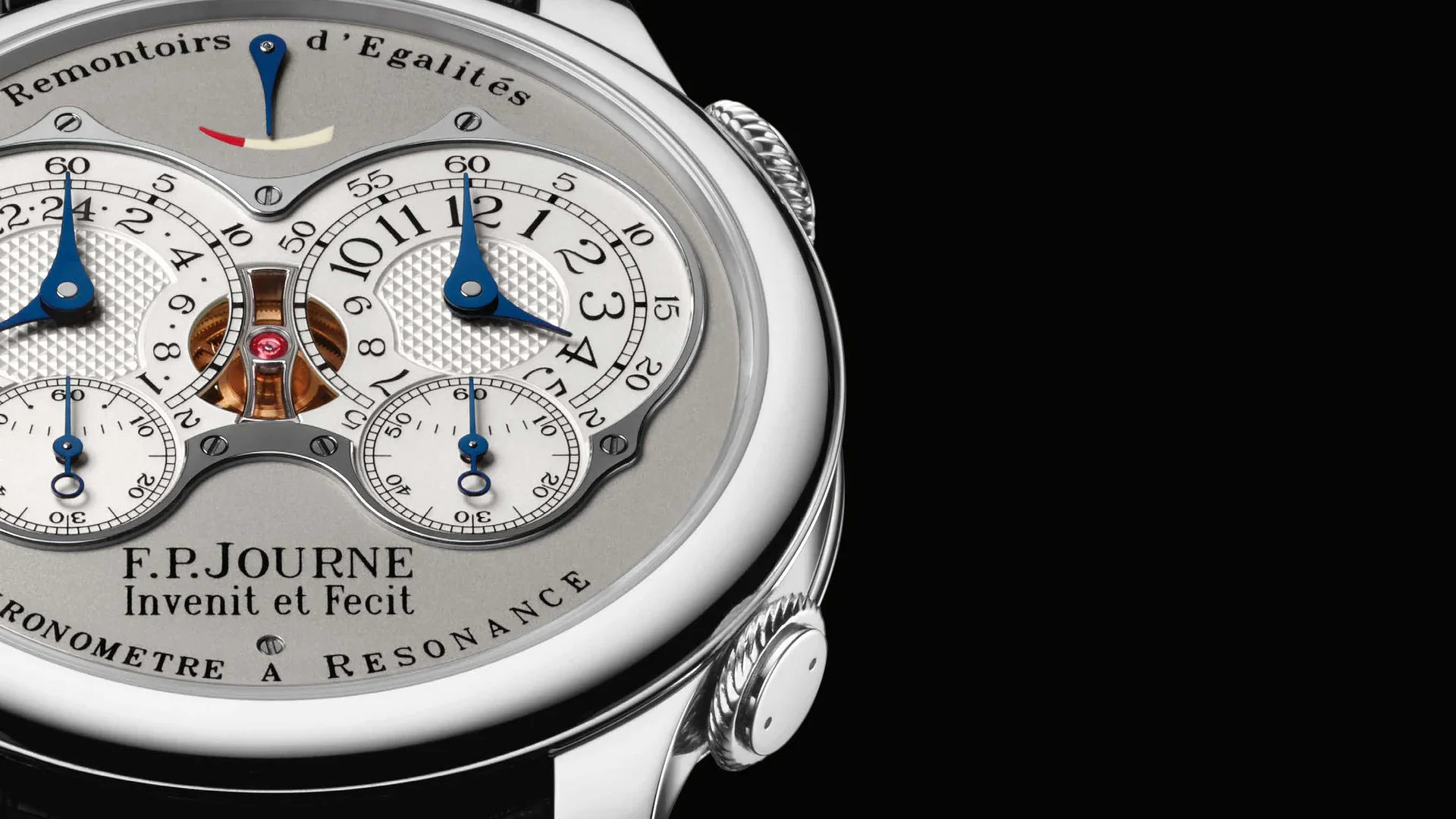
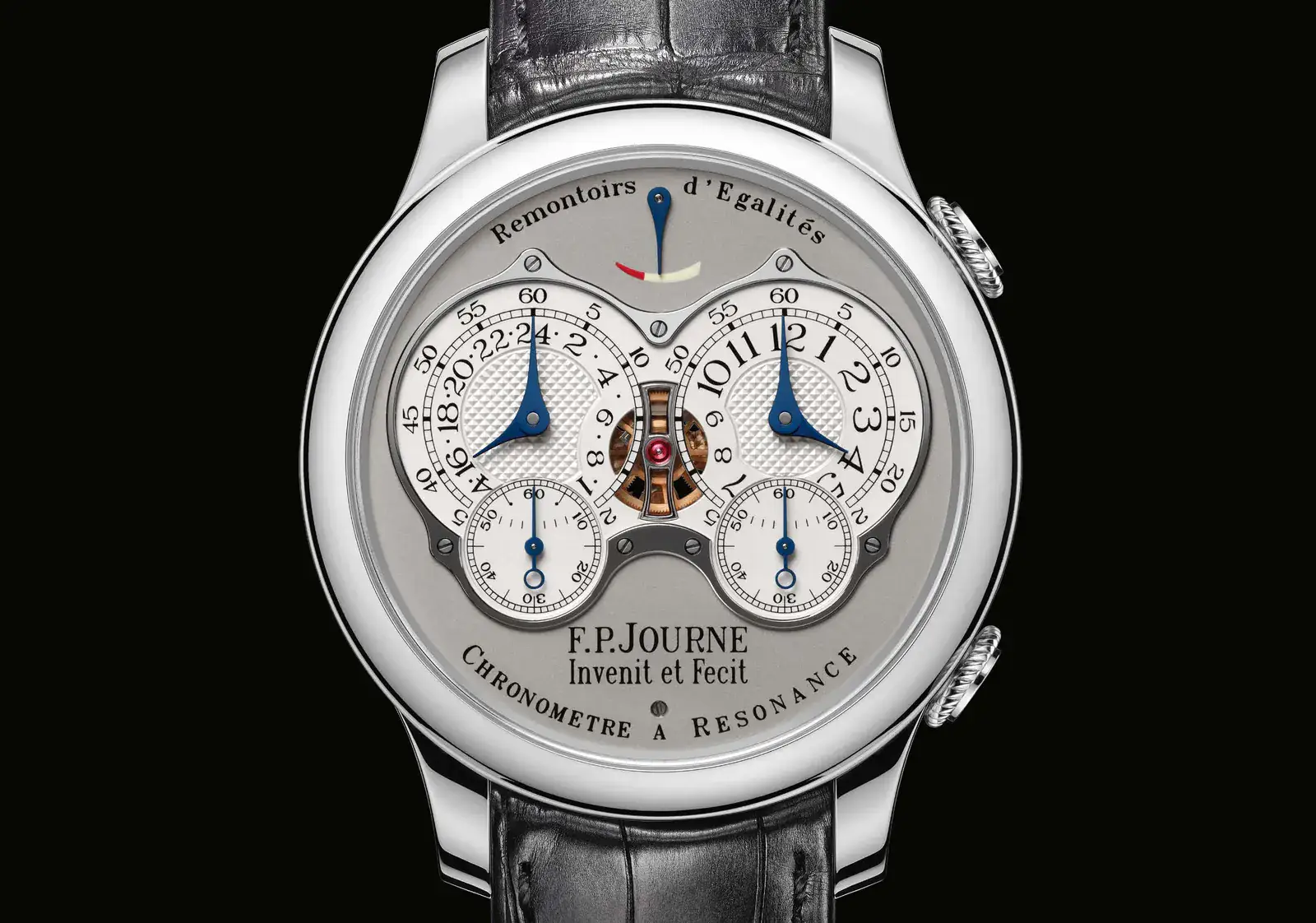
On November 19, 2026, an early F.P. Journe Chronomètre à Résonance “Première Génération,” Ref. 105/01R, circa 2001, in platinum, sold for €893,600, including the buyer’s premium, at Bonhams in Paris. It was offered in the same Fine Watches sale as the Tourbillon Souverain “Souscription” that Bonhams said became the highest price ever achieved for a watch at auction in France. The Resonance is the quieter of the two watches, and the more unusual.
Resonance in a wristwatch is the sympathetic oscillation of two balances, adjusted so their rates sit close together. F.P. Journe’s Chronomètre à Résonance, presented in 2000, couples them without a mechanical link; Armin Strom and Beat Haldimann use a coupling spring.
That makes it a good moment to look at how resonance works in a wristwatch. Two balances, adjusted so their rates sit close together, fall into a shared beat. A knock that hurries one should slow the other by a similar amount, and when the two find each other again, some of the disturbance drops out.
What Resonance Is
In physics, any moving part sends a little vibration into whatever is around it. If a second oscillator is close in frequency, it can pick up that energy and begin to move with the first. Each balance takes a turn as the exciter and as the resonator. Once the coupling takes hold, the two usually settle into opposition, swinging toward and away from each other in time.
François-Paul Journe has described the effect in those terms. For the Chronomètre à Résonance, the two trains have to be regulated so that the difference between them does not exceed five seconds a day, accumulated over six positions. Only then, he says, do the balances harmonize.
On the wrist, the promised benefit is simple. Move your arm, and one balance speeds up while the one in opposition slows down. The energy they share pulls them back into step, and the disruption is reduced. It isn’t a promise of perfect accuracy. It’s a way of asking two oscillators to correct each other, provided they’ve been set close enough to listen.
From Huygens to Breguet
The idea predates the wristwatch by centuries. By 1665, the Dutch mathematician and astronomer Christiaan Huygens had noticed that two pendulum clocks, hung from a common support, could fall into step. Later clockmakers tried to put that sympathy to work.
Around 1780, Antide Janvier, a French clockmaker who styled himself a mechanical engineer, built regulators with two complete movements and two pendulums hanging from the same construction. In F.P. Journe’s account, the pendulums recovered energy from one another and began to beat together, shielding the clocks from some outside vibration.
One such Janvier regulator, a late-eighteenth-century “régulateur de parquet à couplage,” inventory 18281, is in the Musée Paul-Dupuy in Toulouse. The museum describes an exchange of energy between the two pendulums that leads to synchronization when their periods are close enough.
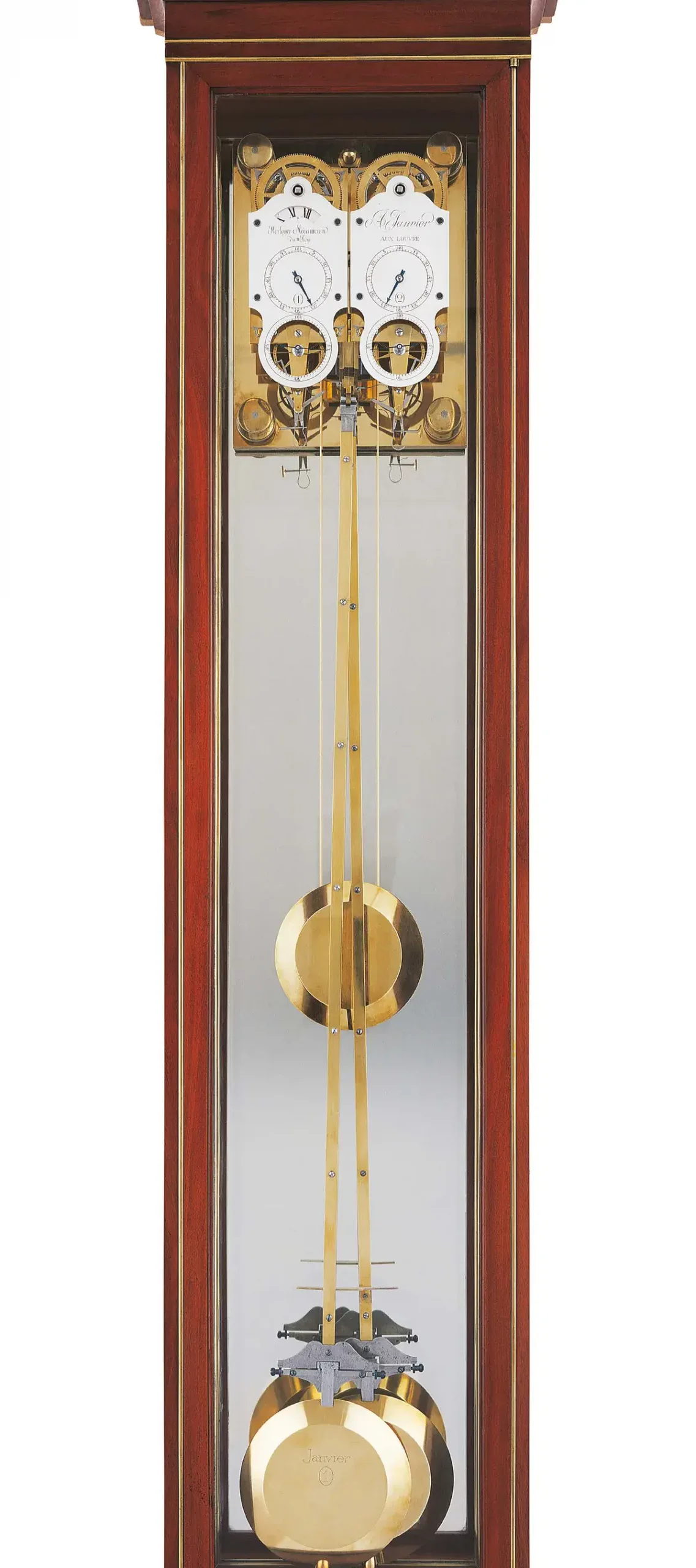
A second example, signed “A. Janvier / Aux Louvre” and “Horloger Mécanicien du Roy,” appears in that same 2020 dossier. Journe has said the manufacture holds a Janvier regulator in its own collection, and that a third is at the Patek Philippe Museum in Geneva.
Abraham-Louis Breguet picked up the idea, too. The Royal Collection holds a Breguet et Fils double-pendulum regulator, RCIN 2767, made between 1819 and 1824 and delivered to Carlton House for George IV on September 19, 1825. It has two independent, identical movements and two pendulums that swing in opposite directions.
The collection describes it plainly: by sympathetic action, any error in one is reduced by the other. F.P. Journe’s historical notes also identify a companion regulator, No. 3177, made for Louis XVIII and now in the Musée des Arts et Métiers in Paris, and a pocket watch, No. 2667, built on the same principle.
F.P. Journe’s Chronomètre à Résonance
Journe first met the problem as a restorer. In the 1980s, working for the Conservatoire national des arts et métiers in Paris, he had the chance to study a Breguet double-pendulum regulator in the museum’s collections. An early pocket-watch attempt, he has written, did not yet perform as he wished. It would take fifteen years before he was ready to put it on a wrist.
Prototype work started in 1994. The first movement ran in 1998, and he has said he wore it, still unofficial, at Baselworld that year. The production Chronomètre à Résonance was presented at Baselworld in 2000, under the trademarked name Résonance.
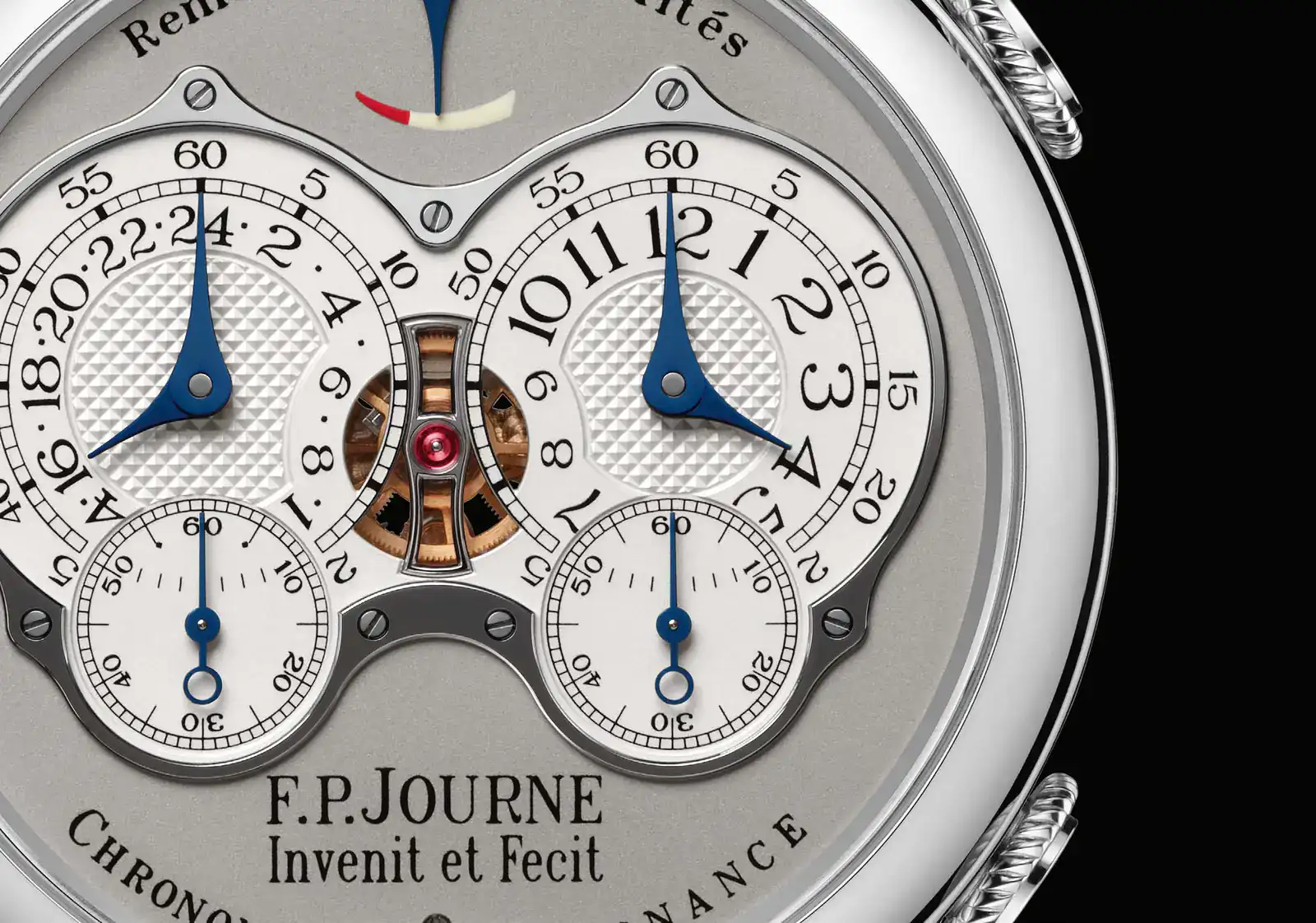
Journe calls it the only wristwatch that uses natural resonance without a mechanical link between the two balances. The two complete movements sit very close. The manufacture has put the gap at about 0.4 mm, close enough for the balances to share vibrations through the movement itself. They fall naturally into opposition.
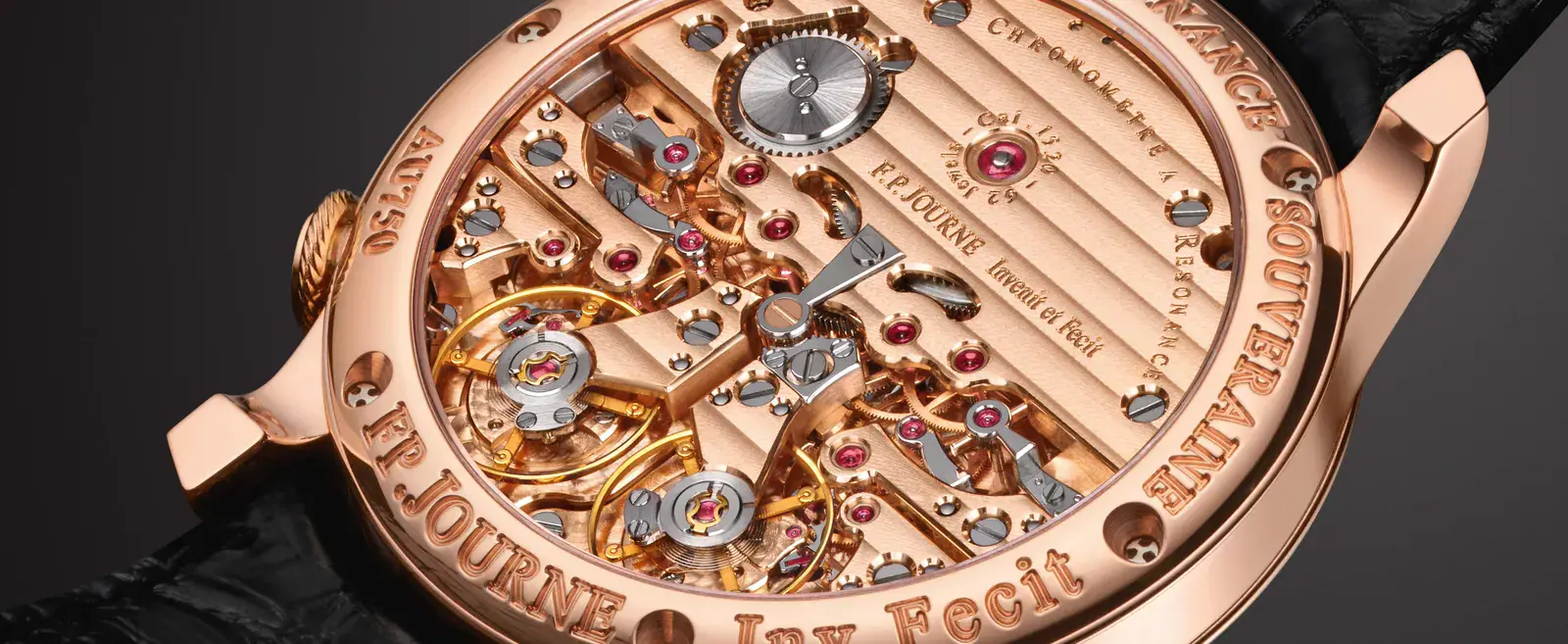
The 2020 edition, issued for the twentieth year of the model, is built around caliber 1520, a manually wound movement in 18k rose gold. A single barrel feeds a differential, visible at the center of the dial, which splits the power between two secondary trains. Each train has a remontoir d’égalité beating every second, so the force reaching the escapements stays linear for 28 hours. Total autonomy is 42 hours.
The balances run at 21,600 vibrations per hour, or 3 Hz. The left dial shows 24 hours, the right shows 12, and the watch is offered in platinum or 18k 6N gold, in 40 mm or 42 mm. Our explainer on how the remontoir d’égalité functions goes deeper on that constant-force device.
Armin Strom and the Haldimann H2
Other officially documented resonance wristwatches take a different route. Rather than trusting the main plate alone to carry the vibration, they add a coupling spring.
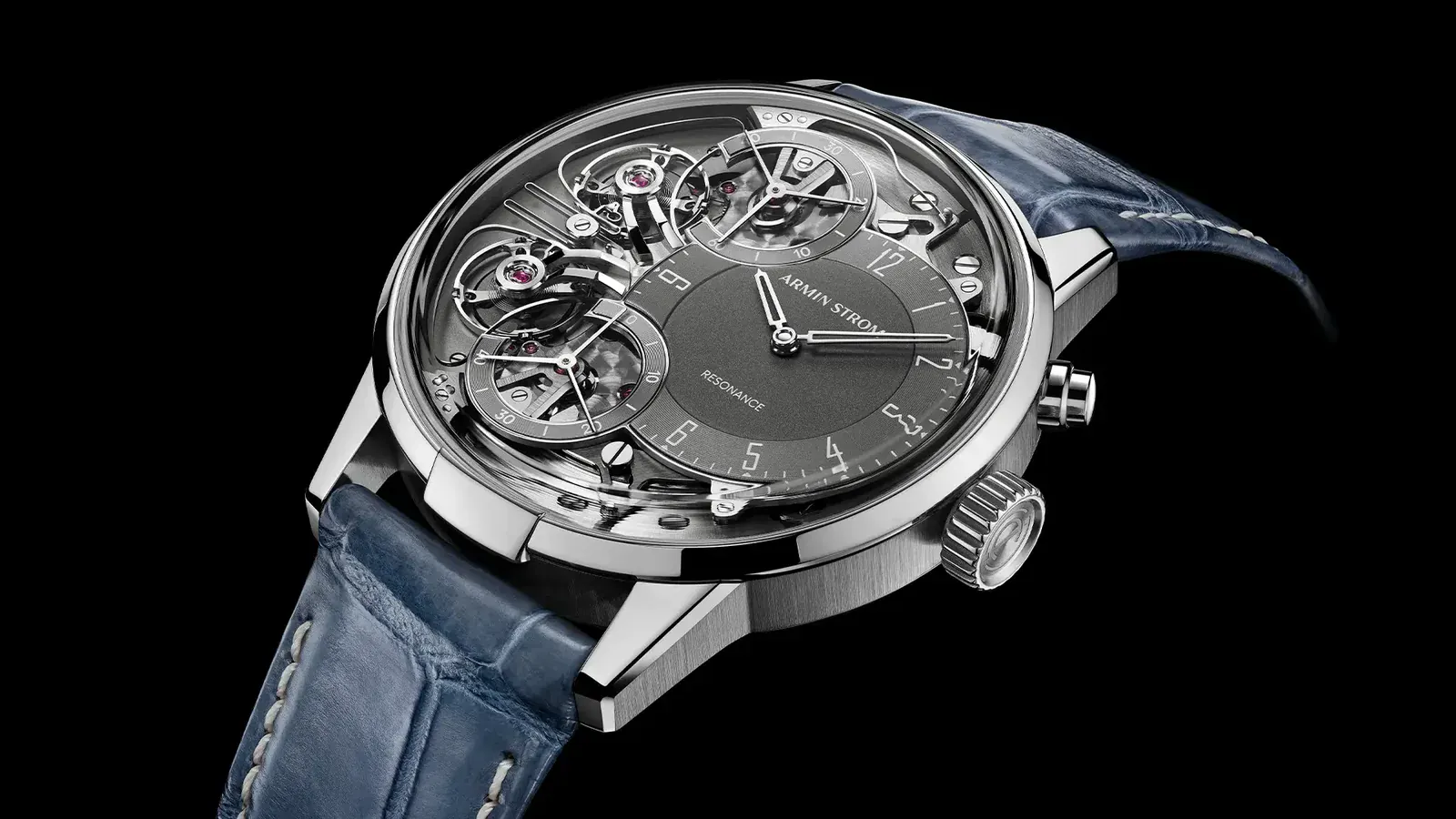
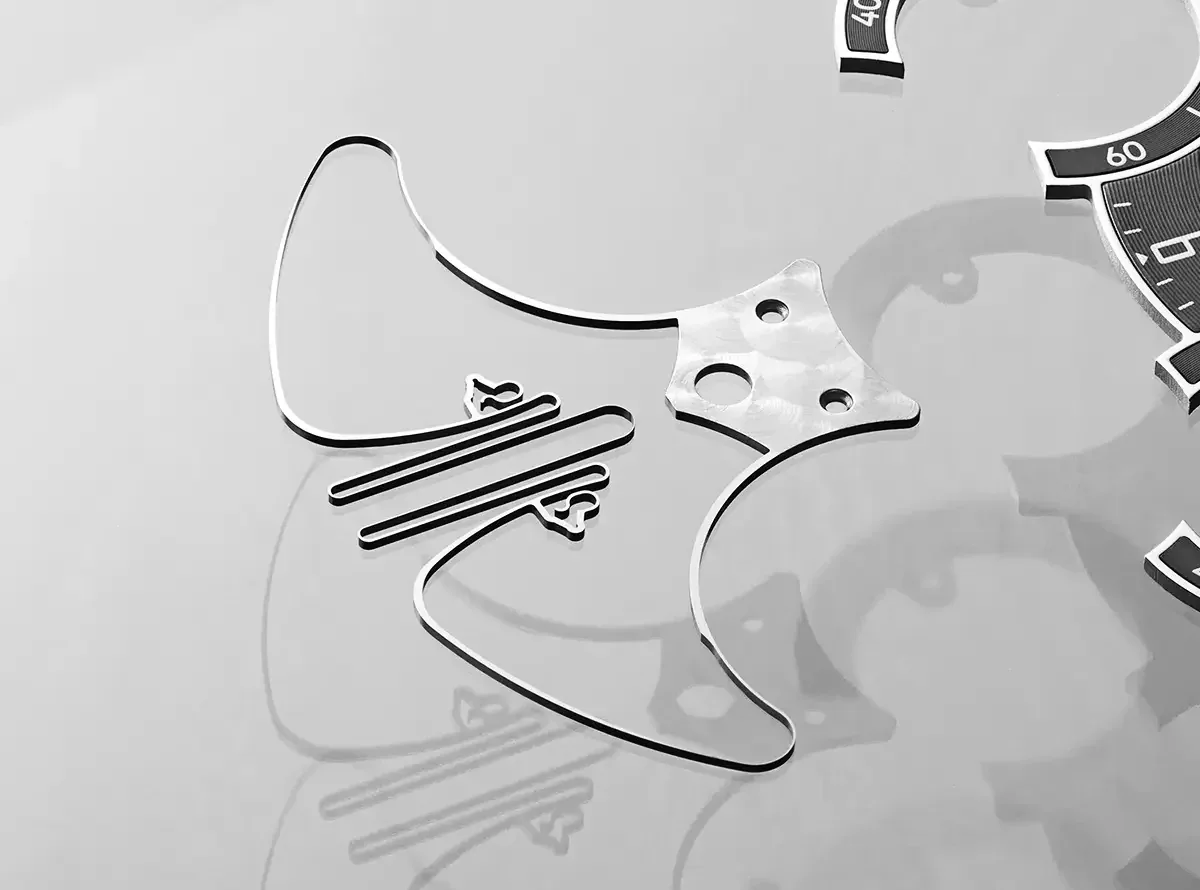
Armin Strom presented the Mirrored Force Resonance in 2016, with a steel Resonance Clutch Spring developed over three years by Claude Greisler, the manufacture’s co-founder and master watchmaker. The patent was approved in 2018.
Armin Strom is precise about what the spring does. It is a vibrational intermediary, not a mechanical driver. There is no pushing or pulling of the balances. Two independent regulating systems share almost imperceptible vibrations through that spring, and, the brand says, find a stable resonant state even when the watch is worn.
On the Mirrored Force Resonance, two seconds hands show the trains in step, and a twin-seconds flyback can reset both at once without stopping the movement. The same clutch spring now runs through a wider collection, including a Dual Time GMT Resonance and a minute repeater.
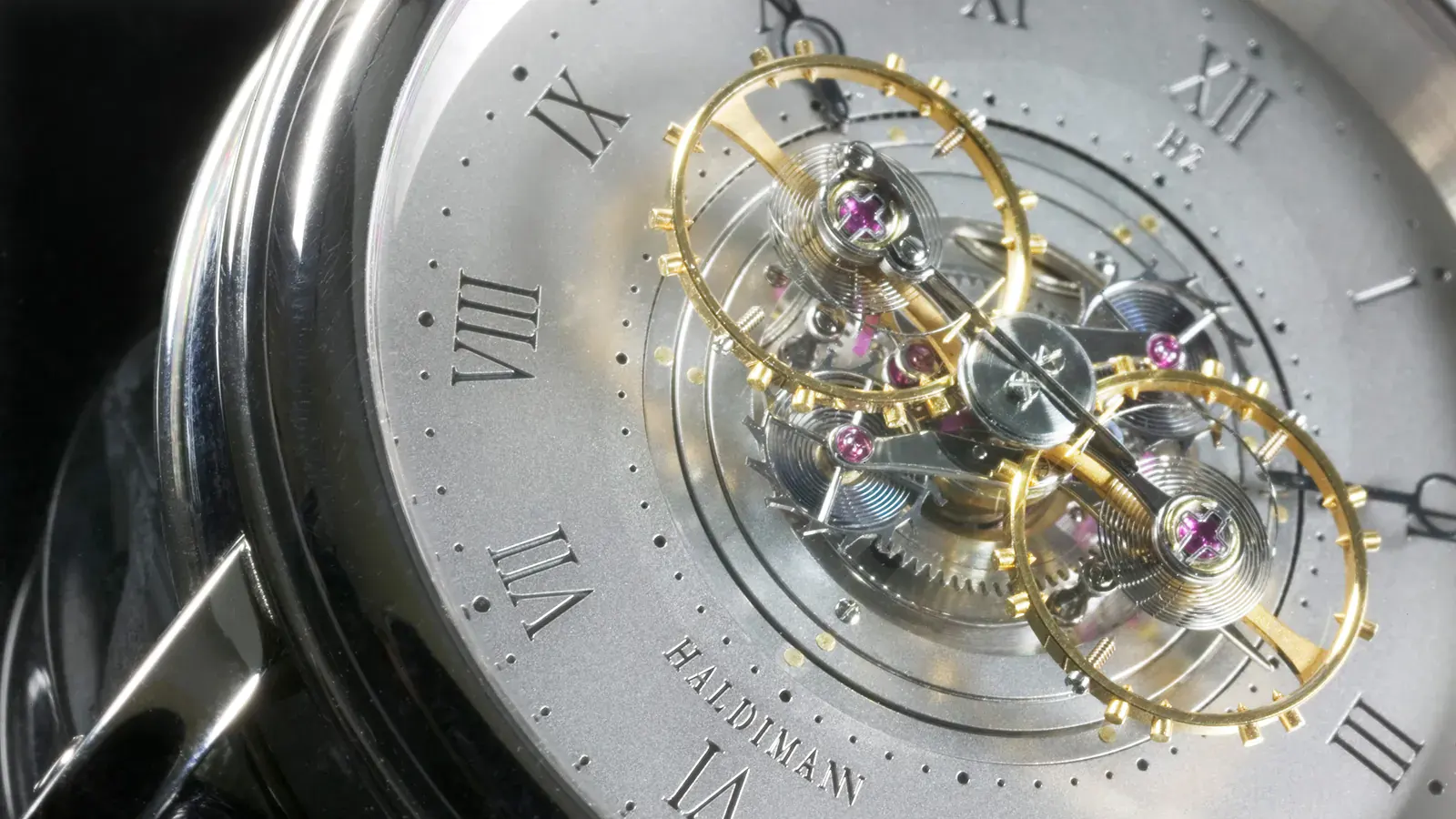
Beat Haldimann’s H2 Flying Central Tourbillon Resonance appeared at Baselworld in 2005. It carries two flying 60-second central tourbillons in caliber ZEN-H2. Resonance, in Haldimann’s documentation, is transmitted by a common spring that links the balance-spring studs. The movement has 408 parts, runs at 18,000 vibrations per hour, or 2.5 Hz, and offers a 38-hour power reserve. The handcrafted case is offered in 37 mm, 39 mm, or 41 mm.
To us, the distinction that matters isn’t who got there first. It’s the path the energy takes. In Journe’s watch, the two balances couple through the movement, with no added link. In Armin Strom’s and Haldimann’s, a dedicated spring carries that conversation.
Either way, the aim is the same. Two oscillators, kept close in frequency, share a beat and cancel some of the chaos of being worn. That is how resonance works in a wristwatch, and it is why a first-generation Journe, offered in Paris this month, still draws a room.
| Specification | Details |
|---|---|
| Phenomenon | Sympathetic oscillation between two balances, which synchronize when their rates are close enough |
| Claimed benefit | A disturbance that speeds one balance slows the other; the shared energy helps cancel the disruption |
| 1665 | Christiaan Huygens observes two pendulum clocks on a common support falling into step |
| c. 1780 | Antide Janvier builds double-pendulum regulators; Musée Paul-Dupuy, Toulouse, holds Inv. 18281, a “régulateur de parquet à couplage” |
| 1819–1825 | Breguet et Fils double-pendulum regulator, RCIN 2767, delivered to Carlton House for George IV on September 19, 1825 |
| 2000 | F.P. Journe presents the Chronomètre à Résonance at Baselworld; balances about 0.4 mm apart; adjustment limit of five seconds a day on six positions |
| 2005 | Haldimann H2 Flying Central Tourbillon Resonance, Baselworld; caliber ZEN-H2, two flying 60-second central tourbillons, 18,000 v/h (2.5 Hz), 408 parts, 38-hour power reserve; case 37 mm, 39 mm, or 41 mm |
| 2016 | Armin Strom presents the Mirrored Force Resonance with the Resonance Clutch Spring, developed over three years by Claude Greisler; patent approved in 2018 |
| 2020 | Chronomètre à Résonance, caliber 1520, 18k rose gold, manually wound; single barrel and differential; two remontoirs d’égalité of one second; 21,600 v/h (3 Hz); 28-hour efficient running, 42-hour autonomy; 40 mm or 42 mm, platinum or 18k 6N gold; left dial 24 hours, right dial 12 hours; patent EP 1 760 544 A1 |
Timely FAQs
What is resonance in a wristwatch?
How does F.P. Journe’s Chronomètre à Résonance produce resonance?
How do Armin Strom and Haldimann’s resonance watches differ from Journe’s?
