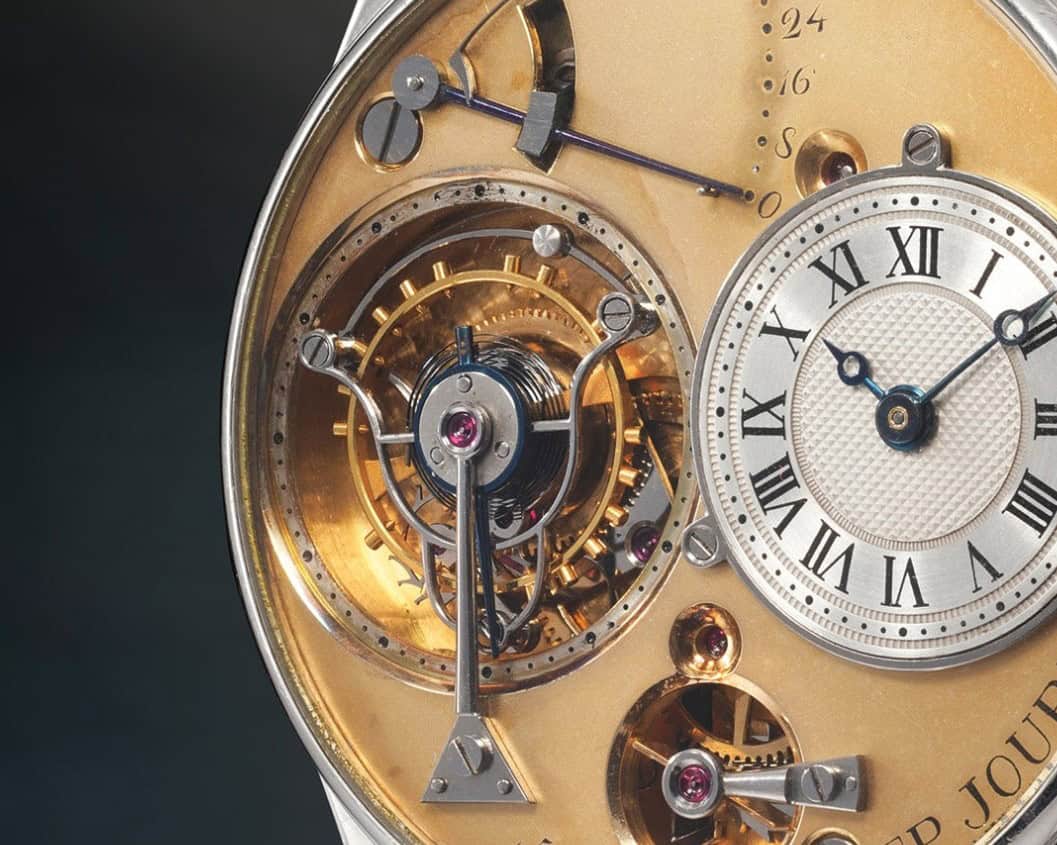
The remontoir d’égalité (or “remontoir” for short) is a continually evolving innovation that has been yielding baffling auction results in recent years. Originally invented to solve a glaring flaw in spring-driven clocks, it became the defining secret weapon of horological pioneers like John Harrison, Ferdinand Berthoud, and François-Paul Journe. Today, luminaries such as A. Lange & Söhne, Andreas Strehler, Grönefeld, Jacob & Co, Kari Voutilainen, and Romain Gauthier are flexing their engineering muscles by building remontoirs into modern wristwatches.
When a watch’s mainspring is fully wound, it releases higher torque, which can cause your watch to run slightly faster. As it unwinds, torque drops, which can cause the time to tick by slower. The remontoir d’égalité is a power limiter that releases a fixed, equal pulse of energy at short intervals to keep the watch perfectly accurate. While 18th-century horological legends like John Harrison used it to improve maritime navigation, François-Paul Journe famously miniaturized and integrated the mechanism into the modern wristwatch. Today, brilliant minds like those behind Grönefeld and A. Lange & Söhne continue to refine the remontoir d’égalité.
So, what actually is this contraption and why should you care? Let’s break it down.
What is a Remontoir d’Égalité and Why Was It Invented?
Back in the 15th century, watchmakers made a huge leap. They moved away from giant, gravity-fed pendulum clocks and started building portable timepieces powered by tightly wound springs (mainsprings).
There was just one giant problem: uneven power.
When a watch mainspring is fully wound, it delivers a surge of high energy to the escapement, causing the balance wheel to swing with wide amplitude. As the mainspring unwinds, its tension gradually drops. Toward the end of the power reserve, the mainspring delivers significantly weaker torque, causing the balance wheel’s swing amplitude to collapse.
As a balance wheel’s rate of oscillation depends on consistent energy impulses, this fluctuating power supply causes the watch to run fast when fully wound and slow down as it unwinds—a rate variation known as isochronal error. Watchmakers realized that to achieve true precision, they needed a way to deliver a perfectly constant stream of power from the mainspring to the escapement, regardless of how tightly wound the mainspring was.
How Does a Remontoir d’Égalité Mechanism Work?
In a standard mechanical watch, energy flows continuously from the mainspring barrel through the gear train directly to the escape wheel. If the mainspring pushes hard, the escape wheel gets pushed hard. If the mainspring pushes weakly, the escape wheel receives weak impulses. A remontoir d’égalité acts like a prudent middleman between the mainspring and the escapement:
- The Secondary Power Store: Watchmakers insert a small, delicate spring—typically a coiled hairspring or a thin blade spring—directly onto one of the gear train arbors near the escapement.
- Short, Frequent Recharges: Rather than allowing the mainspring to drive the escapement directly, the mainspring’s job is simply to re-arm (wind) this small secondary spring at short, fixed intervals (often every 1 second, 2.5 seconds, or 5 seconds).
- Pure, Constant Output: The small secondary spring then unwinds over that brief interval, supplying energy to the balance wheel. As this tiny spring is only unwinding a microscopic fraction of its capacity before being instantly rewound, the torque it delivers to the escapement remains virtually flat and uniform from the first hour of power reserve to the very last.
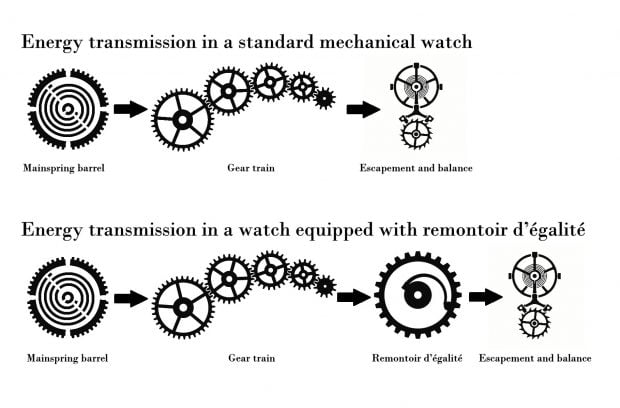
In a standard mechanical wristwatch, the mainspring barrel releases energy to the gear train; as this energy dwindles, the escapement and balance fluctuate in amplitude. In a watch equipped with a remontoir d’égalité, power from the mainspring barrel and gear train first travels through a remontoir buffer—think of it as a river dam that only releases water in a steady stream, regardless of the water level—providing the escapement and balance with a stable amplitude.
Historic Milestones in Remontoir Innovation
Originally developed by Swiss watchmaker Jost Bürgi in the late 16th century, the remontoir became vital in the 18th century for marine chronometers—most famously integrated by John Harrison in his legendary H4 sea clock in 1759 to calculate longitude at sea.
In marine chronometers and pendulum clocks, heavy gear trains caused erratic friction that ruined precision; the remontoir bypassed gear train friction entirely by placing a pristine energy buffer right at the escapement.
As watchmaking advanced into the 20th century, better mainspring alloys (such as Nivaflex) and refined tooth profiles made power delivery far more linear, watchmakers didn’t strictly need remontoirs for everyday watches anymore. However, contemporary haute horlogerie has revived the mechanism as a crowning achievement of micro-engineering. Crafting a secondary spring assembly that trips, recharges, and releases flawlessly thousands of times a day requires immense skill and precision adjustment.
John Harrison’s Marine Chronometer H4 (1759)
To solve the Longitude Problem, British horologist John Harrison incorporated a remontoir into his pocket-watch-sized H4 chronometer. The mechanism rewound its secondary spring every 7.5 seconds, isolating the escapement from rough sea movements and mainspring variations, ultimately enabling accurate navigation across the Atlantic.
F.P. Journe and the Wristwatch Revival (1999)
François-Paul Journe made horological history with the Tourbillon Souverain avec Remontoir d’Égalité. Journe became the first watchmaker to successfully shrink a remontoir mechanism down to wristwatch dimensions, combining it with a tourbillon. A blade spring recharges every single second, driving a dead-beat seconds hand that steps crisply once per second. Journe’s life is intertwined with the remontoir and warrants its own section, which I’ve included below.
A. Lange & Söhne Lange 31 (2008)
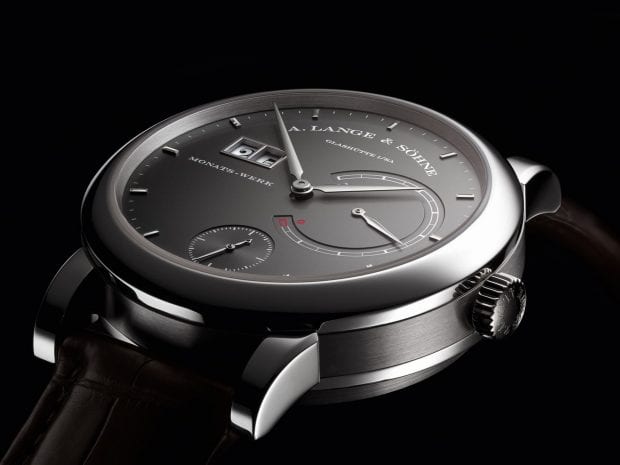
When A. Lange & Söhne introduced the Lange 31 featuring an astounding 31-day (744-hour) power reserve, they faced a massive physics challenge: the twin mainsprings were so powerful they could damage the movement when fully wound, yet too weak by day 30. Their fix? A 10-second remontoir that meters out that massive reservoir of power evenly over an entire month.
Grönefeld 1941 Remontoire (2016)
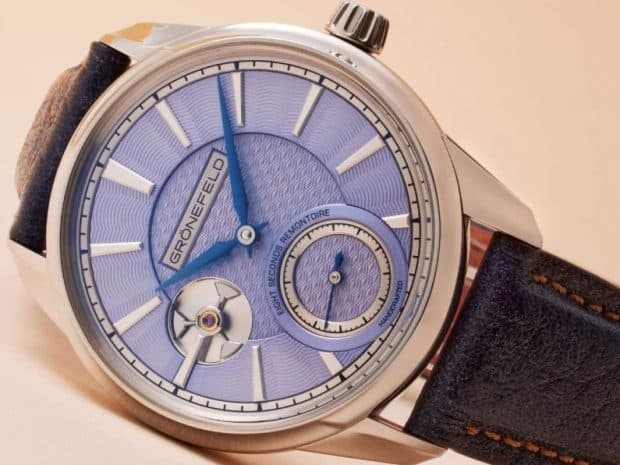
Dutch brothers Bart and Tim Grönefeld brought a modern tactile aesthetic to the complication with their 1941 Remontoire. Their movement utilizes an 8-second remontoir mechanism equipped with a miniature governor fan that spins exposed on the dial side to slow down the release of energy each time the spring trips, preventing excess wear.
Are “Remontoir d’Égalité” and “Constant-Force Mechanism” Interchangeable Terms?
All remontoirs d’égalité are constant-force mechanisms, but not all constant-force mechanisms are remontoirs. To understand why, we must look at how different horological complications achieve uniform torque delivery to the balance wheel.
“Constant force” describes a functional objective: delivering a flat, unwavering amount of energy to the regulating organ regardless of the mainspring’s state of wind or gear train friction. Any system engineered to achieve this flat torque curve qualifies as a constant-force mechanism.
Common types of constant-force mechanisms include:
- Fusee and Chain: A cone-shaped pulley connected by a miniature bicycle-style chain to the mainspring barrel. As the mainspring unwinds and loses tension, the chain pulls on a wider diameter of the cone, using variable mechanical leverage to equalize output torque.
- Constant-Force Escapements: Mechanisms where the constant-force spring is built directly into the escapement itself, which is a configuration favored by manufactures like Girard-Perregaux and De Bethune.
- Remontoir d’Égalité: A secondary intermediate spring mechanism placed along the gear train.
A remontoir d’égalité is a distinct, step-by-step mechanical implementation used to achieve constant force. Its hallmark features are:
- An Intermediate Reservoir: It uses a secondary spring (a small coiled hairspring or blade spring) positioned between the mainspring barrel and the escapement.
- Periodic Re-Arming (Tripping): It operates on a cycle of continuous charging and releasing. A stop-wheel and locking arm allow the mainspring to wind this secondary spring at set intervals.
When a watchmaker states a timepiece has a constant-force mechanism, they are describing the benefit (even power delivery). When they specify it has a remontoir d’égalité, they are describing the exact mechanical device (a secondary spring buffer that reloads every few seconds) used to deliver that benefit.
François-Paul Journe: How the Remontoir Launched an Auction Legend
While the remontoir d’égalité was historically confined to heavy clockmaking and marine chronometry, no modern watchmaker is as inextricably linked to the complication as François-Paul Journe.
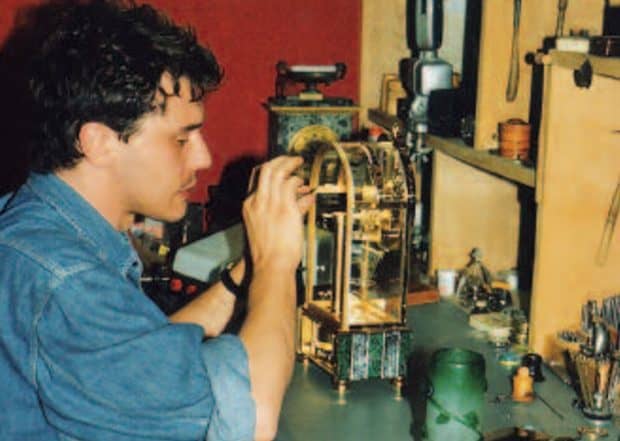
In the late 1980s, working in his uncle Michel Journe’s antique watch restoration workshop, François-Paul spent extensive time examining historical masterpieces by Abraham-Louis Breguet and Antide Janvier. He realized that while a tourbillon compensates for positional errors caused by gravity, it does not solve the problem of varying torque as a mainspring unwinds.
During visits to the Musée des Arts et Métiers in Paris, Journe observed a historical clock equipped with a flat-bladed spring remontoir mechanism. This design served as his primary technical inspiration for adapting the mechanism into personal watchmaking projects.
In 1984, prominent watch collector Dr. Eugen Gschwind commissioned Journe to build a pocket watch. Journe incorporated both a tourbillon and a remontoir d’égalité into the piece, successfully utilizing a blade spring that wound and released every second to deliver linear, constant power.
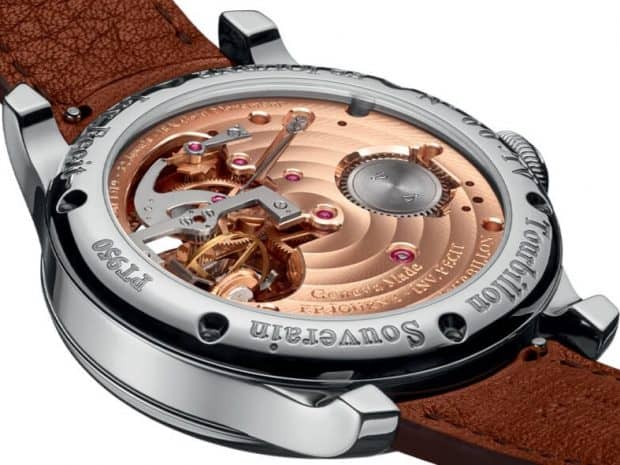
Integrating a remontoir into a pocket watch or clock was one thing, but fitting it into a wristwatch was considered nearly impossible due to space and energy constraints. In 1991, Journe completed his first prototype tourbillon wristwatch featuring a remontoir d’égalité. By 1999, when he launched his brand F.P. Journe, he introduced the Tourbillon Souverain, making it the first series-produced wristwatch in history to incorporate a remontoir d’égalité.
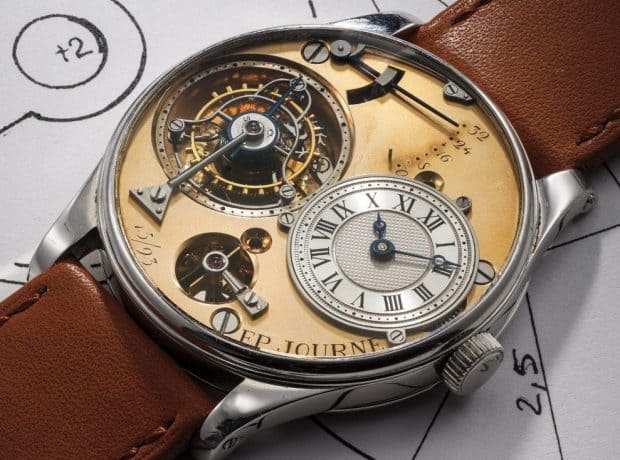
Named the Tourbillon Souverain avec Remontoir d’Égalité, it bore his newly coined motto, Invenit et Fecit (“Invented and Made”).
The technical triumph of the Remontoir d’Égalité did far more than prove Journe’s genius—it catapulted F.P. Journe from an obscure independent watchmaker into a titan of modern horology.
Journe made the remontoir an iconic design motif. On the dial of the Tourbillon Souverain, an aperture at 6 o’clock prominently exposes the blade spring and locking arm of the remontoir mechanism as it trips once every second, driving a crisp dead-beat seconds (seconde morte) display.
To fund his brand early on, Journe created 20 “Souscription” watches for loyal collectors who paid upfront. Those early brass-movement wristwatches, built around the remontoir, became ground zero for modern watch collecting. Fast forward to today: early Journe remontoirs routinely smash multi-million dollar estimates at Phillips, Sotheby’s, and Christie’s, rivaling legacy titans like Patek Philippe and Rolex. His creations enjoy dedicated single-brand or even single owner auctions—a level of prestige traditionally reserved only for historic heritage brands like Patek Philippe and Rolex.
Case in point? In 2024, the historic Tourbillon Souverain “15/93” sold for a jaw-dropping CHF7.3 million, proving that a 500-year-old table clock trick is still the coolest wrist accessory.
We hope you enjoyed this explainer! If you have any other burning questions about horology, don’t hesitate to reach out.