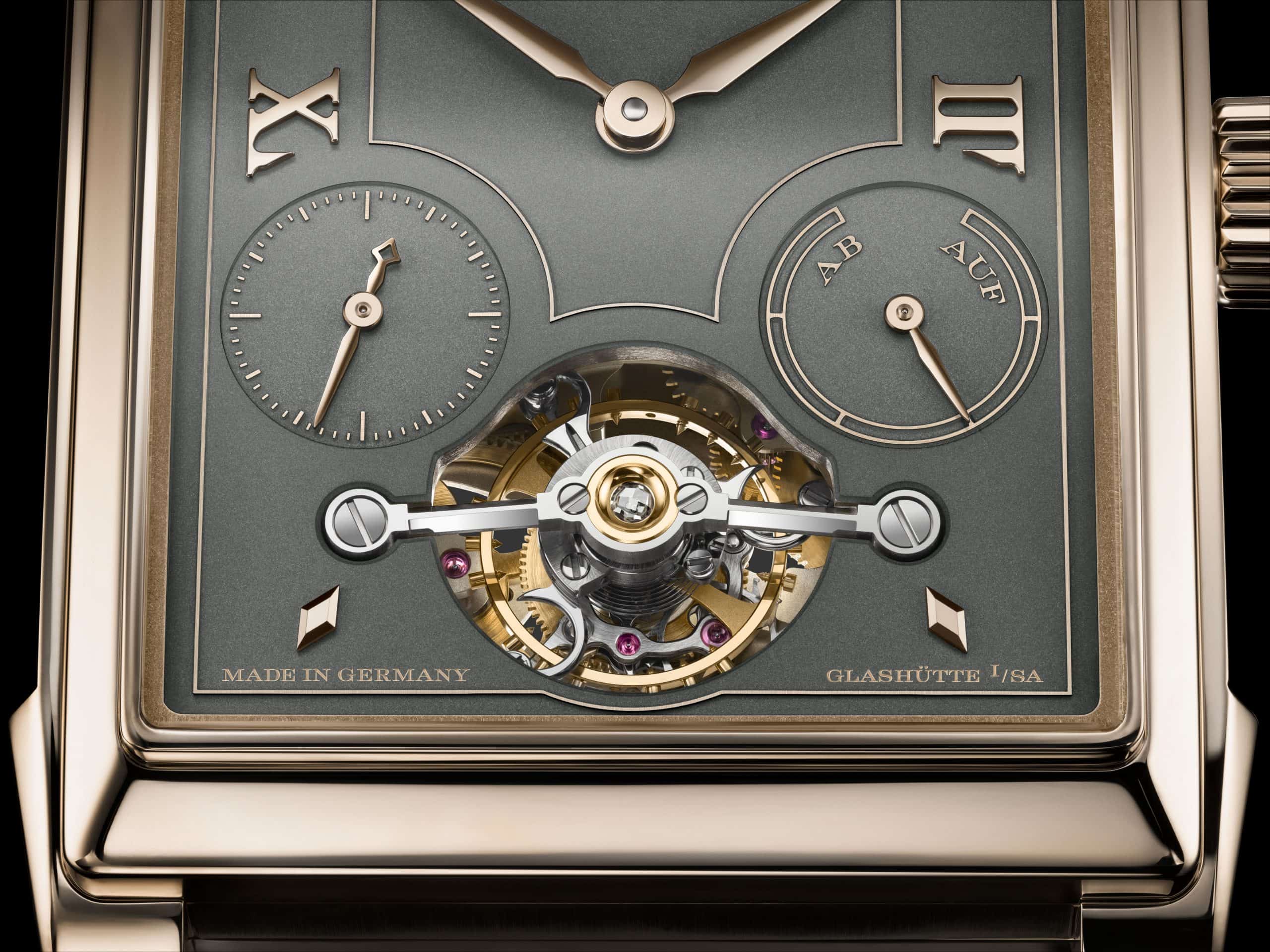
A French word that newcomers to watch collecting often struggle to pronounce, tourbillon translates to ‘whirlwind’. Originally conceived as an ingenious solution to improve pocket watch accuracy, it came to define the careers of horological legends like Abraham-Louis Breguet and Franck Muller. Today, haute horlogerie maisons such as Roger Dubuis and Arnold & Son continue to use the tourbillon as a canvas for innovation and artistic embellishment.
What happens when you take an 18th-century solution for gravitational pull, strip away its practical necessity on the modern wrist, and turn it into a hypnotic flex of micro-engineering? You get the tourbillon. Here's how to tell it apart from the balance and escape wheel.
What is a Tourbillon and Why Was It Invented?
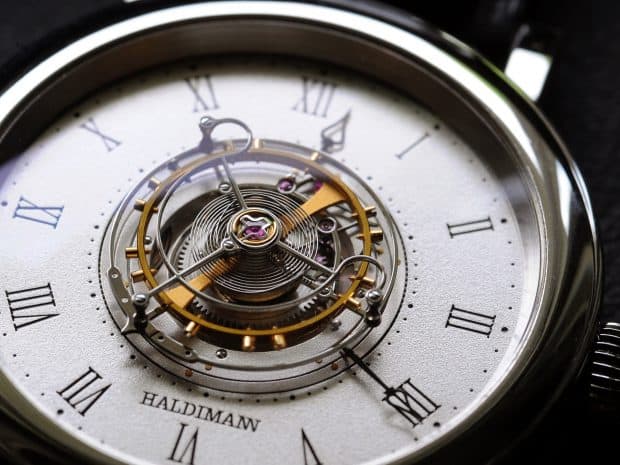
In 1795, master Swiss watchmaker Abraham-Louis Breguet conceptualized the tourbillon mechanism, officially securing its patent on June 26th 1801. During this era, gentlemen relied primarily on pocket watches. These timepieces spent almost their entire lives oriented vertically inside vest pockets.
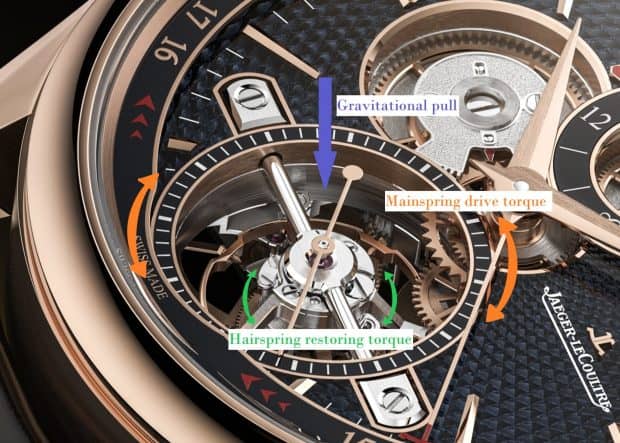
As the watch remained in a single vertical position, gravity exerted a constant downward pull on the delicate balance wheel and hairspring—the core regulating organs responsible for pacing the watch. This asymmetrical gravitational drag results in subtle yet persistent rate variations known as positional errors.
Recognizing that gravity could not be eliminated, Breguet devised an ingenious solution: average out its adverse effects by keeping the entire regulating assembly in continuous 360-degree rotation.
How Does a Tourbillon Mechanism Work?
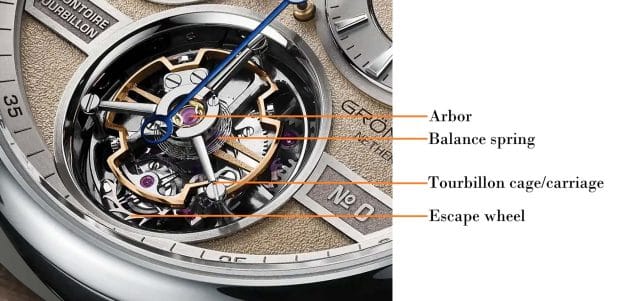
To understand how a tourbillon operates, it helps to contrast it with a traditional watch movement. In a standard mechanical watch, the escapement—consisting of the escape wheel and pallet fork—along with the balance assembly are mounted directly to fixed plates or bridges inside the movement.
In a tourbillon movement, watchmakers remove these critical regulating components from the mainplate and mount them inside a lightweight, rotating cage.
Driven directly by the watch’s gear train, this cage turns constantly on its central axis, completing one full rotation every 60 seconds. As the cage revolves, the balance wheel experiences every possible vertical orientation across 360 degrees. Consequently, any micro-acceleration in rate caused by gravity in one position is immediately neutralized by an equal deceleration when the cage rotates to the opposite position, effectively canceling out positional errors.
From Pocket Watch Utility to Wristwatch Aesthetic
Although the tourbillon represented a triumph of pocket watch physics, its practical necessity shifted dramatically with the widespread adoption of wristwatches in the early 20th century.
Unlike pocket watches resting statically in a pocket, wristwatches naturally change positions throughout the day as the wearer walks, gestures, and moves their hands. This dynamic daily motion inherently averages out gravitational resistance, meaning a tourbillon offers minimal functional accuracy gains on a modern wrist.
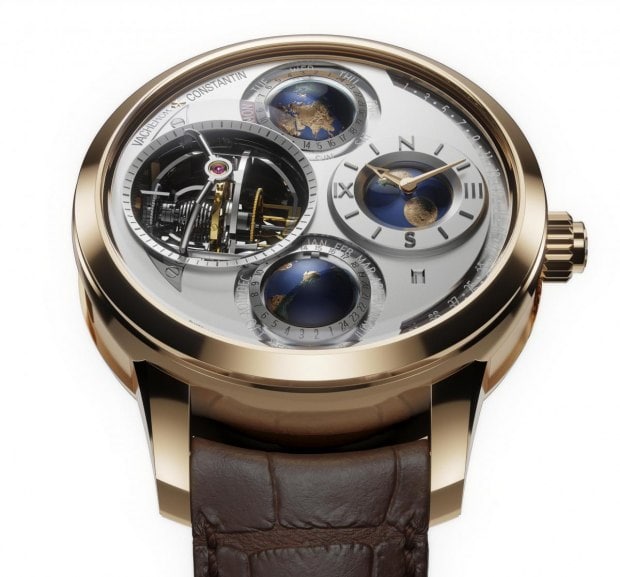
Instead, contemporary horology prizes the tourbillon as a showcase of artistic micro-engineering and haute horlogerie. Constructing a mechanism composed of dozens of micro-components weighing fractions of a gram demands supreme craft. To highlight this craftsmanship, modern luxury brands showcase the tourbillon through an open aperture on the dial side, allowing collectors to appreciate its mesmerizing motion. This front-facing placement itself carries a rich history, with prominent manufactures still debating who was truly the first to move the mechanism from the caseback to the dial.
Historic Milestones in Tourbillon Innovation
The Dial-Side Debut: Audemars Piguet vs. Franck Muller
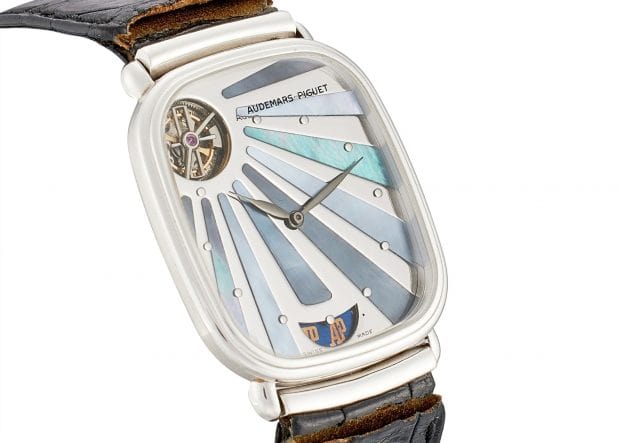
For nearly two centuries, tourbillons remained hidden behind watch dials or visible only through sapphire casebacks. The transition to dial-side visibility involved two distinct breakthroughs. In 1984, before founding his eponymous brand, master watchmaker Franck Muller crafted a customized timepiece for a private client that displayed the tourbillon cage directly on the front dial. Two years later, in 1986, Audemars Piguet released the Ref. 25643 (Caliber 2870), establishing the world’s first ultra-thin, serial-production automatic tourbillon wristwatch featuring an open dial aperture. However, historians also acknowledge that Daniel Roth (1989) was the first to introduce a dial-side tourbillon in a classical watch layout, because the Audemars Piguet Ref. 25643’s movement was built into its caseback.
Alfred Helwig and the Flying Tourbillon (1920)
At the German Watchmaking School Glashütte, master instructor Alfred Helwig developed the Flying Tourbillon. Traditional tourbillons require supporting bridges on both the top and bottom of the cage. Helwig eliminated the upper bridge entirely, anchoring the cage exclusively from the base. This engineering feat provided an unobstructed, cantilevered view of the spinning mechanism.
Greubel Forsey’s Inclined Multi-Axis Architecture (2004)
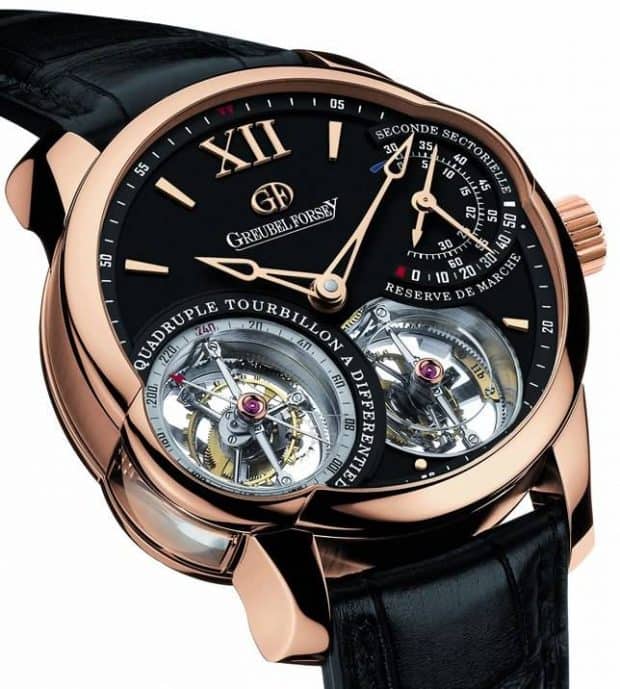
With the launch of the Double Tourbillon 30° Invention Piece 1, Robert Greubel and Stephen Forsey addressed the reality of wristwatch wear. As a single-axis tourbillon only offsets gravity when held vertically, Greubel Forsey nested an inner tourbillon cage rotating every 60 seconds at a 30-degree incline inside an outer cage rotating every 4 minutes, ensuring multi-plane gravitational compensation.
Thomas Prescher and the Triple-Axis Tourbillon (2004)
Watchmaker Thomas Prescher introduced the Triple-Axis Tourbillon Regulator in a wristwatch format. Prescher’s mechanism rotates simultaneously across three distinct axes. All three axes complete their respective revolutions every 60 seconds. This innovation achieves complete spherical gravitational neutralization regardless of arm orientation.
Boundary-Pushing High Horology
Beyond multi-axis developments, historic manufactures continue to push the envelope:
Girard-Perregaux elevated functional movement architecture into decorative art with its iconic Tourbillon with Three Gold Bridges, famously debuted in the La Esmeralda pocket watch.
Jaeger-LeCoultre introduced the Gyrotourbillon 1 (Ref. Q6002420) in 2004, housing a spherical multi-axis tourbillon inside ultra-lightweight aluminum cages.
Franck Muller pushed spatial dimensions with the Revolution 3 tri-axial framework and the Giga Tourbillon, featuring a massive 20mm cage occupying half the visual area of the dial.
How to Tell Apart a Tourbillon, Escape Wheel, and Balance Wheel
Distinguishing the individual timekeeping elements inside a watch mechanism becomes straightforward when thinking of a mechanical movement like an automobile engine. In this framework, the balance wheel acts as the heartbeat, the escape wheel serves as the metronome metering energy, and the tourbillon operates as a motorized frame rotating them both.
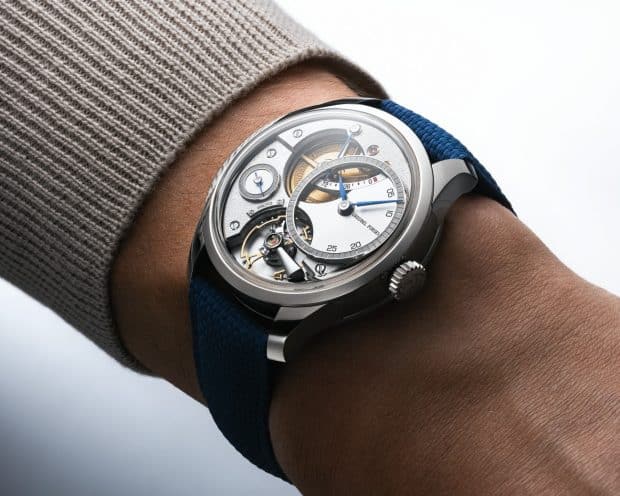
The balance wheel is a relatively large, smooth ring—typically crafted from brass, beryllium bronze, or Glucydur—supported by thin spokes. At its center lies a microscopic coiled wire called the hairspring. Rather than spinning continuously, the balance wheel rapidly swings back and forth, oscillating anywhere from 21,600 to 36,000 times per hour to set the pace of time.
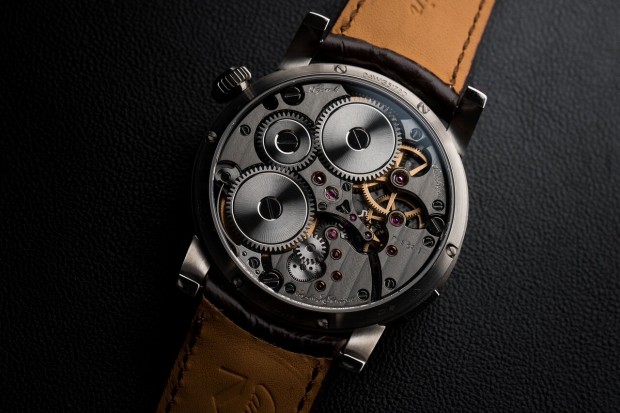
Positioned directly adjacent to the balance wheel, the escape wheel is a small gear easily recognized by its unusually shaped, hook-like teeth. These angled teeth interact with synthetic ruby jewels on the pallet fork to release energy from the mainspring in precise, incremental bursts, producing the familiar ticking motion and sound.
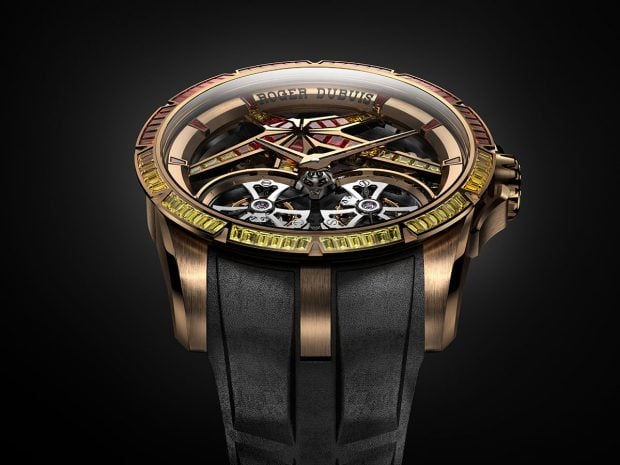
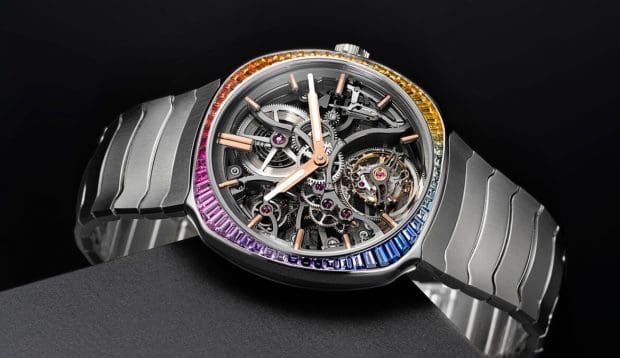
A tourbillon is not a single gear or wheel, but rather a complete structural housing. It appears as an intricate, rotating cage that encloses the balance wheel, hairspring, pallet fork, and escape wheel together. The defining visual characteristic of a tourbillon is movement: while a standalone balance wheel simply vibrates in place, a tourbillon carries its entire internal framework around in a complete circle relative to the watch dial, once every minute in most cases.
We hope you enjoyed this explainer! If you have any other burning questions about horology, don’t hesitate to email [email protected] or DM us on Instagram.
Timely FAQs
Does a tourbillon actually make a wristwatch more accurate?
What is the difference between a tourbillon, a balance wheel, and an escape wheel?
What is a "flying tourbillon" vs. a traditional tourbillon?