Occupying a rarified echelon of haute horlogerie, the minute repeater is the most exclusive of traditional complications, yet it continues to be refined and advanced by standard-bearers like Patek Philippe, Audemars Piguet and Chopard.
How does a minute repeater work? When you slide the case lever, it winds a small dedicated spring and drops toothed feeler racks onto stepped cams called snails. These snails are linked to the hands, so their physical positions measure the exact hour, quarter and single minutes. After which, the spring drives the racks back, while a spinning centrifugal governor keeps the rhythm steady as the rack teeth trip tiny spring-loaded hammers. These hammers strike hardened steel wire gongs wrapped around the movement, sounding low tones for the hours, alternating high-low pairs for each quarter hour, and high tones for the remaining individual minutes. This delicate dance has no room for error, which is why a minute repeater can cost more than an apartment—watchmakers would have you believe. Enter Atelier Mephalie, which made a splash a few days ago when it debuted with one enameled and two engraved minute repeaters going for as little as US$25,000. Geneva had a century-long head start; Atelier Mephalie is making up for lost time at 80 decibels.
True chiming watches inhabit several distinct tiers. A grande sonnerie strikes both the hours and quarter-hours every fifteen minutes, while a petite sonnerie strikes only the quarter-hours before chiming at a different pitch to announce the top of the hour. Beyond these lie even rarer configurations. Carillon repeaters, such as those recently produced by Biver and Blancpain, chime intricate multi-tone melodies, while decimal repeaters, famously championed by Kari Voutilainen, count off ten-minute intervals rather than quarters, and the list goes on.

Only a tiny cadre of watchmakers possess the savoir-faire required for such labor-intensive mechanisms. As a result, the Swiss industry turns out only a modest handful each year.
Pursuit of an allocation invariably warrants deep pockets, patience, and relationship building. Complain about the barrier to entry, and manufactures will point to the choreography of 300 to 400 microscopic racks, snails, levers and gathering pallets that calculate exactly what to chime at each interval, which are all crammed into a wearable case. A fraction of a millimeter off, and the entire complication jams. Add the endless cycles of hand-filing, testing and tuning the tempered gongs to achieve true acoustic purity, and the argument against these sky-high premiums is extinguished.
What originated in the 18th century as a practical tool for telling time in the dark has morphed into a gentle, melodious flex.
Until now.
A few days ago, two new minute repeaters turned heads across the industry. Atelier Mephalie achieved what many traditionalists claimed was impossible: serially producing minute repeaters in large quantities, thus driving down their cost.
Atelier Mephalie
Founded in 1876 and awarded gold at the 1915 Panama-Pacific International Exposition, Atelier Mephalie is an anglicization of its Mandarin name, 美華利 (měi huá lì). Traditional Chinese marques often choose names intended to bring prosperity to owners and patrons alike: 美 represents beauty, 華 honors Chinese heritage, and 利 is framed by the brand as a nod to complicated watchmaking, though the character literally translates to “benefit” or “profit.”
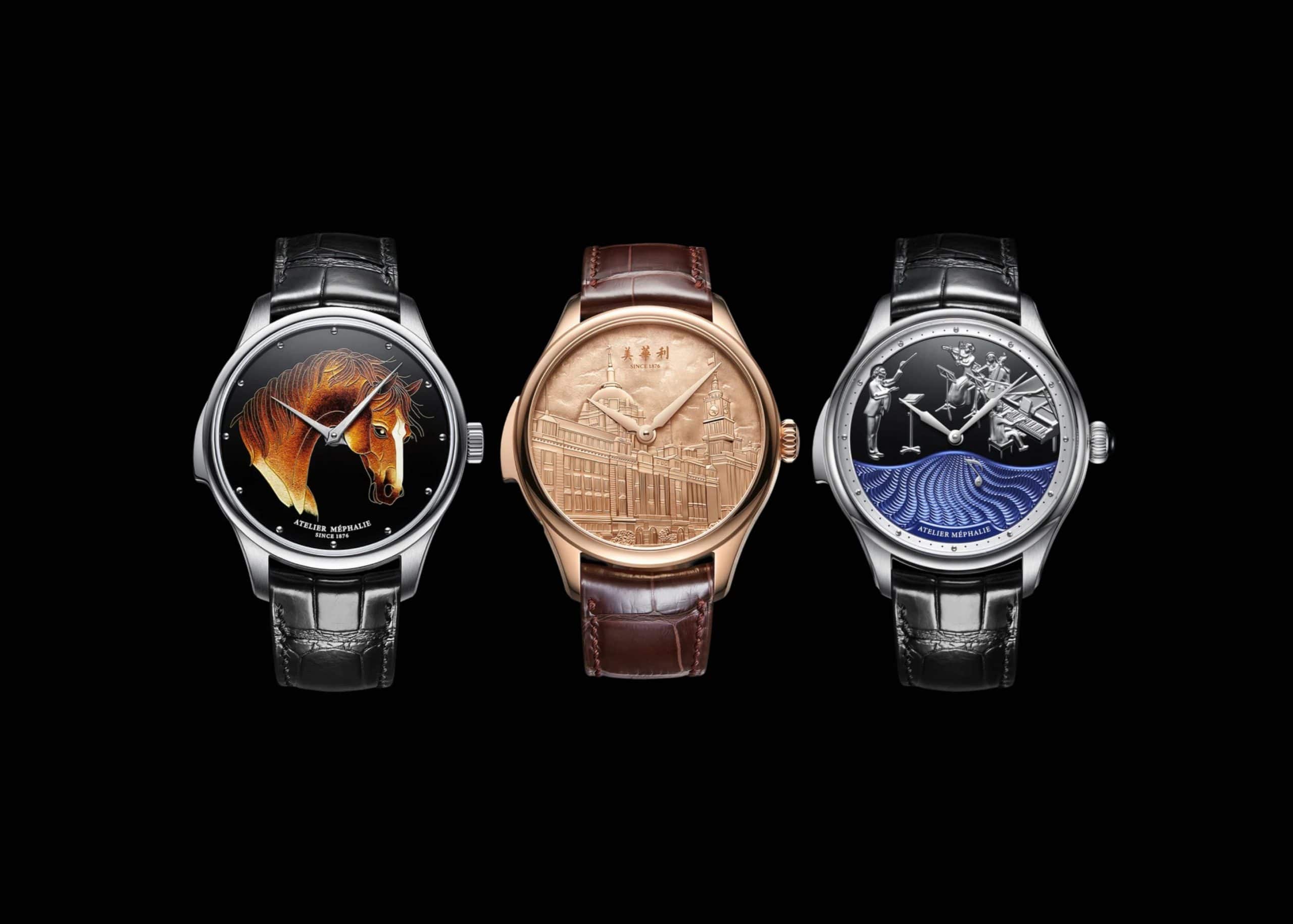
Following the destruction of its factory during the Shanghai War of 1932, Atelier Mephalie slipped into decades of obscurity. Now, the maison has reemerged under principal Lin Xiaolin, marking its revival with a trio of chiming timepieces: two sculptural and one enamel minute repeater.

Voice of China
While minute repeaters are often small-batch limited editions, if not one-off marketing exercises, the 42mm Voice of China is a regular-production piece, beginning with an initial run of 20 examples.
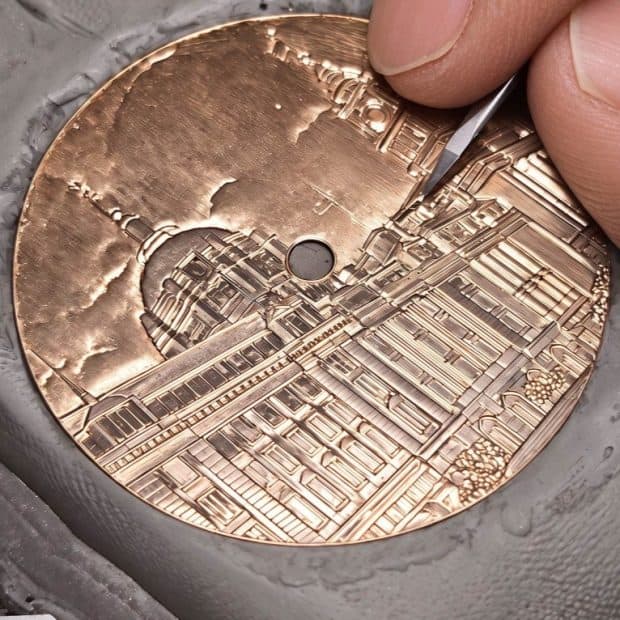
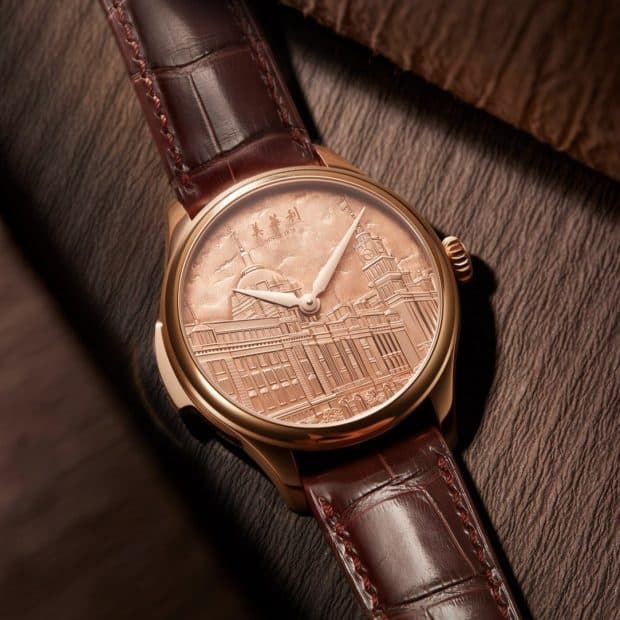
The dial, hand-sculpted from 18k solid rose gold, depicts the historic Shanghai skyline anchored by the iconic No. 12 on the Bund. Varied carving depths lend dramatic perspective to this relief. Matching the dial, the case, hands and pin buckle too are executed in 18k rose gold.
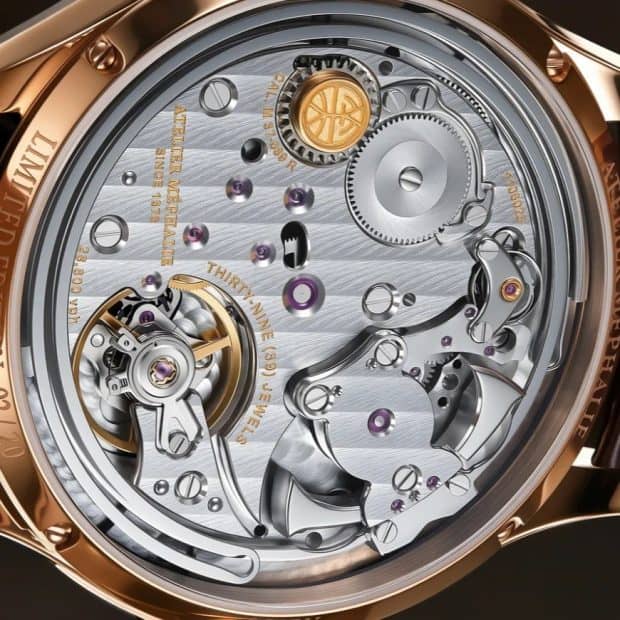
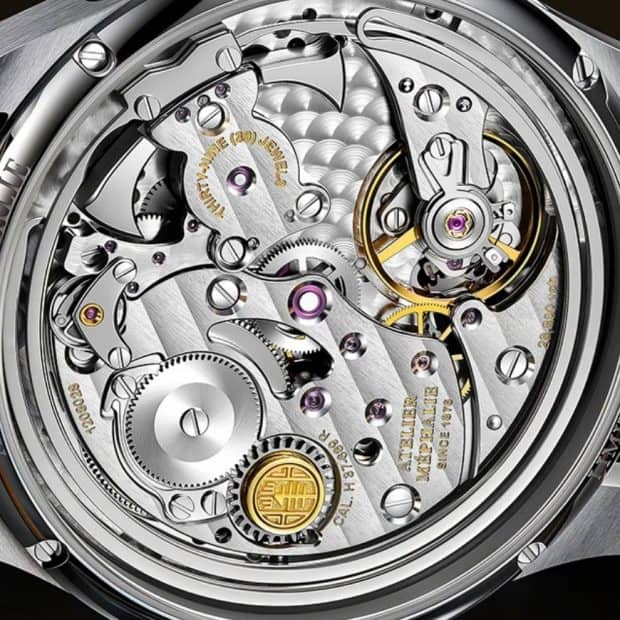
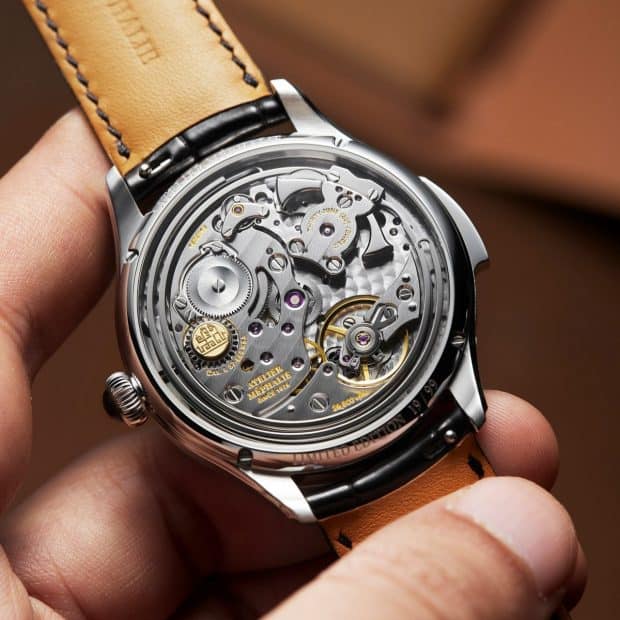
Powering the watch is the CAL.M 37-689R, a movement offering a 45-hour power reserve and a chime sequence that can ring for up to 23 seconds at over 80 decibels. Visible through the sapphire caseback and encircling an 18k yellow gold movement plaque, its snailing, anglage, and striping throw down a gauntlet to Geneva’s old guard.
The Voice of China retails for US$59,500.

The Conductor
Housed in a 42mm steel case, The Conductor relies on the CAL.L 37-689R&A, a caliber modified to incorporate an automaton: the engraved figure on the dial waves his hands in time with the chimes.

The composition in the upper hemisphere naturally brings to mind classics like Ulysse Nardin’s Jaquemart and Hourstriker collections. The lower portion features a hand-turned guilloché dial by master artisan Cheng Yucai, who builds his own rose-engine lathes and is celebrated for his dial work with Atelier Wen.

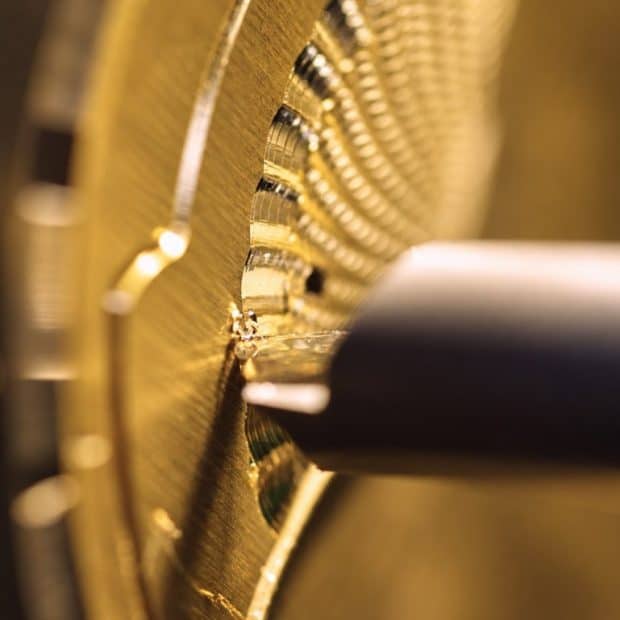
The Conductor is limited to 99 pieces and priced at US$25,000.

The Galloping Horse
In Chinese culture, the spirited steed represents vitality and corporate success. The dial’s equestrian portrait is executed in cloisonné enamel (a technique where fine gold wires partition enamel powders before kiln-firing) crafted by master artisan Xiong Songtao.

Encased in 42mm of stainless steel, this model shares the CAL.M 37-689R caliber found in the Voice of China. Limited to 99 pieces, it is priced at US$28,000, with bespoke enamel commissions available at an added premium.
All three references measure approximately 12mm thick and come mounted on alligator leather straps.

The Disruption of Haute Horlogerie
Collectors’ hearts still skip a beat when they discuss Christopher Ward’s four-figure Bel Canto chiming watch, which was launched in October 2022. Yet, impressive as it is, the Bel Canto is a sonnerie au passage (it only chimes the hours)—a vastly simpler mechanical undertaking than the full strike trains powering Atelier Mephalie’s repeaters.
Only months ago, Chinese brand Peacock grabbed our collective attention by unveiling a triple-axis tourbillon for US$61,999. In much the same way Chinese manufacturers first built industrial machinery by reverse engineering before fathoming its intricacies, Chinese artisans have been voraciously consuming watchmaking knowledge, then applying their business acumen towards producing intricate mechanical complications at scale.
As China, with its immense human capital, asserts itself as a compelling force in modern mechanical watchmaking, showstoppers like these are chipping away at the notion that high watchmaking must remain the exclusive preserve of a privileged few.