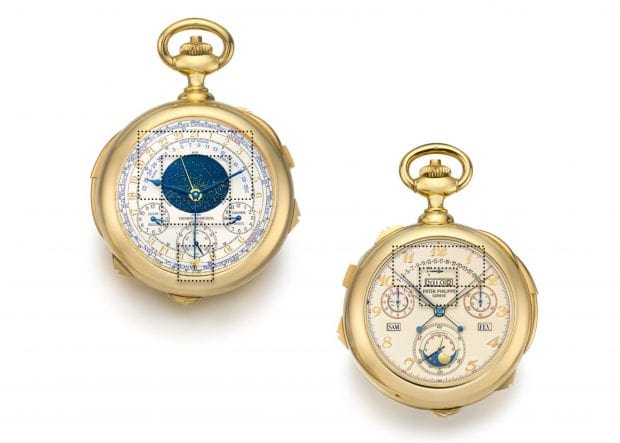
Long an engrossing complication that meticulously maps the constellations, sidereal time has graced some of Patek Philippe’s most revered grand complications, and has also been used to exhibit the complicated watchmaking capabilities of Richemont houses like IWC, Jaeger-LeCoultre and Vacheron Constantin.
Earth finishes its daily spin nearly four minutes faster than the Sun admits, and for centuries, mechanical watches tracking those extra seconds were priced strictly for modern-day Medicis. Today, the cosmos is observing a sharp increase in accessibility: Yema puts a sidereal disc and a flying tourbillon in a titanium tool watch for €14,500, while Citizen introduces 452 glowing stars onto your wrist for US$2,300.
Unlike solar time, sidereal time measures Earth’s rotation relative to distant, “fixed” stars rather than the Sun. While a standard solar day lasts 24 hours—the time required for the Sun to return to the same celestial meridian—a sidereal day is the time Earth takes to complete an exact 360-degree axial rotation: approximately 23 hours, 56 minutes and 4 seconds. As Earth advances along its orbit while spinning, it must rotate roughly one degree extra each day to realign with the Sun.
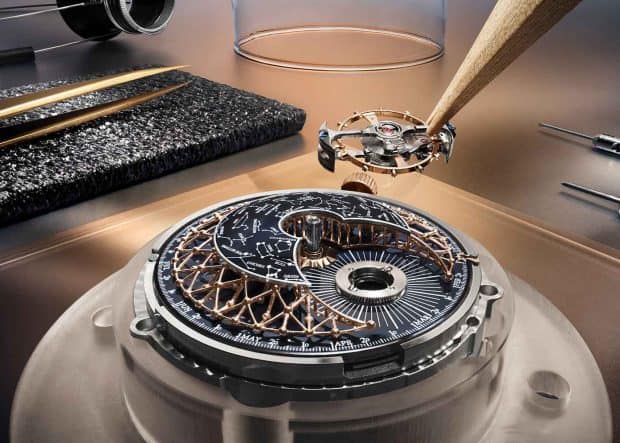
In haute horlogerie, astronomical timepieces with sidereal displays rely on a dedicated gear train calibrated to this slightly faster rate. Historically, this relationship between stellar transit and timekeeping allowed navigators and astronomers—for whom terrestrial time zones are secondary—to calculate one’s relative time and bearings based on the night sky overhead.
Historically, this hefty mechanical undertaking was reserved strictly for six-figure collector showpieces. In recent years, however, the democratization of watchmaking savoir-faire has sparked an exciting shift: sidereal complications are now surfacing with accessible five- and even four-figure price tags.
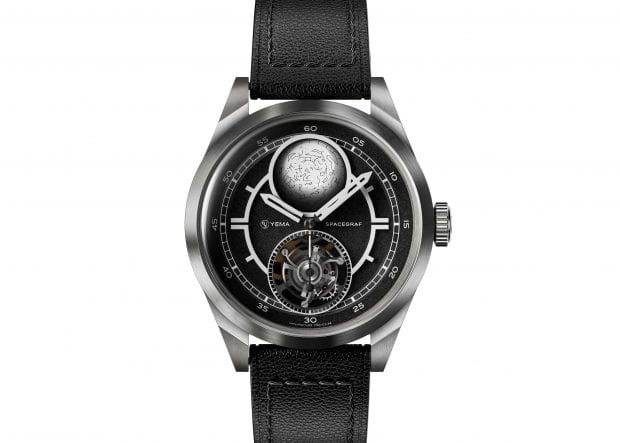
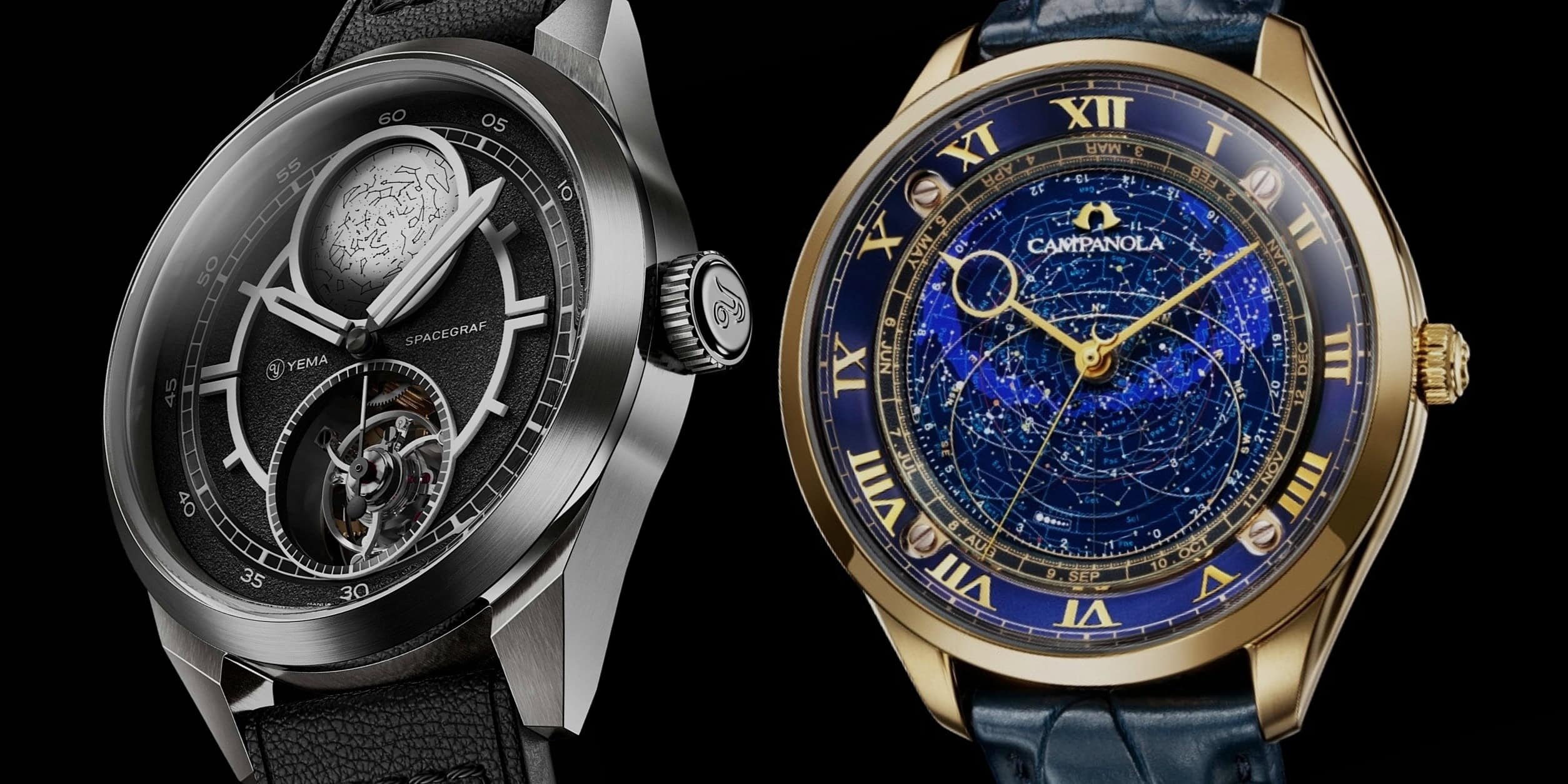
Yema Spacegraf Heure Sidérale Tourbillon Volant Limited Edition
A profound departure from the earlier Spacegraf Zero-G quartz chronograph, Yema’s Spacegraf Heure Sidérale introduces a flying tourbillon paired with a celestial disc that rotates once every sidereal day, designed as a tribute to the Besançon Astronomical Observatory.
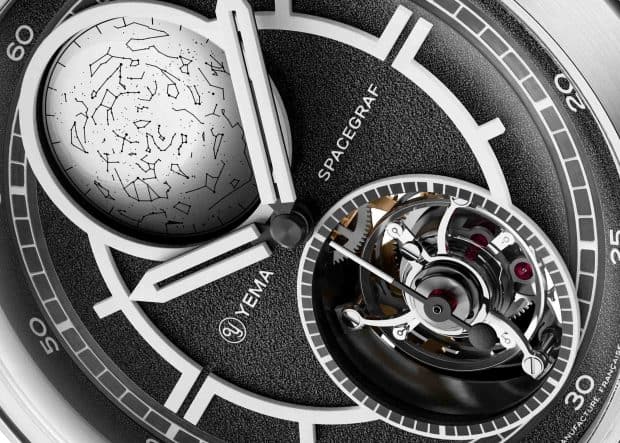
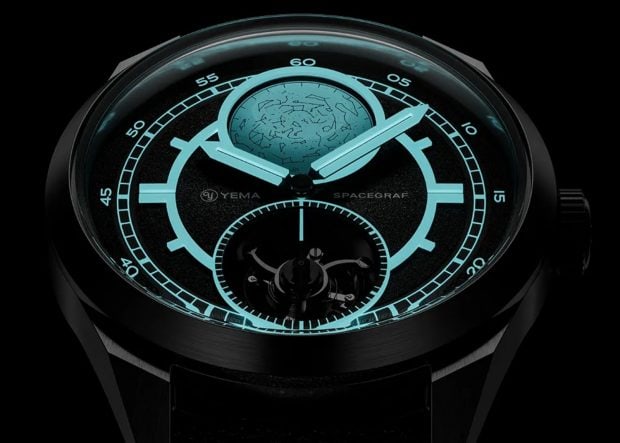
Set against a sandblasted black dial framed by a circular-brushed minutes track, the minutes are read via crisp, two-digit numerals at each hour marker. In low light, Super-LumiNova accents ensures legibility, with the celestial rings, indices, and hands glowing an evocative deep blue. As with common practice, this one-minute tourbillon incorporates a subtle pointer atop its cage to mark running seconds.
Beating inside is the manufacture caliber CMM.32, which boasts an impressive 105-hour power reserve. Assembled in Morteau, France, the caliber was developed alongside independent watchmaker Olivier Mory as an evolution of Yema’s proprietary tourbillon architecture.
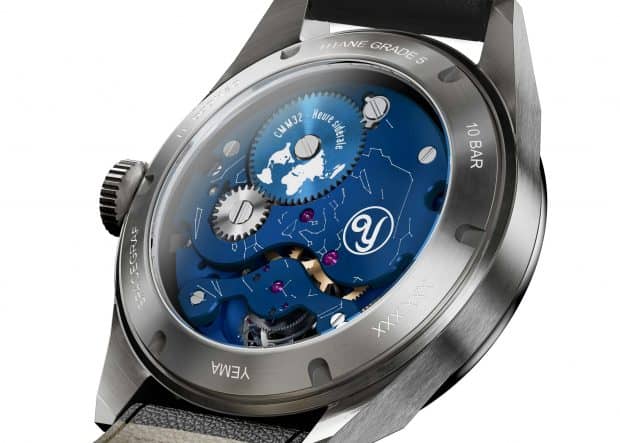
Yema housed the movement in a 42mm grade 5 titanium case with alternating brushed and polished facets. Despite its delicate complication, the watch is engineered for true tool-watch utility: it offers 100 meters of water resistance and shock resistance up to 5,000 G.
No, this novelty’s planetarium isn’t hand-painted or cloisonné enameled like those made by the industry’s titans, but I still rightfully tip my hat to its construction and finishing.
Measuring 12.15mm thick, it wears with substantial wrist presence, secured by a stitched leather strap with a matching titanium pin buckle. At €14,500 (approximately US$16,250 by current rates) and limited to just 150 pieces, it represents an astonishingly accessible entry point into high-complication French horology.
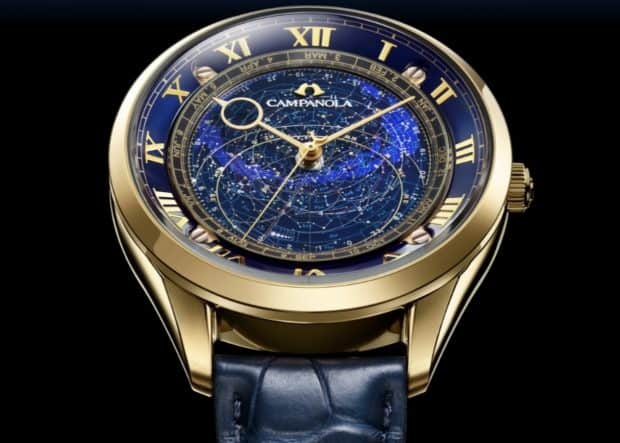
Citizen Campanola Cosmosign
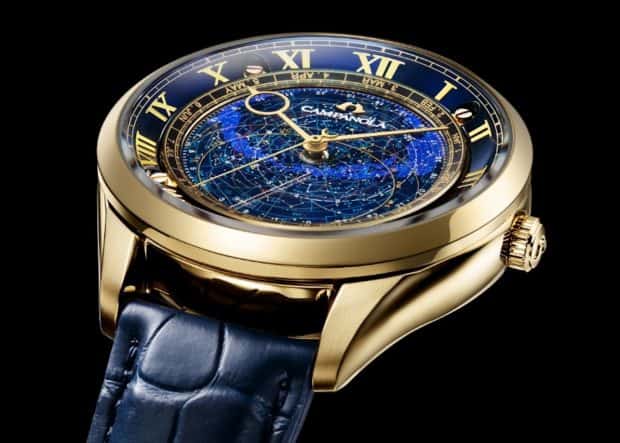
Citizen’s high-craft, Japan-exclusive subsidiary brand, Campanola, has unveiled the Cosmosign AO1032-03L to celebrate the 40th anniversary of the Cosmosign celestial complication.
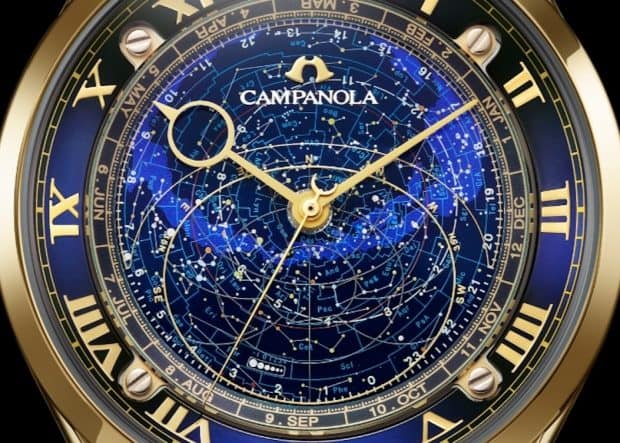
Framed by an intricate urushi lacquer rehaut, the star chart is calibrated for 35° North latitude, mapping 452 stars alongside 119 notable nebulae and star clusters. Unlike purely mechanical executions, this high-precision quartz movement also manages to integrate sunrise and sunset indications within an exceptionally wearable 39mm footprint.
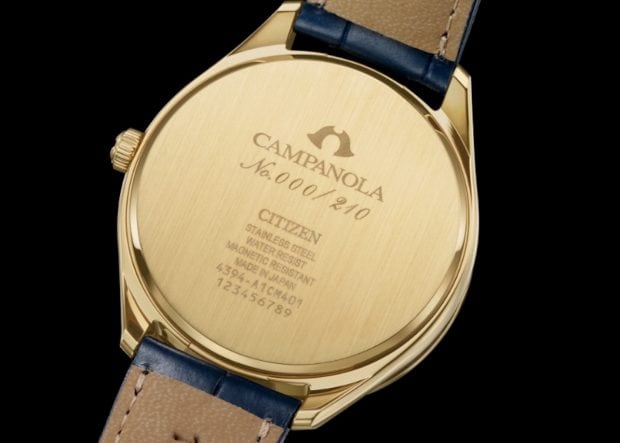
The case features Citizen’s proprietary Duratect Amber Yellow surface-hardening technology, balancing warm rose gold tones with remarkable scratch resistance. Paired with an integrated crocodile leather strap and limited to 210 pieces, the anniversary Cosmosign retails for ¥363,000, which is barely US$2,300 at the time of writing and has convinced me to change more yen for my next trip to Japan.