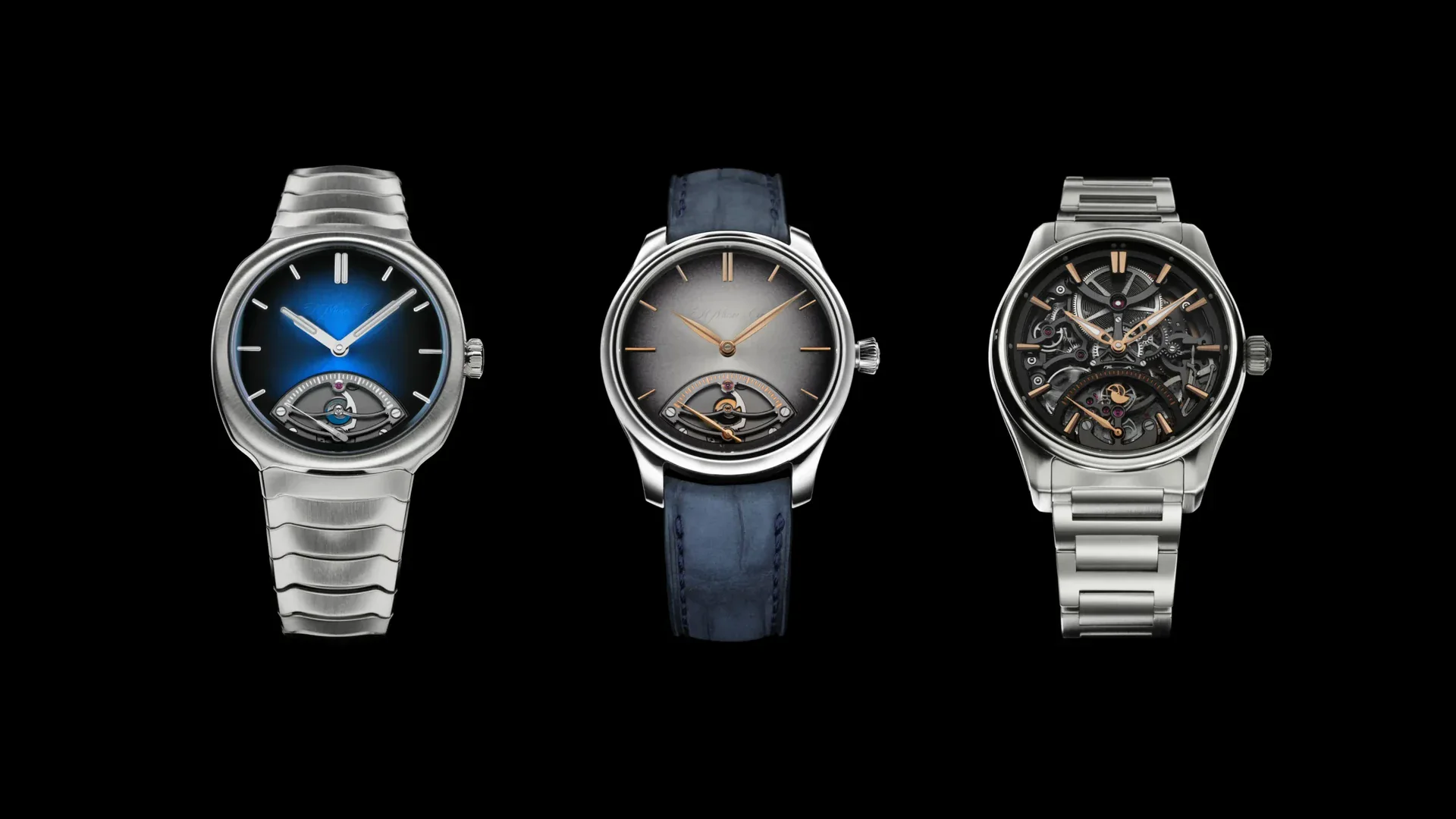
Most seconds hands are content to go around in circles. H. Moser & Cie.’s has other plans. Two years after the Pioneer Retrograde Seconds introduced the Schaffhausen manufacture’s half-minute party trick, a hand that sweeps across an arc for 30 seconds and then snaps back to zero, Moser is spreading the idea across three of its core collections at once: the Pioneer Skeleton Retrograde Seconds, the Streamliner Retrograde Seconds, and the Endeavour Retrograde Seconds.
H. Moser & Cie. has added a 30-second retrograde seconds display to three 40mm steel watches: the Pioneer Skeleton (Ref. 3251-1200, HMC 251), Streamliner (Ref. 6252-1200) and Endeavour (Ref. 1252-1200), both on the HMC 252, all with 72-hour power reserves.
Each one is a 40mm steel watch, each one beats with a self-winding calibre holding 72 hours of power reserve, and each one gives the same complication a very different personality. One is fully skeletonized and sporty, one is fluid and integrated, and one is as quiet as Moser gets. What unites them is the retrograde seconds watch at its most theatrical, and a reminder that a complication does not have to be rare to be a delight.
How a Retrograde Seconds Works
A brief explainer, because the term gets tossed around. In a conventional watch, the seconds hand rotates once every 60 seconds and keeps on going. In a retrograde display, the hand travels along an arc or sector instead of a full circle, and when it reaches the end of its scale it flies back to the start and begins again. Watchmakers have used the idea for centuries, most often for dates and days, where the jump back at month’s end is a once-in-a-while flourish. Applied to the seconds, the flourish happens twice a minute, every minute, which is exactly why it is so hypnotic to watch.
Moser describes its version as “inspired by measuring instruments and speedometers,” noting that “completing its journey every 30 seconds, it offers an exciting kinetic and choreographic spectacle.” The brand’s shorthand is better still: “Sweep. Snap. Repeat.” On all three new models, the mechanism sits at 6 o’clock and is left open on the dial side, so you see the parts that make the snap happen rather than just the result. It is a little like watching the conductor instead of only hearing the orchestra.
The family tree is short and easy to follow. The original Pioneer Retrograde Seconds, Ref. 3250-1200, set the template with a 42.8mm steel case, a Midnight Blue fumé dial, a rubber strap, and the HMC 250 automatic movement, which Moser built on its HMC 201 base calibre and coupled to a module designed by its partner Agenhor SA. The new trio brings the case down to 40mm across the board and introduces two new calibres, the HMC 251 and HMC 252, each with that same 72-hour reserve.
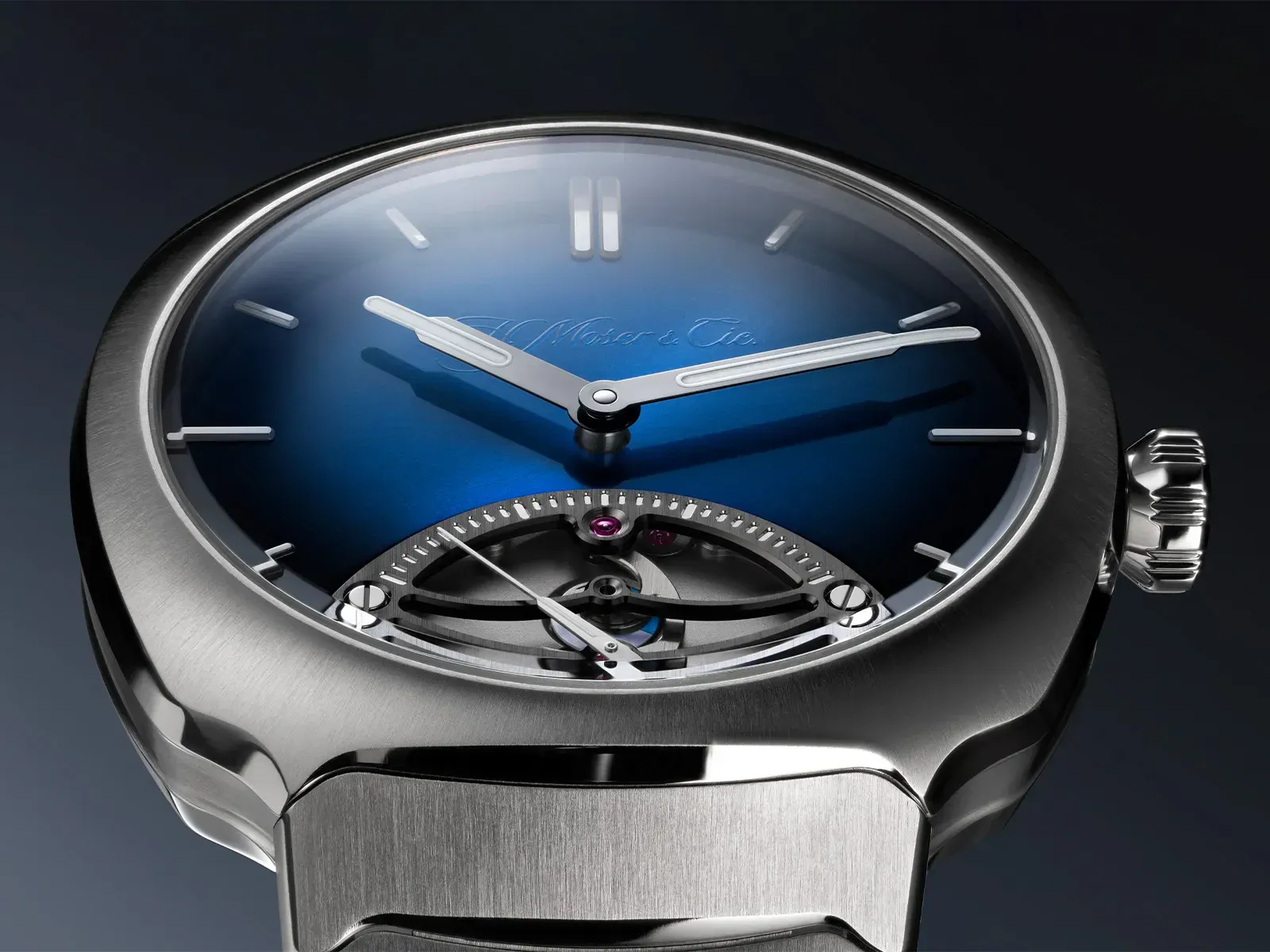
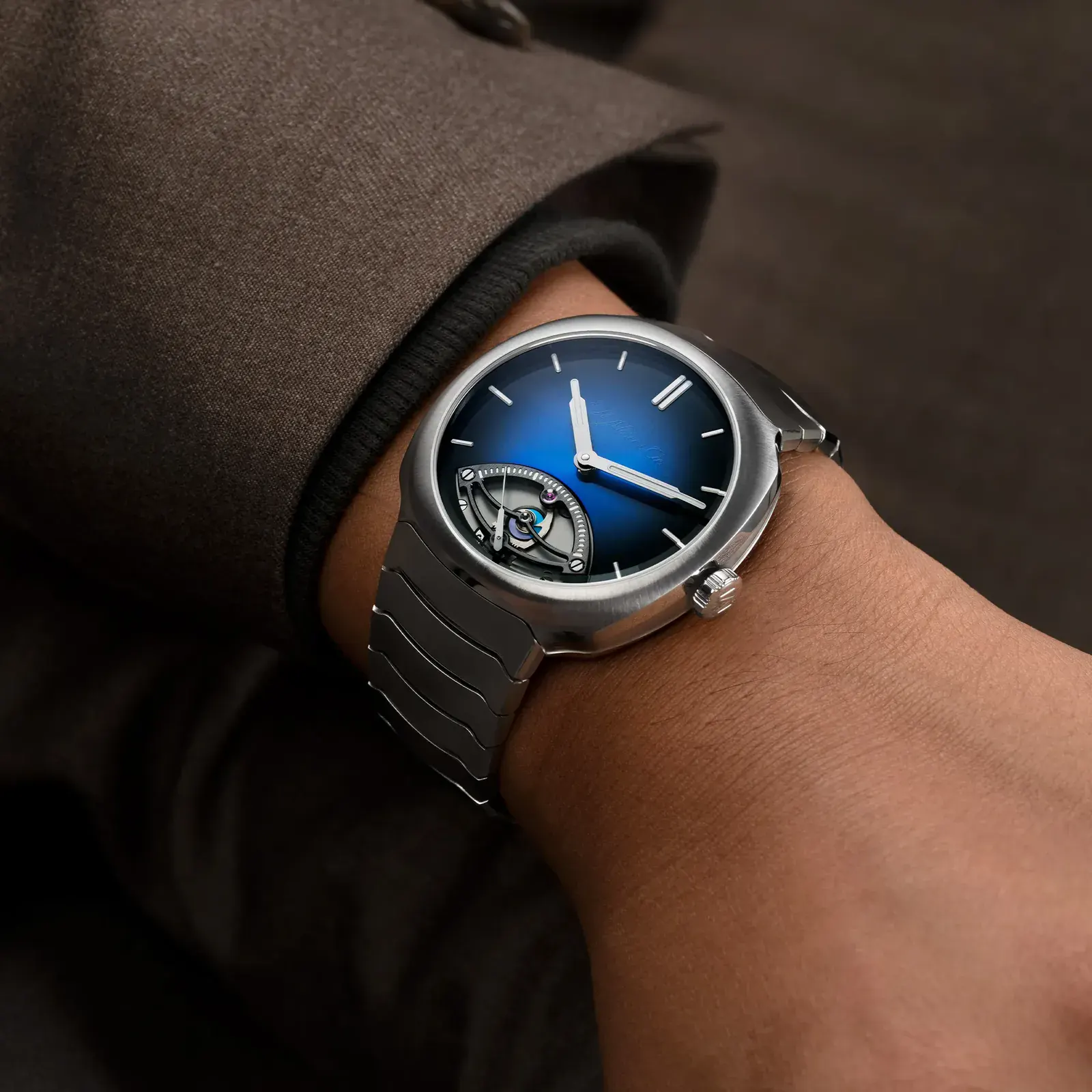
The Streamliner Retrograde Seconds, Ref. 6252-1200, is the one built for motion. Moser puts it best: “A timepiece that looks like it’s going somewhere, even when it’s completely still.” Its fluid steel case and fully integrated steel bracelet flow around a Midnight Blue fumé dial, the gradient that has become Moser’s calling card, while the transparent lacquer logo all but disappears. The brand jokes that the logo “stays out of the way. Wouldn’t want to interrupt the flow now, would we?” In our view, the Streamliner is the most natural home for this complication yet, since the sweeping hand echoes the curves of the case. Water resistance is 12 ATM.
Under the dial is the HMC 252, which Moser calls “an evolution of our HMC 250,” the calibre of the original Pioneer Retrograde Seconds. It is supplied by Agenhor, the specialist movement maker Moser credits with making retrograde mechanisms one of its specialties, and it is equipped with a tungsten rotor. The headline change is visual: “Its retrograde mechanism features a newly designed rack on the dial side, lending a distinctive visual signature to this intricate complication.”
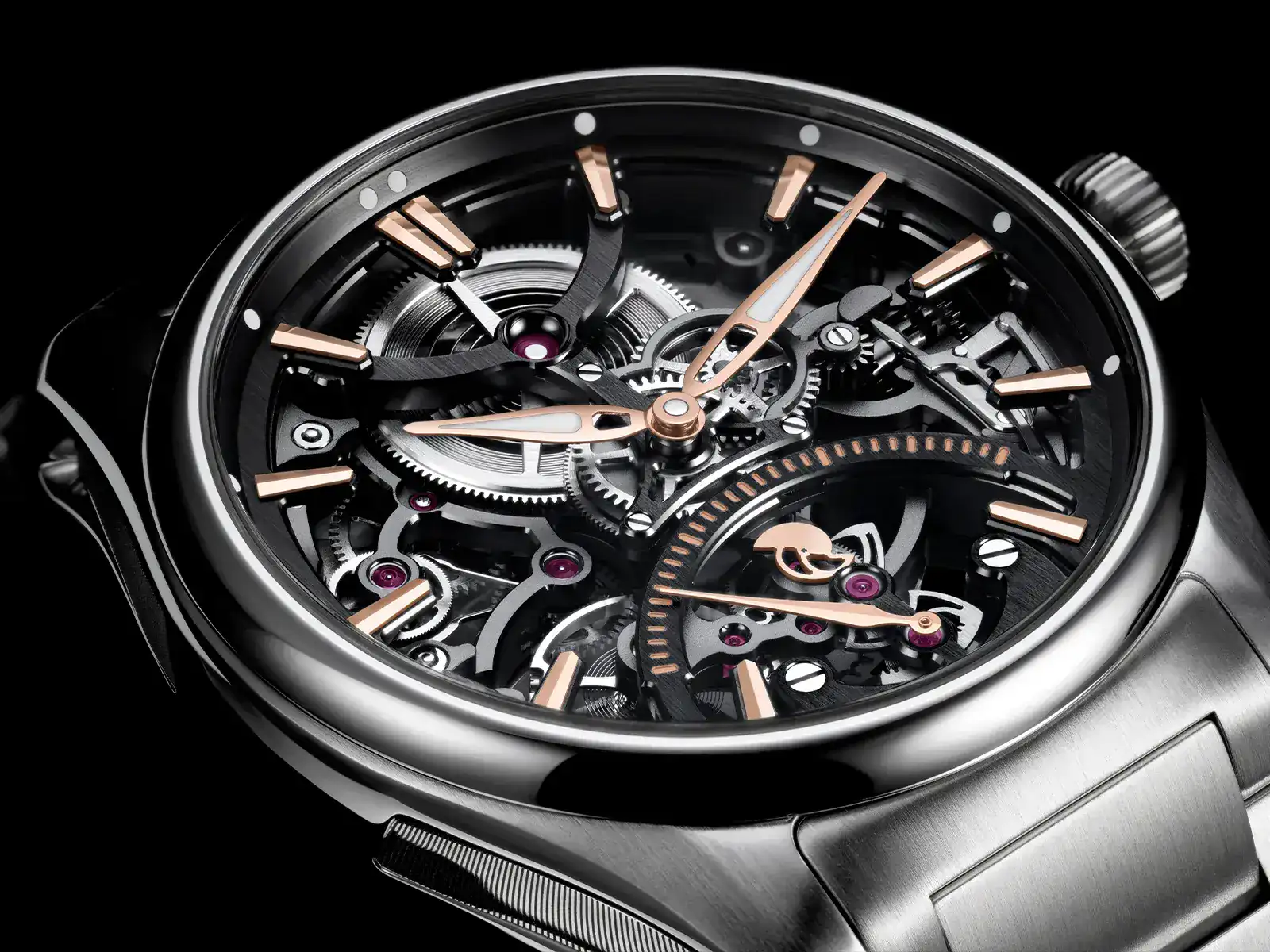
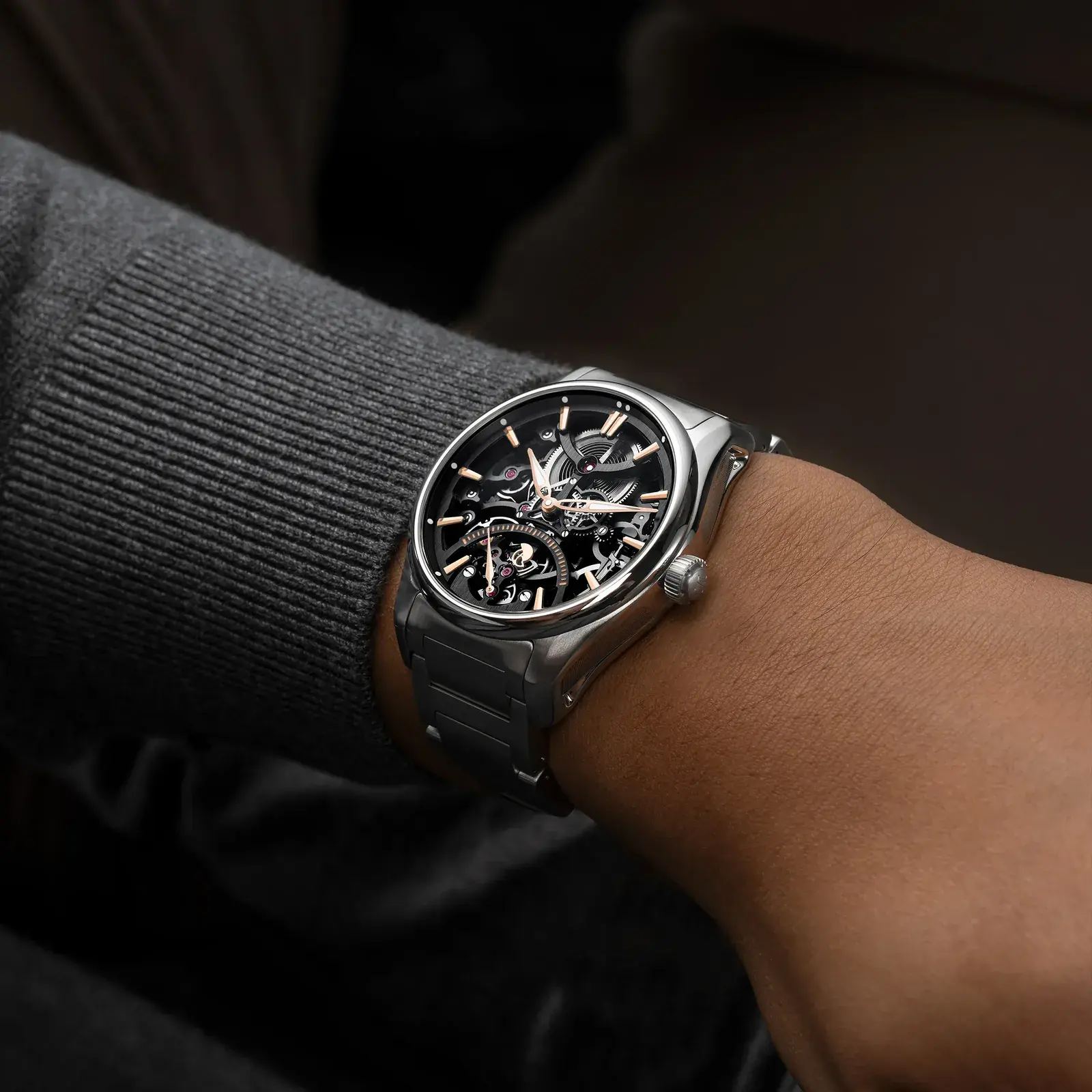
The Pioneer Skeleton Retrograde Seconds, Ref. 3251-1200, goes the other way entirely. Where the Streamliner hides its movement beneath a fumé dial, the Pioneer Skeleton “strips everything away to reveal its mechanics, with a complication that refuses to sit still.” There is no dial at all, only the fully skeletonized HMC 251, a self-winding calibre evolved from the HMC 250 and paired with a retrograde mechanism that Moser’s product page describes as developed in-house. The movement is fitted with a gold rotor and, per the brand, “has been designed with particular attention to symmetry, creating a harmonious and balanced architecture.”
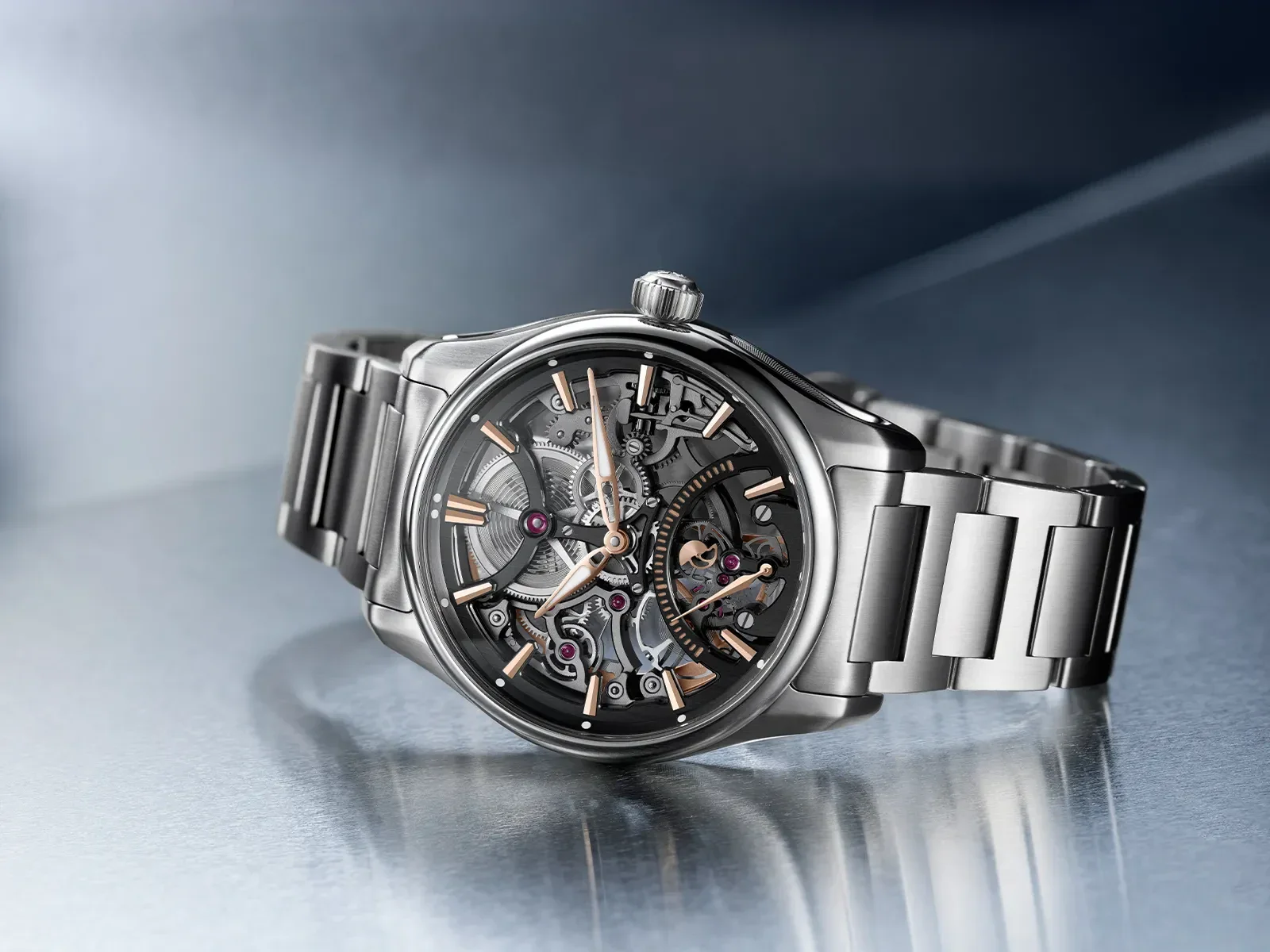
The Pioneer is Moser’s sports collection, and the skeleton keeps that brief: the 40mm steel case is water resistant to 12 ATM, and the watch arrives with both a steel bracelet and a khaki rubber strap. “Did we mention it comes with a steel bracelet and a khaki rubber strap?” Moser asks, with characteristic deadpan. It is the most technical-looking of the three, and the one where the retrograde action reads most like a machine at work.
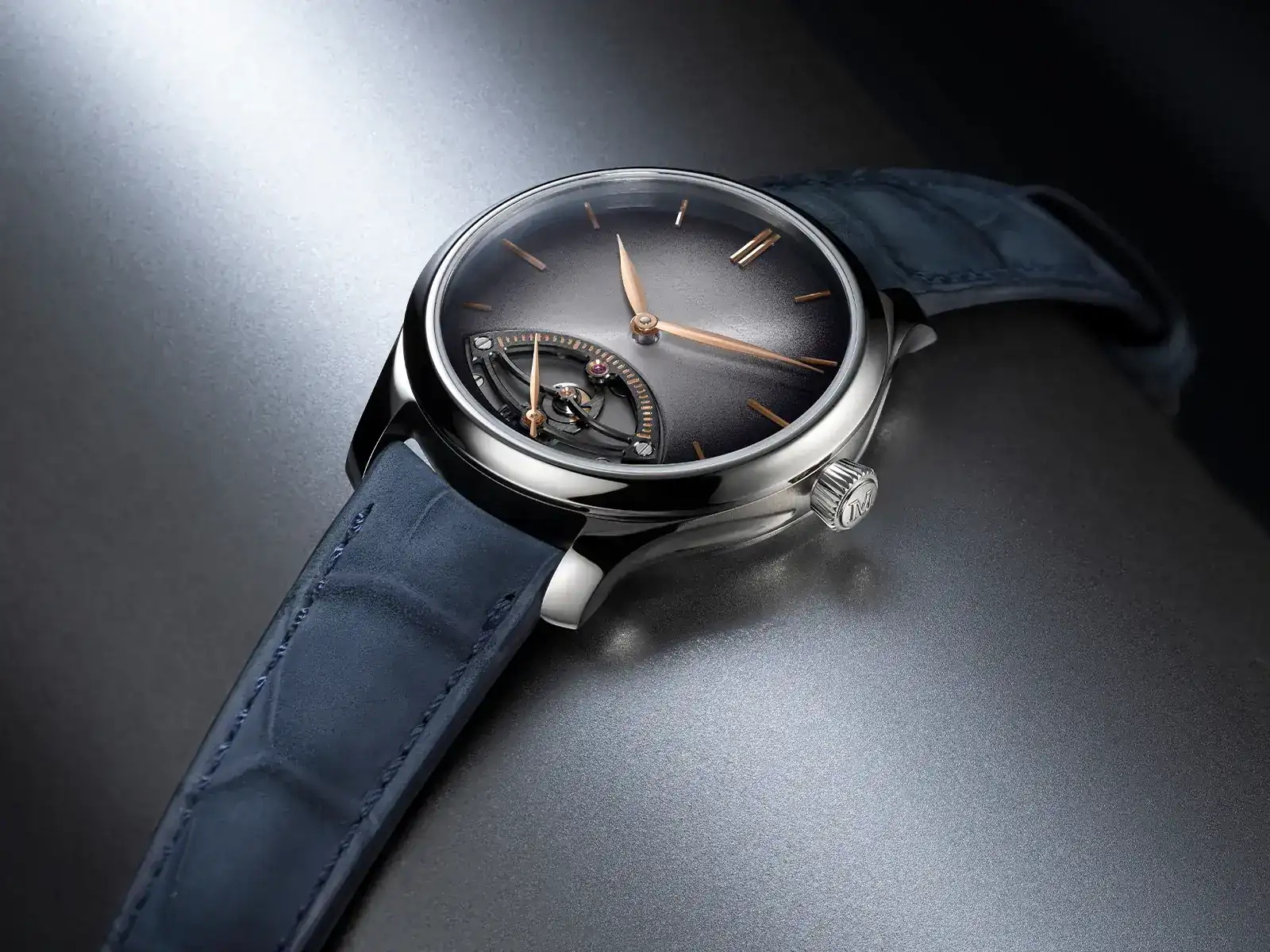
Then there is the Endeavour Retrograde Seconds, Ref. 1252-1200, the dress watch of the trio and, arguably, the purest expression of Moser’s minimalism. “Minimalism with a snap,” the brand calls it. The 40mm steel case frames a Blackor fumé dial “that shifts between light and shade,” and the only flicker of activity is at 6 o’clock, where the hand makes its 30-second journey before snapping back to zero. Moser calls it “a little mechanical theatre on an otherwise austere stage,” adding that “even our transparent lacquer logo knows better than to steal the spotlight.”
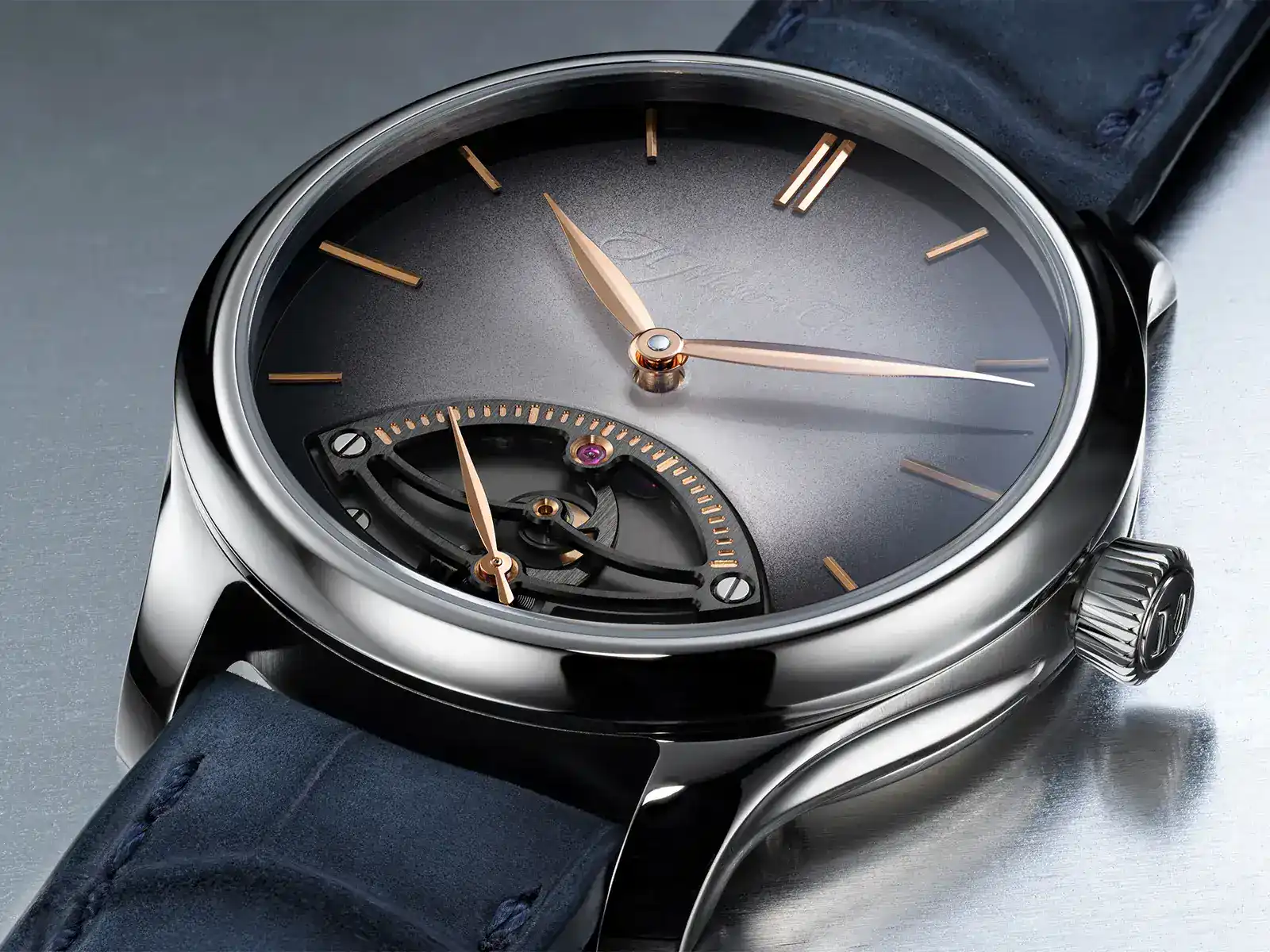
Like the Streamliner, the Endeavour runs on the Agenhor-supplied HMC 252 with its tungsten rotor and dial-side rack. It is fitted with a hand-stitched nubuck alligator leather strap, and, true to its dressier brief, it is water resistant to 3 ATM. If the Streamliner is the retrograde in motion and the Pioneer Skeleton is the retrograde exposed, the Endeavour is the retrograde as punctuation, a single mechanical exclamation point on a dial that otherwise says very little.
Taken together, the three watches show how much range a single complication can have when a brand is willing to play. Moser has long treated its collections as a stage for a little mischief, from the Streamliner Off-Grid to a minute repeater you can watch chime, and the retrograde seconds fits that pattern neatly: a serious piece of mechanics that never takes itself too seriously. For more on how complications like these evolved, our tourbillon explainer is a good next stop.
The Endeavour Retrograde Seconds is CHF 27,900, the Streamliner Retrograde Seconds is CHF 29,900, and the Pioneer Skeleton Retrograde Seconds is CHF 35,000, all excluding VAT.
| Specification | Streamliner Retrograde Seconds | Pioneer Skeleton Retrograde Seconds | Endeavour Retrograde Seconds |
|---|---|---|---|
| Reference | 6252-1200 | 3251-1200 | 1252-1200 |
| Case | 40mm steel | 40mm steel | 40mm steel |
| Dial | Midnight Blue fumé | Fully skeletonized | Blackor fumé |
| Movement | HMC 252, self-winding, supplied by Agenhor, tungsten rotor | HMC 251, self-winding, skeletonized, gold rotor | HMC 252, self-winding, supplied by Agenhor, tungsten rotor |
| Complication | 30-second retrograde seconds | 30-second retrograde seconds | 30-second retrograde seconds |
| Power reserve | 72 hours | 72 hours | 72 hours |
| Water resistance | 12 ATM | 12 ATM | 3 ATM |
| Bracelet / strap | Fully integrated steel bracelet | Steel bracelet and khaki rubber strap | Hand-stitched nubuck alligator leather |
Timely FAQs
What is a retrograde seconds display?
Which H. Moser & Cie. models have retrograde seconds?
What movements power the new Moser Retrograde Seconds watches?
How much do the Moser Retrograde Seconds watches cost?
