SIGN UP

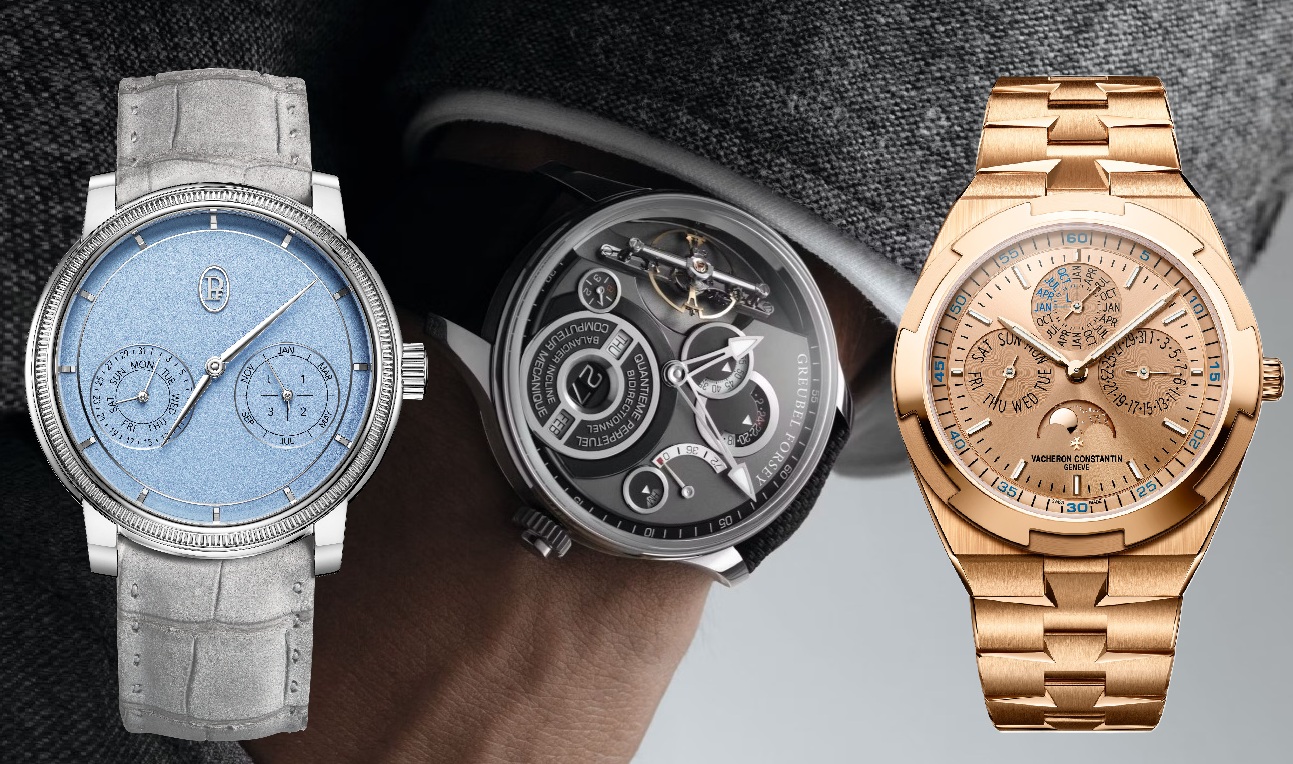
The Calendar Watch Turns a New Leaf

Sure, your smartphone can tell you the day, date, month, and even which stores nearby sell Labubus. But there’s an enduring human element in all calendar watches that gives them a timeless allure.
Multiplying the passage of time by the varying lengths of each month requires intricate mechanics: even an annual calendar watch comprises many gears with numerous teeth. Perpetual calendars, which account for leap years, push the mechanical equations even further.
Most high-end mechanical perpetual calendars remain accurate until 2100, since the Gregorian calendar skips most century years as leap years, except those divisible by 400.
The painstaking calculations and craftsmanship behind these watches elicit a reverence that no smartphone can replicate.
If you’ve been in the market for a calendar watch, now is a particularly compelling time to explore—intriguing designs, technological advances, and even some irresistible price tags make this a season worth watching.
The Twilight of the ‘Dead Zone’
History’s most important perpetual calendars include the world’s first perpetual calendar wristwatch that Patek Philippe made in 1925, and the IWC Da Vinci Perpetual Calendar of 1985, which was the first watch to allow all calendar indications to be set synchronously through the crown.
However, they bore one of the most frustrating quirks of calendar watches—the so-called “dead zone”. Owners of perpetual calendars need to know when their watch’s dead zone is, as adjusting the watch during these hours risks fracturing its delicate mechanism. Attempting adjustments during the dead zone can easily lead to costly repairs or, in the worst case, render a five- or six-figure timepiece irreparable.
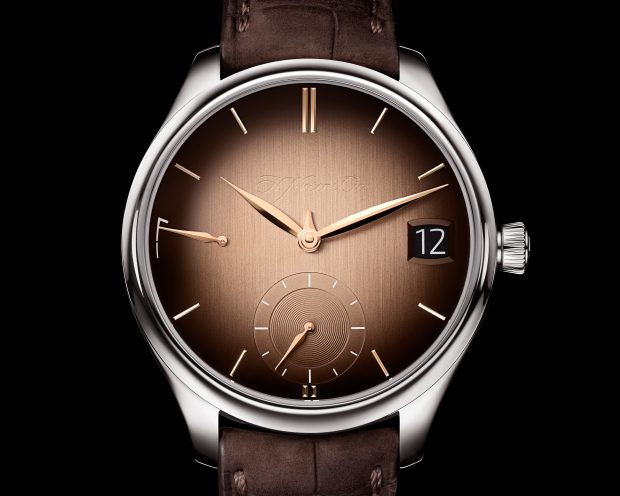
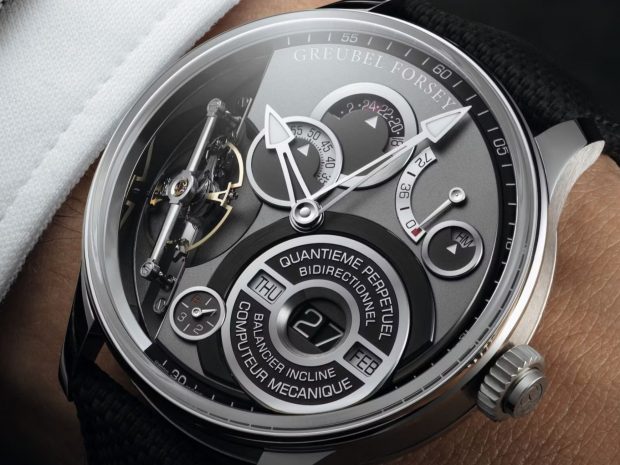
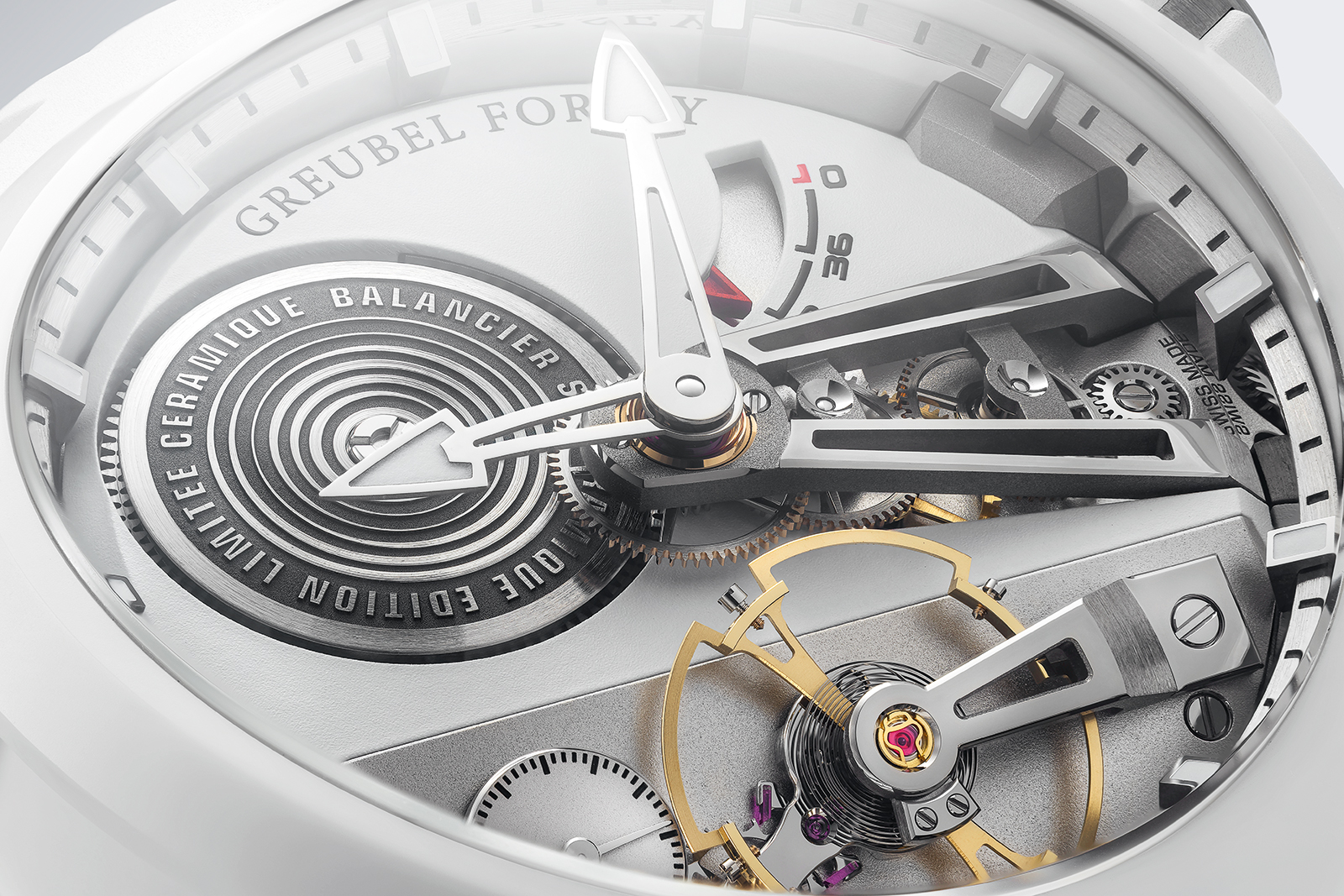
Some recent releases have finally addressed this longstanding issue. Greubel Forsey’s brand-new QP Balancier, for example, solves the dead zone problem, as does the H. Moser & Cie. Endeavour Perpetual Calendar, now returned with a striking Smoked Salmon dial.
The 45.1 mm white gold Greubel Forsey QP Balancier employs a 25-part “Mechanical Computer” that lets wearers set all 12 calendar indications bidirectionally via the crown, with an automatic safety lock that eliminates the perilous dead zone. H. Moser & Cie.’s 42mm white gold Endeavour Perpetual Calendar takes a more minimalist route, displaying the months through a discreet central hand aligned with the hour markers, while offering an instant-jump date and the freedom to adjust the calendar safely at any time.
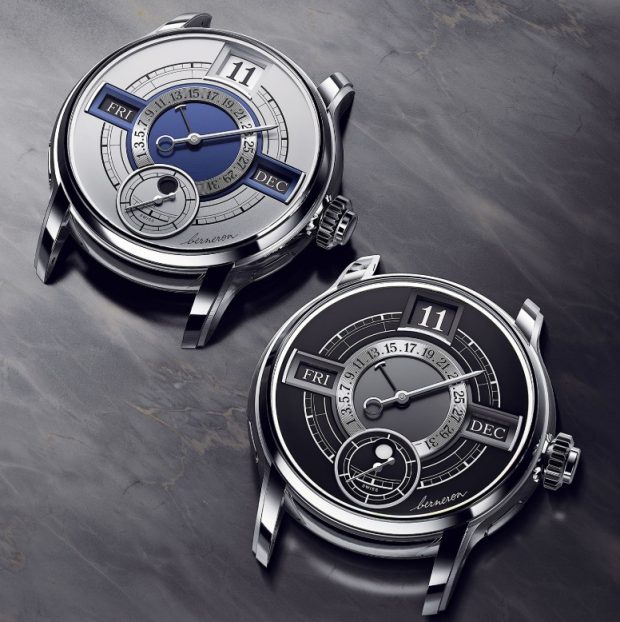
A rising star in this space is Sylvain Berneron. The Versailles-born, Neuchâtel-based designer recently unveiled the Berneron Quantième Annuel, which combines a highly legible top-to-bottom regulator layout, a retrograde date with four jumping displays, a 100‑hour power reserve, and a completely dead‑zone‑free calendar, all housed in a compact, durable 38 mm platinum case.
It’s worth noting that Sylvain’s Berneron Mirage Prussian Blue also made headlines at Phillips’ Fall auction last week, fetching CHF 241,300 against an upper estimate of CHF 80,000—emblematic of this young designer’s meteoric ascent.

We also elaborated on the three new perpetual calendars that Audemars Piguet released last week. They too will not be damaged if their wearers attempt to adjust them during the dead zone. These new references arrive in a more wearable 38mm case—a testament to the manufacture’s ability to combine intricate complications with minute precision.
Minimalist and Affordable Calendars
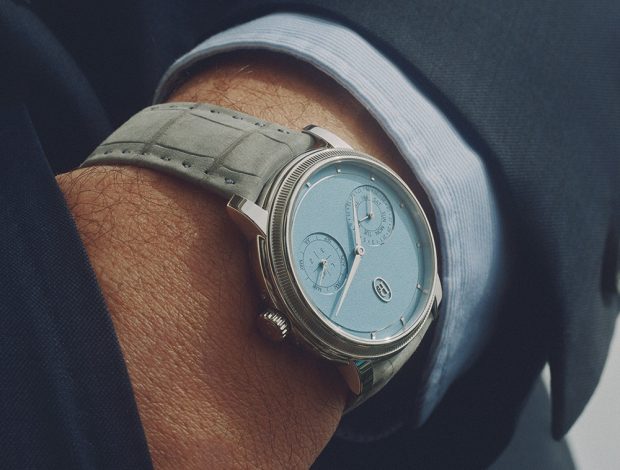
Calendar watches have long carried the stigma of additional actuators and cluttered dials, but recent designs challenge this assumption. The Moser Endeavour Perpetual Calendar exemplifies minimalist elegance, as does the recently released Parmigiani Fleurier Toric Perpetual Calendar, which we discussed in detail here. Arriving in a 40.6mm platinum or rose gold case, its Golden Ratio-inspired design leaves ample space for its hand-grained dial to shine.
Then there’s Frédérique Constant, a brand increasingly recognized for marrying accessibility with technical innovation. To me, Frédérique Constant’s Slimline Monolithic Manufacture represents this brand’s captivating technical prowess, as this timepiece debuted an ingenious 40Hz Monolithic oscillator that replaces the traditional 26-part balance assembly.
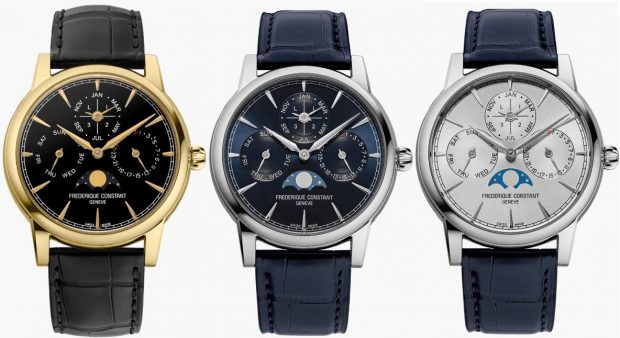
Frédérique Constant unveiled three new 40mm Classic Perpetual Calendar Manufacture timepieces last week, which start from CHF 9,995, making sophisticated complications attainable to a broader audience.
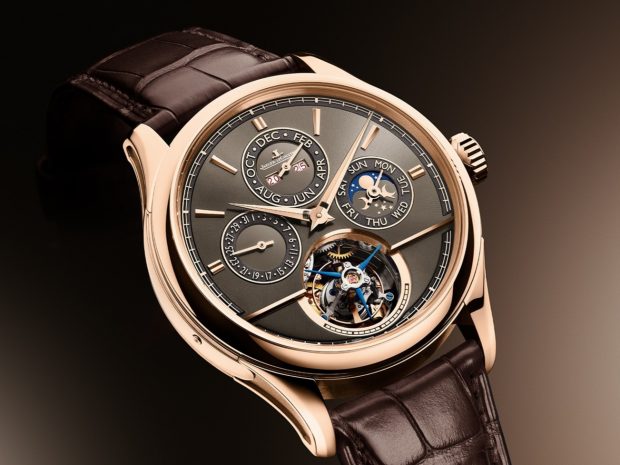
Even Richemont stalwarts have doubled down on this complication and launched refined perpetual calendars: the 41.5mm Vacheron Constantin Overseas Perpetual Calendar Ultra-Thin, a mere 8.1mm thick; and the 42mm Jaeger-LeCoultre Master Grande Tradition Calibre 985, which pairs a perpetual calendar with a flying tourbillon and moonphase display.

Distinguished by its relentless pursuit of perpetual chronometry, Vacheron Constantin unveiled the La Quête du Temps astronomical clock and accompanying watch in the Louvre yesterday, two emphatic endeavors that mark the brand’s 270th anniversary.
Today’s calendar watches are rewriting the rules: more attainable prices, sleek minimalist designs, and dead‑zone‑free mechanics make this an especially exciting era for enthusiasts.
Advertisement

Related Posts



Advertisement