SIGN UP


Introducing the Ōtsuka Lōtec No. 9: A Game-Changing Complication 9 Years in the Making

Since the invention of quartz watches in 1969, Japanese watches have often been perceived as cheap, mass-produced products. But the striking designs of independent watchmakers like Hajime Asaoka and Naoya Hida have been steadily reshaping this perception.
A turning point came last year, when Phillips announced that its Hong Kong sale would feature a dedicated auction for Japanese watches—an unprecedented milestone for Japan’s standing as a serious watchmaking nation.
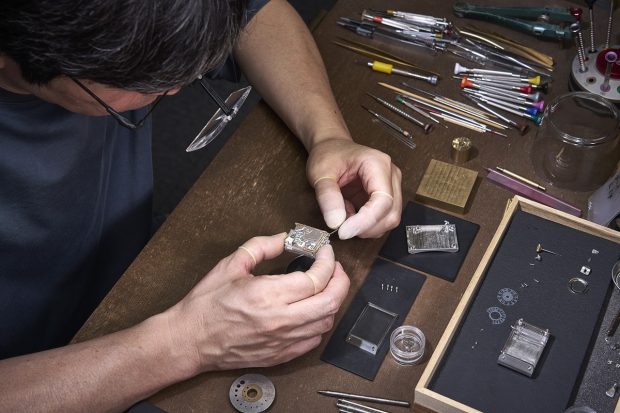
Held in November 2024, the TOKI auction spotlighted rare editions from Asaoka and Hida, alongside timepieces from Ōtsuka Lōtec. The brainchild of industrial designer-turned-watchmaker Jiro Katayama, Ōtsuka Lōtec has built a following with inventive creations like the “No. 5” with satellite hours, the double-retrograde “No. 6,” and the “No. 7” and “No. 7.5” that display time through portholes. Priced between USD 2,000 and 5,000, these complications made mechanical whimsy unusually accessible.
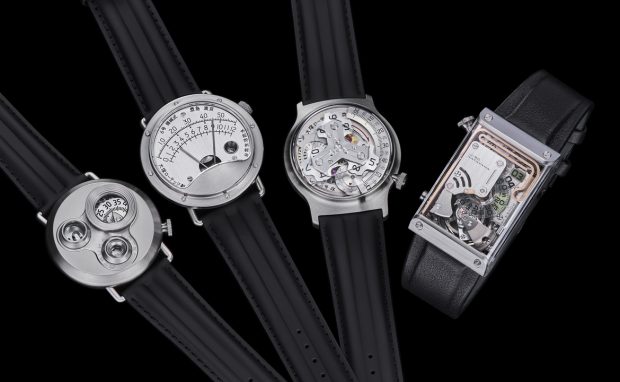
At TOKI, however, all three of Katayama’s watches soared past their upper estimates. Both the “No. 6” and its variant, the “Shinonome,” hammered for around HKD 500,000 (USD 64,000) each—ten times their upper estimates. These sales came just a week after Katayama clinched the GPHG Challenge Prize for the No. 6, and one could almost hear the gears turning in his head.
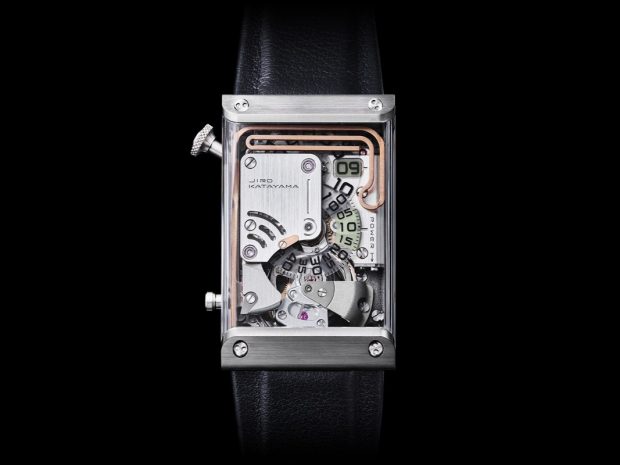
Two days ago, without exaggeration, Katayama left his fans’ jaws on the floor when he unveiled his most ambitious project yet: the Ōtsuka Lōtec No. 9, a watch nine years in the making.
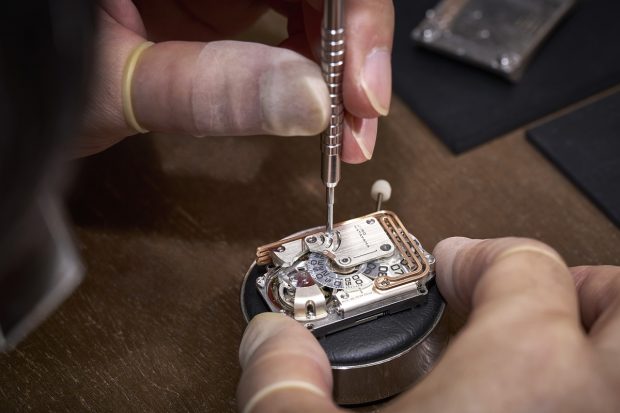
Unlike his earlier pieces, which were based on Miyota movements, the No. 9 is entirely in-house and pretty complex. It features jumping hours, retrograde minutes, a tourbillon, a linear power reserve indicator, and a sonnerie au passage striking mechanism—all within a case just 13mm thick. Beneath its wraparound sapphire crystal, every mechanical element is laid bare.
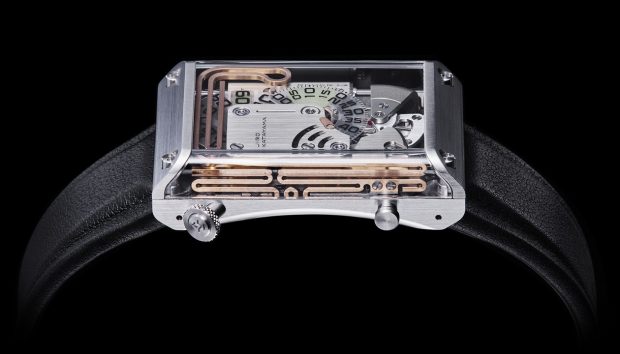
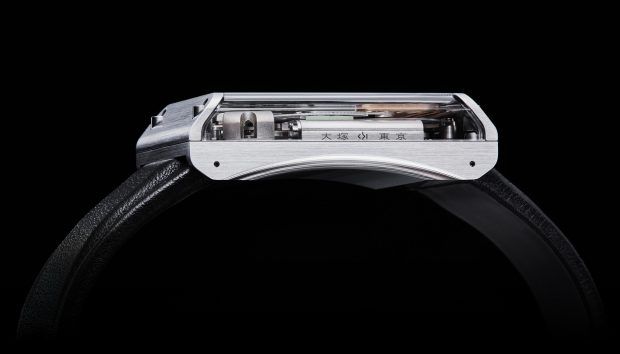
The magic unfolds at the top of each hour: the retrograde minute disc snaps back to zero, the backlit hour disc jumps forward, and the hammer strikes the sonnerie’s coiled gong. One transparent flange showcases the snaking gong itself, while the opposite side bears the inscription “大塚東京” (Ōtsuka Tokyo).
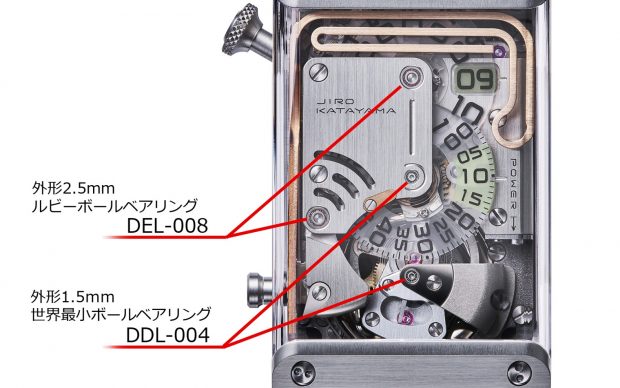
Katayama jokes that layering these complications was like plating sushi on a wooden geta, inspiring him to give the sushi geta-like movement the portmanteau “SSGT”. The Caliber SSGT incorporates five ball bearings from MinebeaMitsumi, including the Guinness World Record–certified smallest ball bearing in the world—just 1.5mm in diameter—used in the tourbillon pivot.
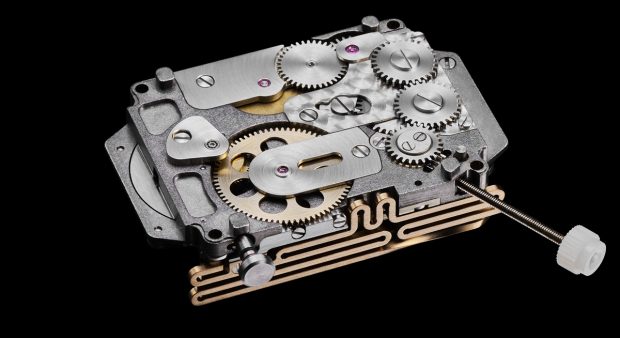
“I came up with the idea of designing this wristwatch that, much like an induction electric meter, would let you see different mechanical parts arranged inside a transparent case and watch them in motion,” Katayama explains.
“So, I set out to design the movement completely from scratch. The way the exposed parts present themselves might remind you of things like vacuum tubes, a camera viewfinder, or even the cityscape of an industrial area. With No. 9, I wanted to create a watch where every moving part under the sapphire crystal gives off the feeling of industrial machinery—its textures, vibrations, and sounds.”
While slim rectangular watches have always appealed to me, none have felt as distinct as the Ōtsuka Lōtec No. 9. Measuring 30mm by 48mm, it sits with understated elegance on the wrist despite its complexity.
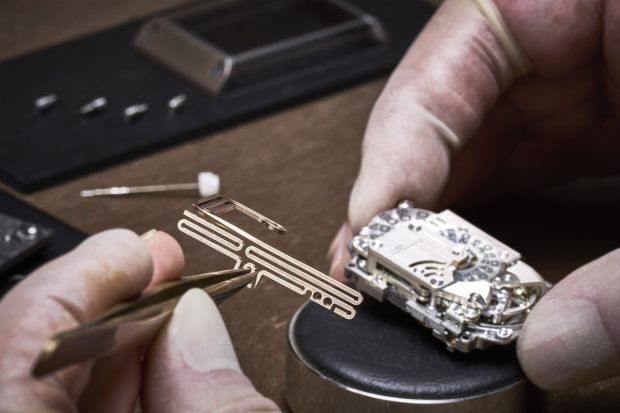
But innovation comes at a price. Hardly as accessible as its predecessors, the No. 9 retails for JPY 16,000,000 (just over USD 107,000), and production numbers remain unannounced. Adding to the intrigue, Ōtsuka Lōtec will not ship outside Japan.
For collectors, that makes the No. 9 elusive, but if you can get your hands on one, it could very well be the watch that brings Katayama his second GPHG prize.
Advertisement

Related Posts



Advertisement