[Dec 6th update: This F.P. Journe FFC Prototype was sold to an anonymous buyer for USD 10.8 million.]
Here's how the F.P. Journe FFC works, and why it will ignite a record-breaking bidding war this coming weekend.
The Phillips New York Watch Auction: XIII (December 6th-7th, 2025) features a remarkable line-up of timepieces from Francis Ford Coppola’s personal collection, alongside several rare F.P. Journe creations.
Lot 17 unites both worlds, and has the horological community buzzing. The only other time a model like this went under the hammer, it achieved a staggering CHF 4.5 million (approximately USD 5.5 million at the time of writing).

Like the F.P. Journe Chronographe Monopoussoir Rattrapante, Astronomic and Furtif, the “Francis Ford Coppola” (FFC) was first debuted at Only Watch, the charity auction of pièce unique creations that often serve as testbeds for future production. But its story actually begins much earlier.
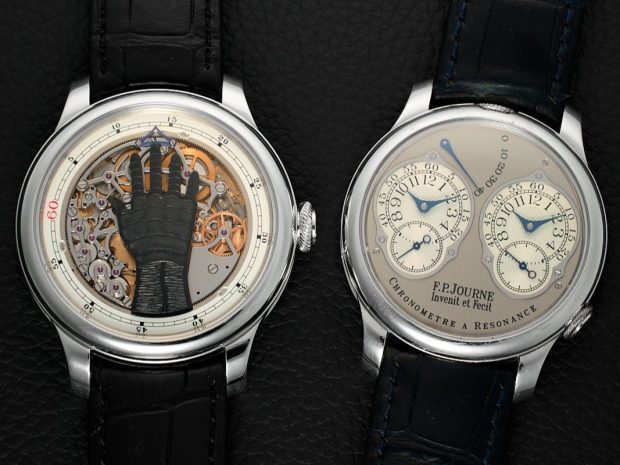
In 2009, Coppola’s late wife, Eleanor, gifted him an F.P. Journe Chronomètre à Résonance (Lot 18 in this auction) for Christmas. The present delighted the six-time Academy Award winner so deeply that he later invited fellow wine enthusiast François-Paul Journe to his historic Inglenook winery in Napa Valley—an estate Coppola bought in 1975 and painstakingly restored to prominence.

During that 2012 encounter, Coppola posed a simple question: had a watch ever used a human hand to indicate time? It was enough to set Journe’s imagination in motion.
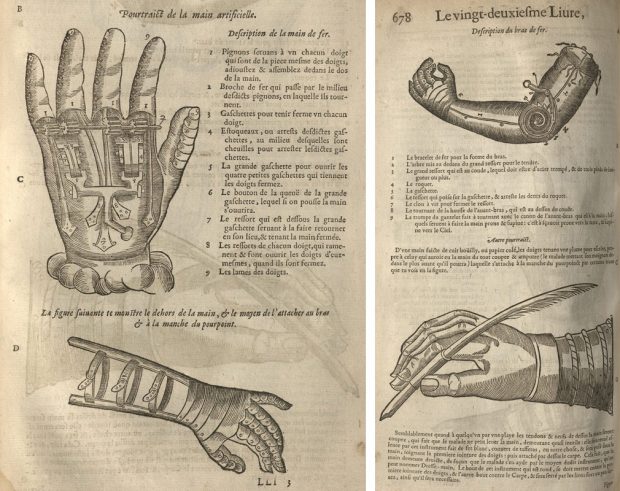
Years of experimentation followed. In 2021, the first FFC stunned attendees of Only Watch when it debuted. Journe drew inspiration from Ambroise Paré, the prolific 16th-century surgeon and pioneer of prosthetic limbs, and began with his Octa caliber 1300.3—known for its one-meter-long, five-day hairspring and slightly off-center rotor—augmented by his signature remontoir d’égalité constant-force mechanism.

If you’re familiar with Octa models, you’ll recall that some models have an hours-and-minutes display at 9 o’clock. In the FFC, that position is dominated by a prominent gear that links the base caliber’s gear train to a specially developed module.
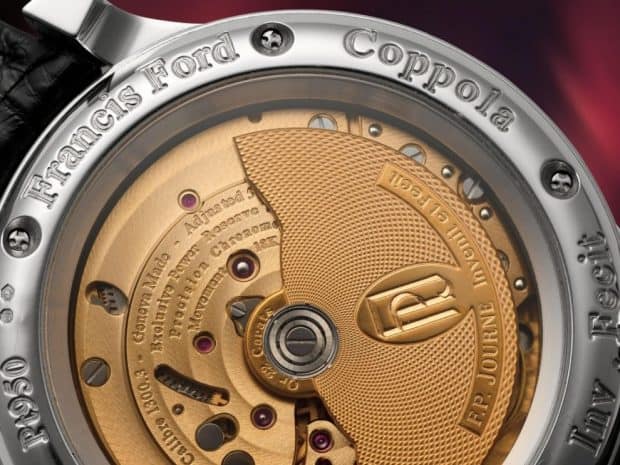
As I noted in my earlier essay on jumping displays, such mechanisms demand considerable energy and tension to spring into action, which can also accelerate wear. Journe addressed this by designing special circular springs that store power from the running train, and release it at the top of the hour to extend or retract the fingers.

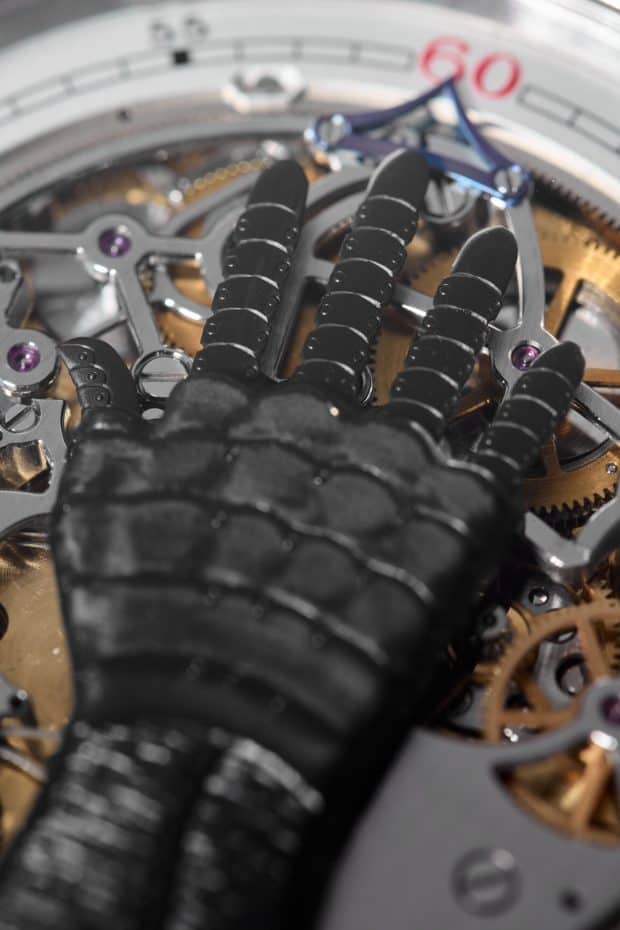
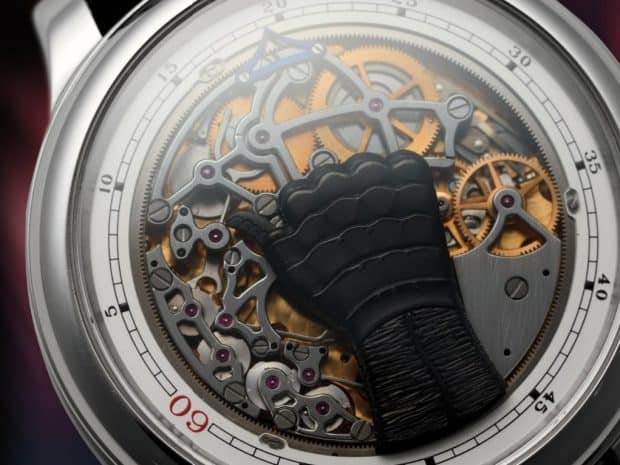
To manage the finger patterns, he programmed stacks of cams that activate specific configurations for each hour from 1 to 12. Tactile codes programmed the old-school analog way into the module guide these sequences, ensuring each “gesture” appears precisely on the hour. The low-friction cams—visible just left of the Paré-inspired gauntlet on the dial—help mitigate long-term wear.

Minutes are displayed via a central rotating ring with an arrow that points to a peripheral minute track. Despite its complexity, the resulting movement measures only 8.1mm thick, housed within a modest 42mm case that stands 10.7mm tall.

The CHF 4.5 million result at Only Watch 2021 persuaded Journe to produce the FFC, but only for the most elite tier of his collectors. However, the example offered at the New York Watch Auction: XIII will eclipse that record, because this is not merely an early example—it is the FFC made for Coppola himself.

While production pieces feature an anthracite gauntlet with a gray minute ring, this unique F.P. Journe “FFC Prototype” is distinguished by a black titanium gauntlet and a white rotating ring. It is also the only FFC (apart from the prototype housed in the F.P. Journe Museum) to feature steel bridges, complete with visible tool marks that speak to its experimental origins.